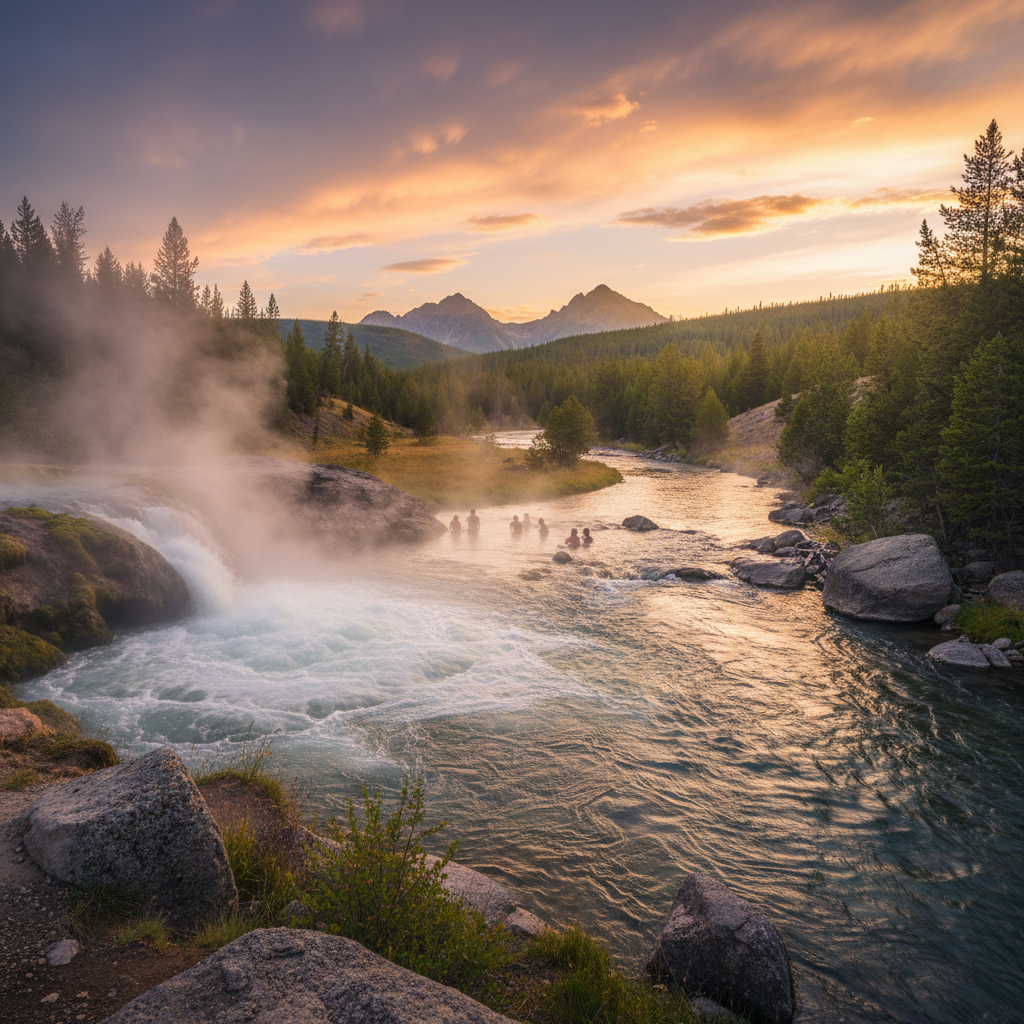
Where a scalding geothermal tributary pours directly into the icy Gardner River, creating a natural, steamy mixing bowl in the wild northern reaches of Yellowstone.
The transition is immediate and sensory. Walking the flat trail along the Gardner River, just inside Yellowstone's northern boundary, you are met by a rising wall of steam that smudges the dry Montana sky. The air carries the sharp scent of sagebrush mixed with the mineral signature of the earth's interior. Where a scalding thermal stream pours over a limestone ledge directly into the frigid, snow-fed river, a natural mixing bowl is formed. Here, the raw power of the park’s plumbing is laid bare, not behind a boardwalk railing, but right at your feet. You step from the cold mountain air into a swirling interface of fire and ice, where the currents shift from bone-chilling to hot-spring warmth in the space of a single step.
This dynamic hydrology is driven by the Mammoth hot spring system. Rain and snowmelt sink deep into the earth, where they are heated by volcanic chambers, dissolve calcium carbonate from ancient limestone beds, and rise back to the surface. At the Boiling River, this mineral-rich water emerges at a scalding 140 degrees Fahrenheit before tumbling down a short channel to meet the Gardner. For centuries, Indigenous peoples, including the Crow and Shoshone, utilized these thermal waters for healing during bitter winters. The surrounding canyon, carved through thick volcanic tuff, serves as a vital winter range for elk and bison, who frequently graze on the steep, grassy slopes above the steam, indifferent to the bathers below.
Finding the perfect spot requires a slow, deliberate shuffle across the slick, rounded river stones. Bathers sit in the shallows, constructing small rock dams to trap the hot currents or let in a refreshing splash of cold water. The sensation is one of constant adjustment: a warm wave envelops your shoulders while a cold draft sweeps past your ankles. Above, the sky is framed by the canyon walls, where golden eagles occasionally wheel on thermals. On colder autumn mornings, the contrast between the freezing air and the steaming water creates an ethereal atmosphere, where the rush of the river drowns out the modern world. It is a rare, unvarnished encounter with the living geology of the West, leaving your skin tingling long after you climb back onto the trail.
The half-mile walk from the parking lot is flat, but the riverbed itself is slick and rocky. Sturdy water shoes with good grip are essential to avoid slipping on the algae-coated stones. Because this is a fragile thermal area, soaking is only permitted during daylight hours, and the area closes seasonally during the high-water spring runoff.