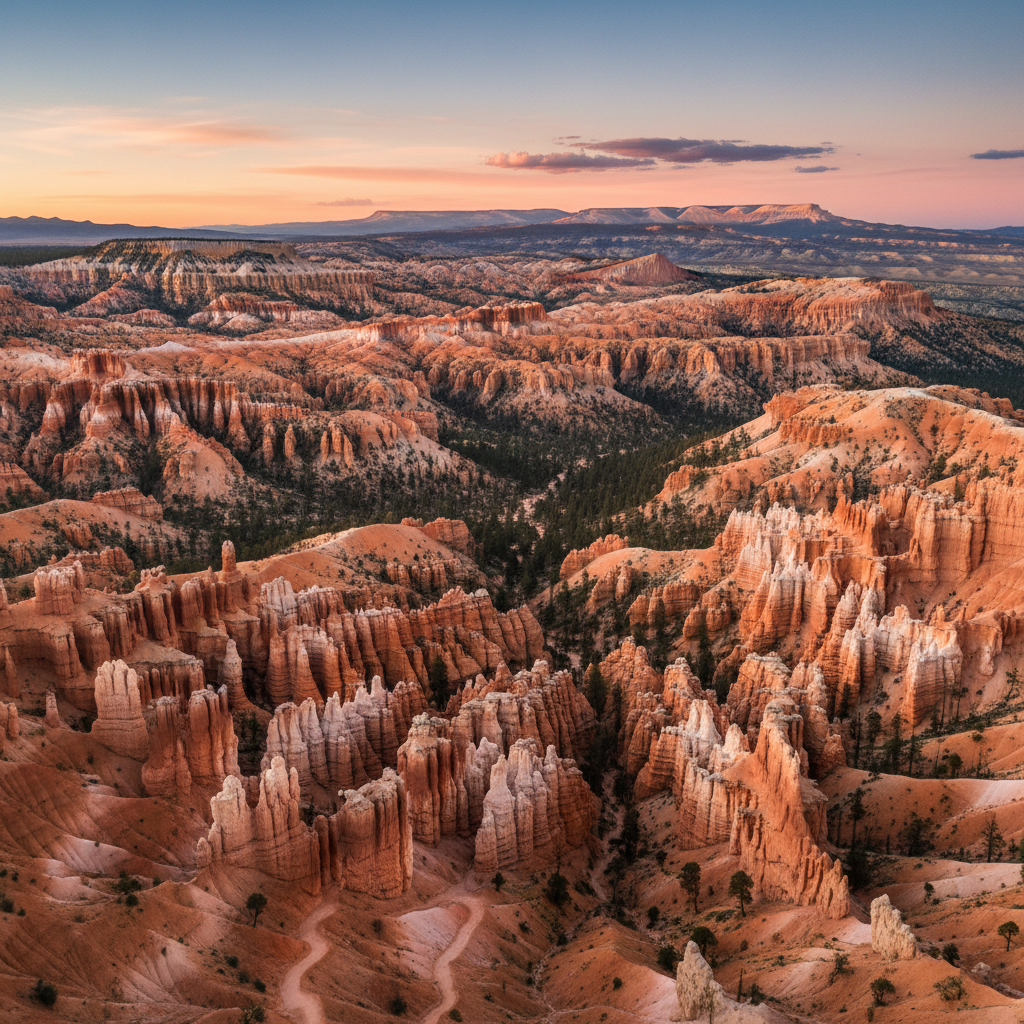
Bryce Canyon National Park is home to the largest collection of hoodoos on Earth — delicate spires of rock sculpted by frost-wedging and erosion along the edge of the Paunsaugunt Plateau. At elevations between 6,600 and 9,100 feet, the park offers cool summer temperatures, dark night skies, and a striking palette of red, orange, and white limestone formations visible from 13 viewpoints along the 18-mile scenic drive.
September, June, and May offer the best conditions at Bryce Canyon. At 8,000+ feet elevation, summer temperatures are pleasantly cool (highs in the 60s–70s°F) compared to lower-elevation Utah parks. September brings smaller crowds and excellent photography light. Winter visits offer magical snow-capped hoodoo views but require cold-weather preparation.
Yes, campground reservations are recommended year-round and can be made through recreation.gov. The park has two campgrounds: North Campground (open year-round) and Sunset Campground (seasonal). Backcountry overnight camping also requires a permit from the visitor center.
Hoodoos are tall, thin spires of rock formed by frost-wedging and erosion. Water seeps into cracks, freezes and expands (Bryce experiences 200+ freeze-thaw cycles per year), and gradually sculpts the limestone into pillars. Bryce Canyon has the largest concentration of hoodoos anywhere on Earth, with formations ranging from a few feet to over 200 feet tall.
Yes, the 18-mile Southern Scenic Drive connects 13 viewpoints accessible by car. The most popular viewpoints — Sunrise Point, Sunset Point, Inspiration Point, and Bryce Point — are clustered near the main amphitheater. A free shuttle operates from April through October connecting the northern viewpoints, trailheads, and Ruby's Inn.
The Queen's Garden and Navajo Loop combination (2.9 miles, moderate) is the most popular trail, descending into the hoodoo amphitheater. The Rim Trail (up to 11 miles, easy) offers panoramic views. For a challenge, the Peek-a-Boo Loop (5.5 miles, strenuous) and the Under-the-Rim Trail (23 miles, backcountry) provide more solitude.