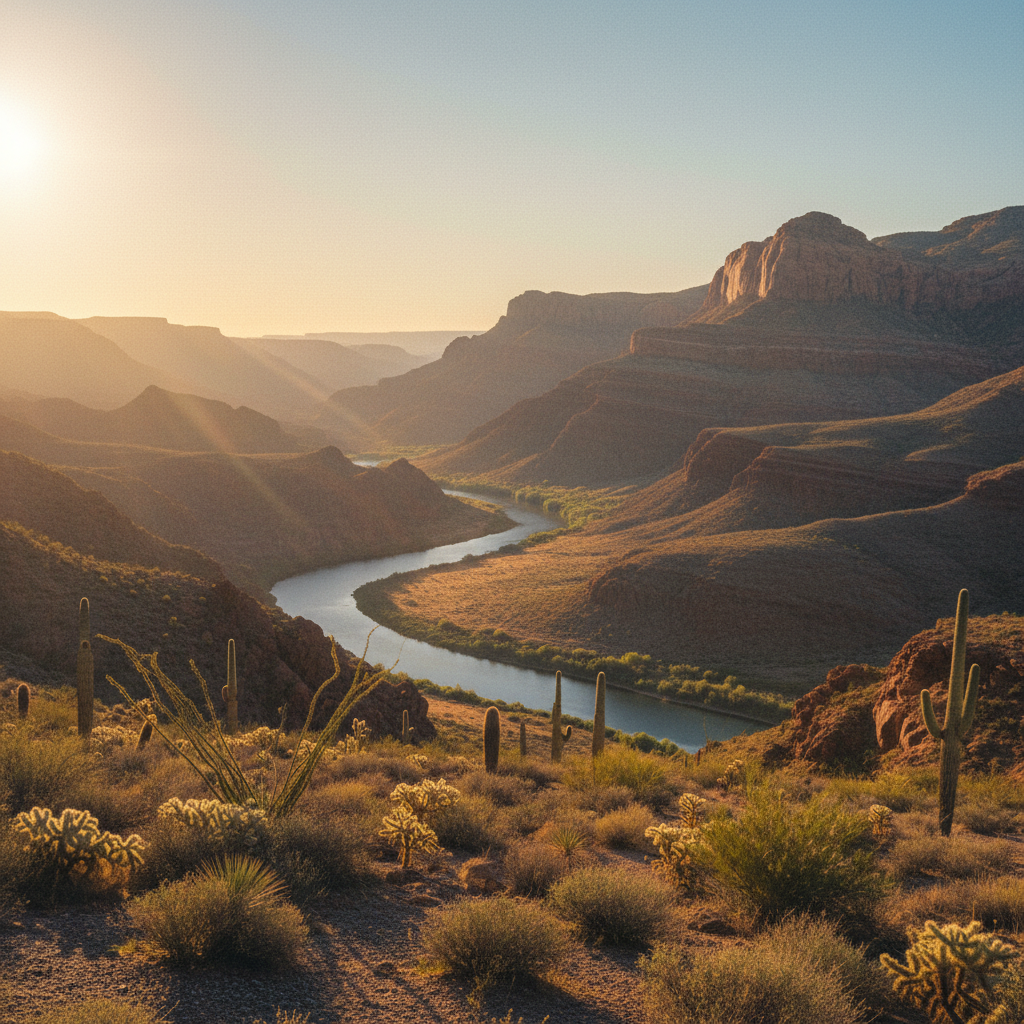
An active Colorado River park on the Parker Strip, featuring red rock trails, 80 campsites, and direct water access.
Buckskin Mountain State Park, officially dedicated on October 29, 1967, occupies 1,677 acres along the Colorado River in western Arizona. Located on the Parker Strip, an 18-mile stretch of water between Parker Dam and Headgate Dam, the park is positioned where the Sonoran Desert meets a major riparian corridor. The park's land was initially leased by the state from the Bureau of Reclamation in 1965, with John Eager serving as the first park manager, before the state secured a patent for the property in 1995. The surrounding Buckskin Mountains, part of the Maria fold and thrust belt, rise sharply from the water's edge, displaying layers of volcanic and metamorphic rock. This river valley holds deep cultural significance for the Mohave and Chemehuevi peoples of the Colorado River Indian Tribes, who thrived along these banks long before 19th-century prospectors arrived to mine copper and gold.
Exploration of the park's desert terrain is facilitated by a dedicated pedestrian footbridge that arches over Highway 95, linking the riverfront campground to a rugged backcountry trail system. The Lightning Bolt Trail offers a steep, half-mile round-trip climb that rewards hikers with expansive views of the river and the California shoreline. This path connects to the 1.5-mile Buckskin Loop Trail, which winds through desert hills and passes a cultivated cactus garden showcasing native saguaros, ocotillos, and barrel cacti. For a more demanding trek, the Buckskin Trail extends nearly seven miles into the backcountry, leading hikers past historic abandoned mine shafts and rugged geological formations. These trails also connect to the park's River Island Unit, located just over a mile north. Hikers along these routes frequently spot desert bighorn sheep navigating the steep cliffs, while birdwatchers can identify some of the 144 recorded avian species, including Vermilion flycatchers, Costa's hummingbirds, and osprey.
Water-based recreation is the central focus of the park, supported by a wide range of well-maintained facilities. Visitors have access to a sandy swimming beach, a concrete boat launch ramp, and a grassy day-use picnic area shaded by mature cottonwoods and willows. Anglers regularly fish from the shoreline and docks, targeting largemouth bass, striped bass, and channel catfish. The park features 80 campsites suitable for both tents and RVs, all equipped with water and electricity, and 15 sites offering full sewer hookups. Several of these sites sit directly on the riverfront, complete with shade cabanas, picnic tables, and fire rings. Additional amenities include a visitor center with interpretive exhibits, a park store selling firewood and boating supplies, a basketball court, and a volleyball court. While winter visitors enjoy mild hiking weather, summer brings high-energy boating and the annual Parker Tube Float, which launches from the park's shores.
To secure one of the coveted riverfront campsites with shade cabanas, book up to a year in advance. For hiking the backcountry trails, plan your trip between November and March to avoid extreme desert temperatures, and always bring sturdy footwear to navigate the rocky terrain near the old mine shafts.