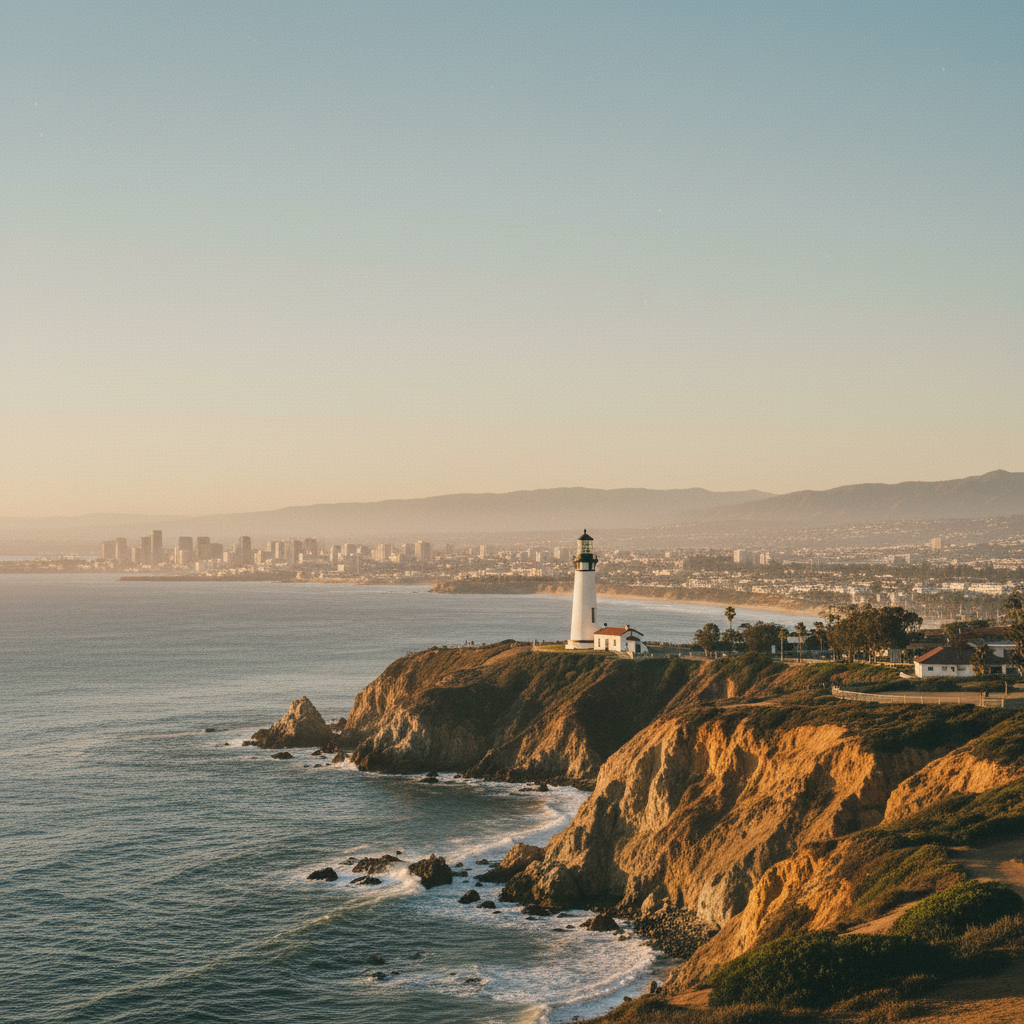
At the continent's rugged edge, California's historic landing site meets rich tide pools and sweeping Pacific panoramas.
Cabrillo National Monument occupies the rugged, wind-swept tip of the Point Loma peninsula, marking the spot where Portuguese explorer Juan Rodríguez Cabrillo and his crew sailed into San Diego Bay on September 28, 1542. This arrival represented the first European expedition to set foot on what would become the West Coast of the United States. Long before the Spanish ships San Salvador, La Victoria, and San Miguel dropped anchor, however, the Kumeyaay people thrived on this peninsula, harvesting fish, mollusks, and coastal plants. Today, a 14-foot-tall sandstone statue of Cabrillo, sculpted by Alvaro de Bree and gifted by the Portuguese government in 1939, stands on the bluff, gazing out across the deep blue harbor. Visitors can explore the visitor center, which houses exhibits on the 16th-century voyage, and trace the complex history of European contact with the region's original Indigenous inhabitants.
Rising 422 feet above sea level, the Old Point Loma Lighthouse remains one of the park’s most iconic landmarks. First lit in 1855, the white-painted brick tower and its keeper's quarters served as a beacon for ships entering the harbor. However, its high elevation proved to be its undoing: low-lying clouds and dense coastal fog frequently obscured the light, prompting the U.S. Lighthouse Board to decommission the station in 1891 in favor of a lower light station closer to the water. Today, the restored interior offers a window into the isolated, daily life of the 19th-century keepers and their families, complete with a meticulously tended historic garden. Nearby, silent concrete bunkers and military exhibits recall the peninsula's strategic role during World War II, when Point Loma was heavily fortified to protect San Diego’s vital military harbor from potential invasion.
On the western side of the monument, the land drops sharply to meet the rocky intertidal zone, home to the Point Loma tide pools. These ancient, tilted sandstone shelves form intricate pockets of life that are revealed during low or negative tides. In these shallow basins, visitors can observe a delicate marine ecosystem teeming with solitary sea anemones, scurrying lined shore crabs, California sea hares, and resilient sea stars. Above the shoreline, the Bayside Trail and the newer Oceanside Trail wind through rare coastal sage scrub, where California brown pelicans glide overhead. During the winter months, from December through March, the Whale Overlook on the high bluffs becomes a premier vantage point for observing the annual migration of Pacific gray whales as they travel nearly 12,000 miles from their Arctic feeding grounds to the warm lagoons of Baja California.
To explore the delicate tide pools, check the NOAA tide tables for Point Loma and plan your arrival for one hour before a low or negative tide. Wear closed-toe shoes with excellent grip, as the wet sandstone shelves are incredibly slick and covered in algae. Because the tide pools are located within a protected state marine reserve, remember to look but never touch or collect any marine life, and leave your dog at home, as pets are not permitted in this sensitive habitat.