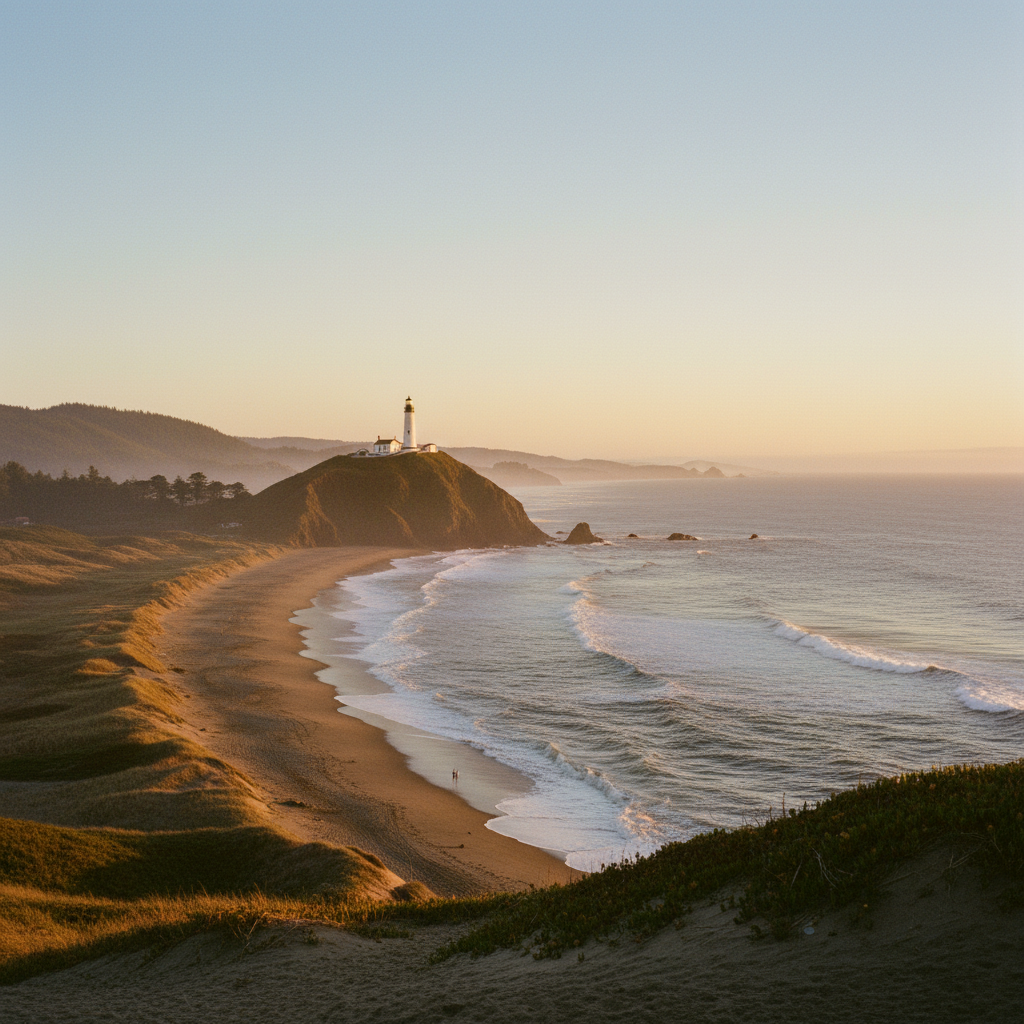
A dramatic state park on the Oregon coast featuring a massive basalt headland, old-growth Sitka spruce forests, and miles of sandy beaches.
Cape Lookout State Park occupies a rugged, forested headland and a sandy spit that divides Netarts Bay from the open Pacific Ocean on the northern Oregon coast. This dramatic state park, situated roughly ten miles southwest of Tillamook, centers around a massive basaltic promontory that juts one and a half miles into the ocean. The headland itself is composed of Miocene-era Columbia River basalt, a resilient volcanic formation that has withstood millions of years of relentless marine erosion. Atop this rocky spine grows a dense, old-growth rainforest of massive Sitka spruce and western hemlock, draped in moss and constantly bathed in ocean mist. Long before European mariners mapped these waters, the Tillamook (or Killamook) people inhabited the shores of Netarts Bay, relying on the rich estuary and coastal forests for sustenance.
The park's geographic name carries a history of maritime confusion. In 1788, British fur trader John Meares sailed along this coast and named a prominent headland ten miles to the north "Cape Lookout". However, in the 1850s, government cartographers mistakenly applied the name to this southern promontory on regional charts. Rather than correct the widely distributed maps, the Coast Survey chose to let the name stand, renaming the northern cape after Meares himself. The modern state park began to take shape in 1935 when the U.S. Lighthouse Service donated 975 acres of surplus land on the cape to the state of Oregon. Subsequent land acquisitions, including a generous donation of the Netarts Sand Spit by Great Northern Railway president Louis W. Hill, expanded the park to more than 2,000 acres. During the late 1930s, crews from the Civilian Conservation Corps developed the park's day-use and picnic areas, paving the way for the campground's opening in 1954.
Today, the park is celebrated for its exceptional trail system, most notably the Cape Lookout Trail. This five-mile round-trip hike begins at the trailhead on the crest of the cape and winds through ancient, moss-draped forest, occasionally hugging the edge of sheer 400-foot cliffs before terminating at the very tip of the basalt peninsula. On clear days, the viewpoint at the end of the cape offers sweeping vistas extending 39 miles south to Cape Foulweather and 42 miles north to Tillamook Head. It is also one of the premier whale-watching spots on the Oregon coast, particularly during the winter and spring migrations when gray whales pass close to the headland. The park's historical legacy includes a somber World War II event: on August 1, 1943, a B-17 Flying Fortress bomber crashed into the fog-shrouded cape during a patrol flight, leaving a sole survivor, bombardier Wilbur L. Perez, who was rescued after a day-long search. A plaque along the trail honors the crew members who lost their lives.
Note that the day-use area and campground are scheduled to close on July 6, 2026, for extensive utility and infrastructure upgrades. When open, the Cape Lookout Trail can be extremely muddy, so sturdy boots are essential, and the exposed tip of the cape is often exceptionally windy and cold even on warm summer days.