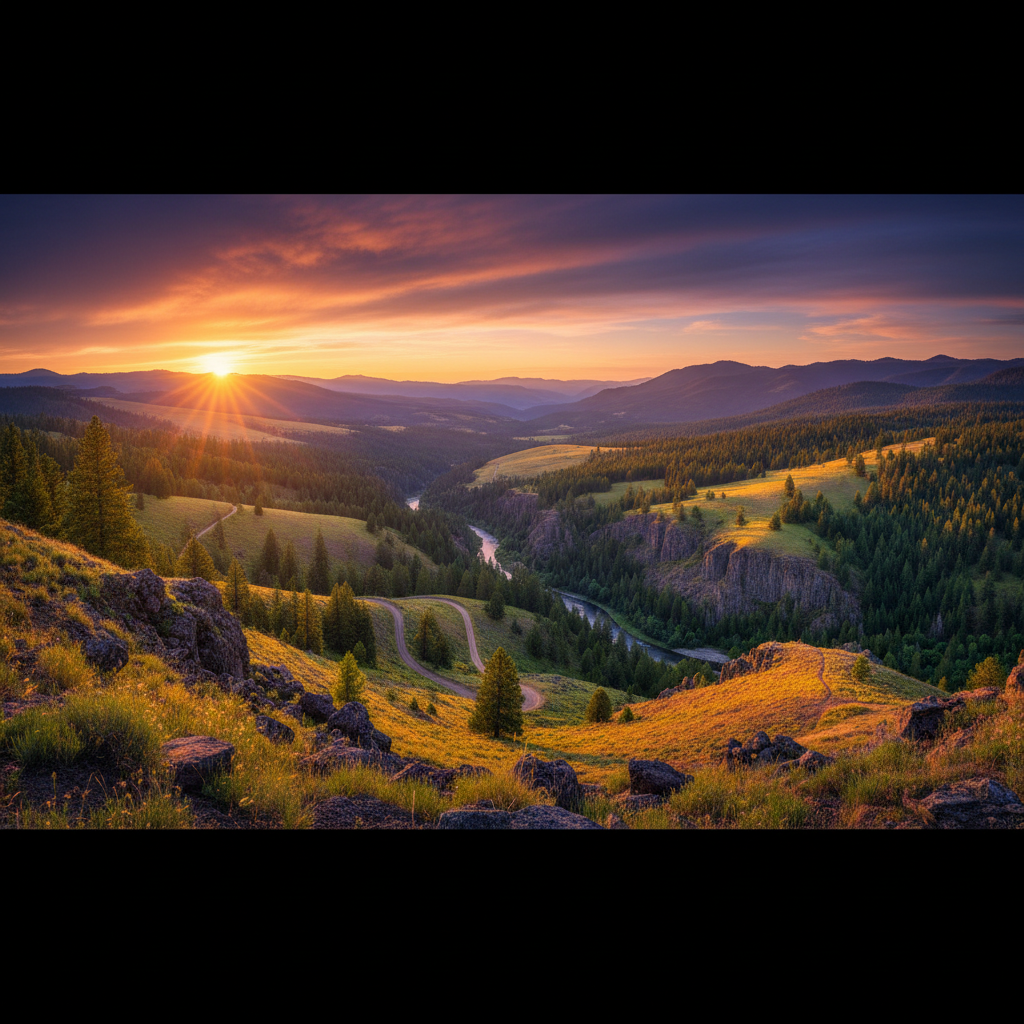
The only American national monument designated solely to protect its rich biodiversity at the meeting of three distinct mountain ranges.
Cascade-Siskiyou National Monument protects a complex, highly varied ecological crossroads where the ancient Siskiyou Mountains, the volcanic Cascade Range, and the arid Great Basin desert converge. Established by presidential proclamation in 2000 and expanded to 114,000 acres in 2017, this is the first and only national monument in the United States set aside specifically to safeguard its exceptional biodiversity. This landscape of steep canyons, oak savannas, and old-growth conifer forests is the ancestral homeland of the Takelma, Latgawa, Shasta, Klamath, and Modoc peoples. Today, descendants of these tribes, including members of the Confederated Tribes of Siletz Indians and the Confederated Tribes of Grand Ronde, maintain deep cultural connections to these lands, where places like Latgawa Creek flow through Vesper Meadow.
The monument's unique geology underpins its biological richness. Along the western edge, the ancient terrane rocks of the Siskiyou Mountains, scraped up from an ancient ocean floor, collide with the much younger volcanic formations of the Cascades. The most iconic geological landmark is Pilot Rock, a 25.6-million-year-old volcanic plug of columnar andesite that rises 570 feet above the surrounding forest and serves as a visual anchor for travelers along Interstate 5. Further south, the 24,700-acre Soda Mountain Wilderness forms the wild heart of the monument. Here, the elevation climbs to the 5,720-foot summit of Soda Mountain, where a historic fire lookout overlooks a rugged expanse inhabited by Roosevelt elk, black bears, mountain lions, and a remarkably diverse population of butterflies.
A 43-mile segment of the Pacific Crest Trail bisects the monument, providing foot travel access to its most remarkable features. Hikers can follow the trail to Hobart Bluff, a moderate climb that yields panoramic views of the Rogue Valley, Mount McLoughlin, and Mount Shasta. Along the path to the bluff, the transition between ecoregions is starkly visible, with white fir and incense cedar growing alongside Great Basin desert plants like sagebrush and western juniper. To the northeast, the Hyatt Lake Recreation Area offers a contrasting aquatic environment, where the reservoir provides a haven for migratory waterfowl and campers, all framed by the snow-capped peak of Mount McLoughlin looming in the distance.
To experience the monument's dramatic ecological transition, hike the 2.5-mile round-trip trail to Hobart Bluff along the Pacific Crest Trail. You will walk past mountain firs growing right next to desert sagebrush, culminating in a 360-degree view of the Rogue Valley and Mount Shasta.