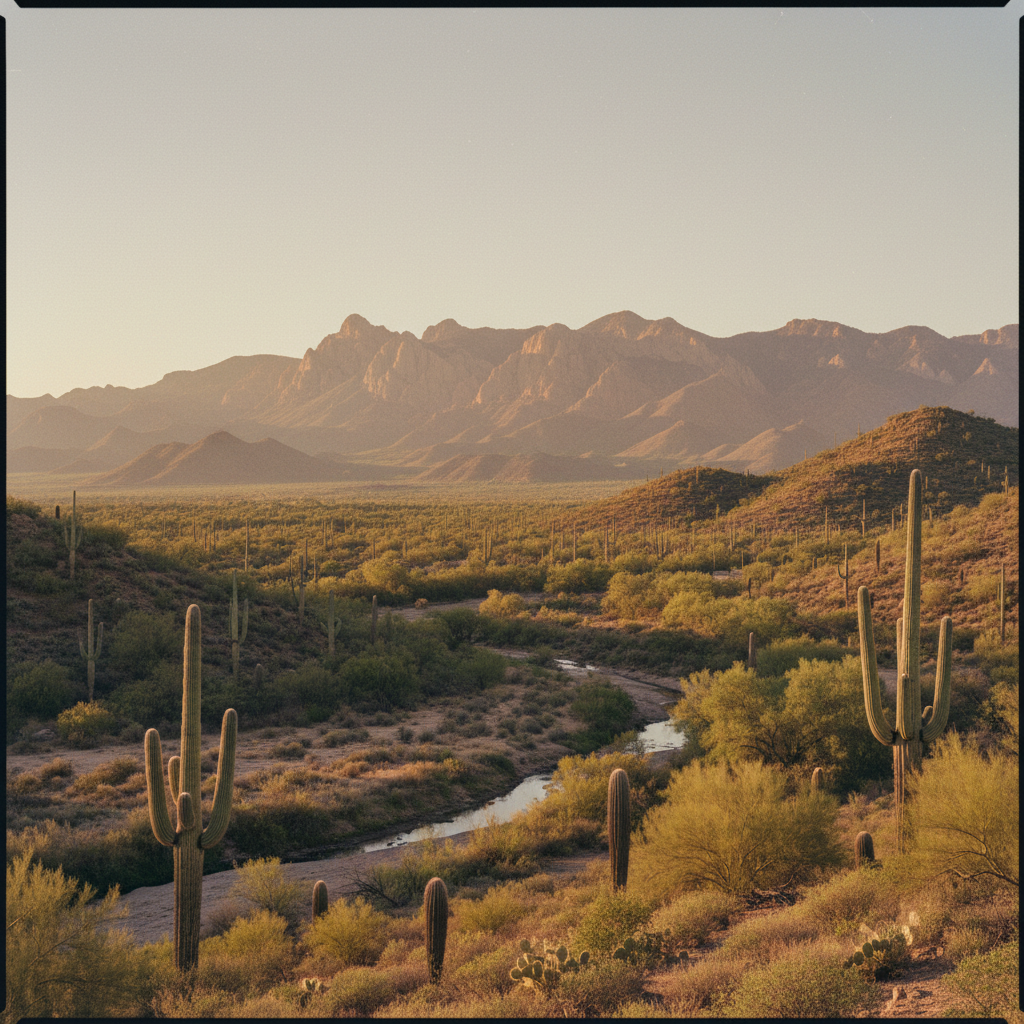
Desert trails at the foot of the Santa Catalinas. Saguaro forests, birding hotspots, and canyon hikes minutes from Tucson.
Catalina State Park spans 5,493 acres of Sonoran Desert foothills, resting directly at the base of the Santa Catalina Mountains north of Tucson. Established in 1983 after a decade of public advocacy led by Representative Charles King to save the land from a massive planned housing development, the park preserves a critical ecological transition zone. The land here has been occupied for millennia, most notably by the Hohokam people who lived in the area from roughly 500 to 1450 CE. Along the park's Romero Ruin Interpretive Trail, hikers can explore the remains of a prehistoric fifteen-acre Hohokam village, complete with stone-and-adobe foundations, agricultural fields, and a preserved Mesoamerican ballcourt. In the nineteenth century, a historic cattle rancher named Francisco Romero built his home on this same ridge, repurposing stones from the ancient ruins to construct his homestead and defensive walls.
The park's trail network provides direct access to the rugged Coronado National Forest and the Pusch Ridge Wilderness. The signature trek is the Romero Canyon Trail, which begins at the main trailhead and crosses the sandy bed of Sutherland Wash before embarking on a steep, rocky climb. This trail gains about 1,000 feet of elevation over 2.8 miles to reach Romero Pools, a series of natural granite basins where seasonal streamflow and winter runoff collect into desert swimming holes. The water, often tinted a distinct golden hue by tannins from the roots of native Mexican oaks, feeds small waterfalls that cascade over smooth rock faces. For a gentler excursion, the Canyon Loop Trail winds through riparian habitats thick with mesquite and palo verde, while mountain bikers favor the rugged terrain of the 8.6-mile 50-Year Trail. The park also serves as a direct link to the Chuck Huckelberry Loop, a massive paved multi-use path system connecting Oro Valley to the broader Tucson area.
Ecology within the park is remarkably diverse, supporting nearly 5,000 saguaro cacti alongside desert ironwood, jojoba, and creosote. Birders travel here to spot some of the 150 documented avian species, including vermilion flycatchers, Gila woodpeckers, and cooperative-hunting Harris's hawks. Overnight visitors can stay at one of the park's 120 campsites, which feature water and electric hookups, paved RV pads, and views of the mountain peaks turning shades of orange and violet at sunset. The park is currently undergoing facility upgrades, including the construction of a brand-new restroom and shower building in Campground A scheduled for completion in mid-2026. Positioned just off Oracle Road, Catalina State Park remains a vital, protected sanctuary where the arid desert floor meets the soaring pine-crowned peaks of the high Catalinas.
Romero Pools after a rain. Desert waterfalls you didn't know existed.