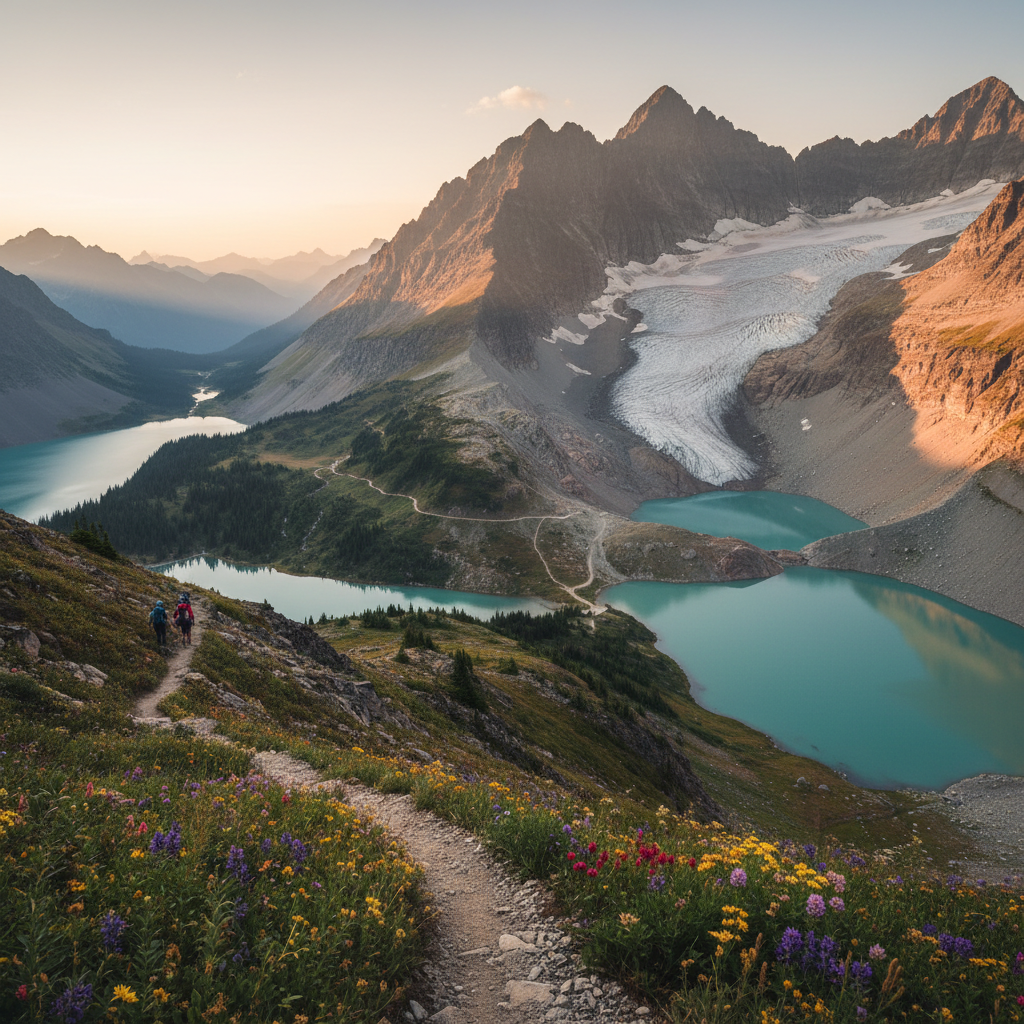
Climb through the heart of Glacier National Park's Many Glacier valley, passing turquoise lakes and alpine meadows to stand at the edge of a massive, melting remnant of the Ice Age.
The hike begins in the shadow of Many Glacier, where the air off Swiftcurrent Lake carries a sharp, high-altitude chill even in mid-July. You start on a path flanked by thick huckleberry brush and lodgepole pine, but the forest quickly parts to reveal the scooped-out amphitheater of the valley. Below, the waters of Lake Josephine and Grinnell Lake gleam in shades of impossible turquoise, colored by fine rock flour suspended in the glacial runoff. As you ascend, the sheer verticality of the landscape takes over. The massive Garden Wall looms to the west, its weeping rock faces dripping with snowmelt that feeds cascades tumbling across the trail. It is a sensory mix of cold mist, the scent of damp shale, and the steady crunch of your boots on red argillite gravel.
This trail is a living lesson in glaciology and the rapid transformation of the West. The landscape was carved during the last ice age, but the glacier you are climbing to see is a younger remnant, formed during the Little Ice Age. In the late 19th century, when conservationist George Bird Grinnell lobbied for the park's protection, the ice filled the entire upper basin. Today, it has retreated into a high cirque, leaving behind the milky-green Upper Grinnell Lake, which is often choked with floating icebergs in late summer. This fragile alpine zone is home to resilient wildlife. Mountain goats navigate the sheer cliffs of Mount Gould with impossible grace, while bighorn sheep graze the high ledges. The Blackfeet, who hold these mountains sacred, know this area as part of the Backbone of the World.
The final mile is a steep, sun-exposed push up rocky switchbacks carved into the cliffside. Reaching the end of the trail at Upper Grinnell Lake feels like stepping onto another planet. The wind off the ice is immediate and biting, a physical force that demands you pull on a windbreaker. You can sit on the smooth, glacier-polished slabs of rock at the water's edge and watch icebergs drift in the silty water. The scale is humbling: the massive headwall of the Continental Divide rises thousands of feet directly above the ice, while the valley you just climbed stretches out below. It is a place of profound silence, interrupted only by the sudden, thunderous crack of shifting ice.
To beat the intense midday sun and the crowds, start your hike from the Many Glacier trailhead before 7:30 AM. Alternatively, you can shave off about four miles of walking by booking a shuttle boat across Swiftcurrent Lake and Lake Josephine through the Many Glacier Hotel dock, though you must reserve these tickets well in advance.