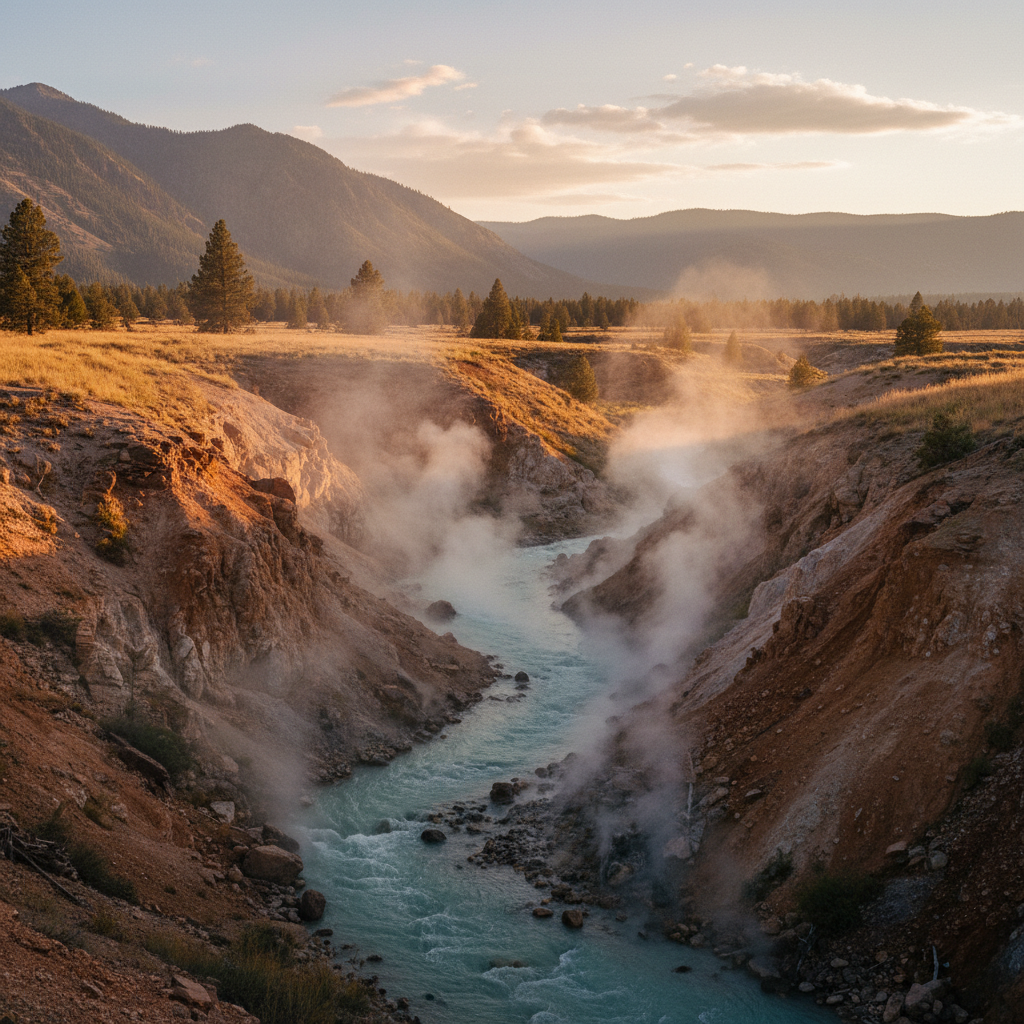
Witness geothermal energy at Hot Creek Geological Site, where superheated waters bubble into steaming, turquoise pools against the backdrop of the Sierra Nevada.
Hot Creek Geological Site, managed by the Inyo National Forest, provides a stark visual encounter with the volcanic forces of the Long Valley Caldera. Located roughly eight miles southeast of Mammoth Lakes, this narrow canyon reveals a landscape in constant, volatile flux. The geological activity here is driven by a chamber of molten magma lying only about three miles beneath the earth's surface, heating subterranean water that rises through fractures in the rock. As this superheated water reaches the surface, it meets the cold flow of Mammoth Creek, creating a striking scene of boiling turquoise pools, bubbling fumaroles, and rising columns of sulfur-scented steam. The contrast is especially dramatic on cold winter mornings, when the frigid mountain air causes the steam plumes to billow high against the backdrop of the Eastern Sierra.
The history of the site is marked by both recreation and sudden, unpredictable danger. For decades, Hot Creek was a highly popular swimming and soaking destination where visitors could float in the warm mixing zones. However, the geothermal system is notoriously unstable: water temperatures can spike to 200 degrees Fahrenheit in seconds, and new geysers can erupt without warning. Following a series of sudden temperature surges and geyser eruptions in June 2006, the U.S. Forest Service permanently closed the water to swimming and wading. Over the years, at least 14 fatalities and numerous severe injuries have been recorded here, a sobering reminder of the raw power beneath the surface. Today, sturdy fences and warning signs keep visitors at a safe distance from the scalding pools and unstable banks.
Visitors can experience the site via a short, paved trail that descends about 100 feet from the parking area down to the canyon floor. The trail is only about a quarter-mile long but is quite steep on the return climb. From the viewing platforms along the path, the distinct gurgle and hiss of boiling water echo off the canyon walls, and the brilliant blue-green hues of the pools, colored by dissolved minerals and thermophilic bacteria, remain clearly visible. While the geothermal section is strictly off-limits, the cold waters of Hot Creek downstream represent a world-class fly-fishing destination. Anglers come to these catch-and-release waters, which hold an estimated 8,000 to 10,000 wild rainbow and brown trout per mile, using only artificial flies and barbless hooks.
Reaching the site involves driving about three miles down Hot Creek Hatchery Road off Highway 395, near the Mammoth Yosemite Airport. The first part of the road is paved, but it eventually transitions into a bumpy, unpaved dirt road leading to the main parking lot, which features vault toilets and interpretive displays. During the winter months, heavy snow regularly closes this access road to standard vehicles, turning the journey into a scenic 1.5-mile trek on snowshoes, cross-country skis, or snowmobiles. Whether visited during the quiet of a winter morning or under the golden light of a summer sunset, the site offers a rare, accessible window into the active volcanic plumbing of California's high country.
Arrive at sunrise on a crisp winter morning to see the steam plumes at their most dramatic against the Sierra backdrop. If visiting in winter, prepare for a 1.5-mile trek on foot, skis, or snowshoes from the winter road closure, and always respect the fences as ground temperatures are highly volatile.