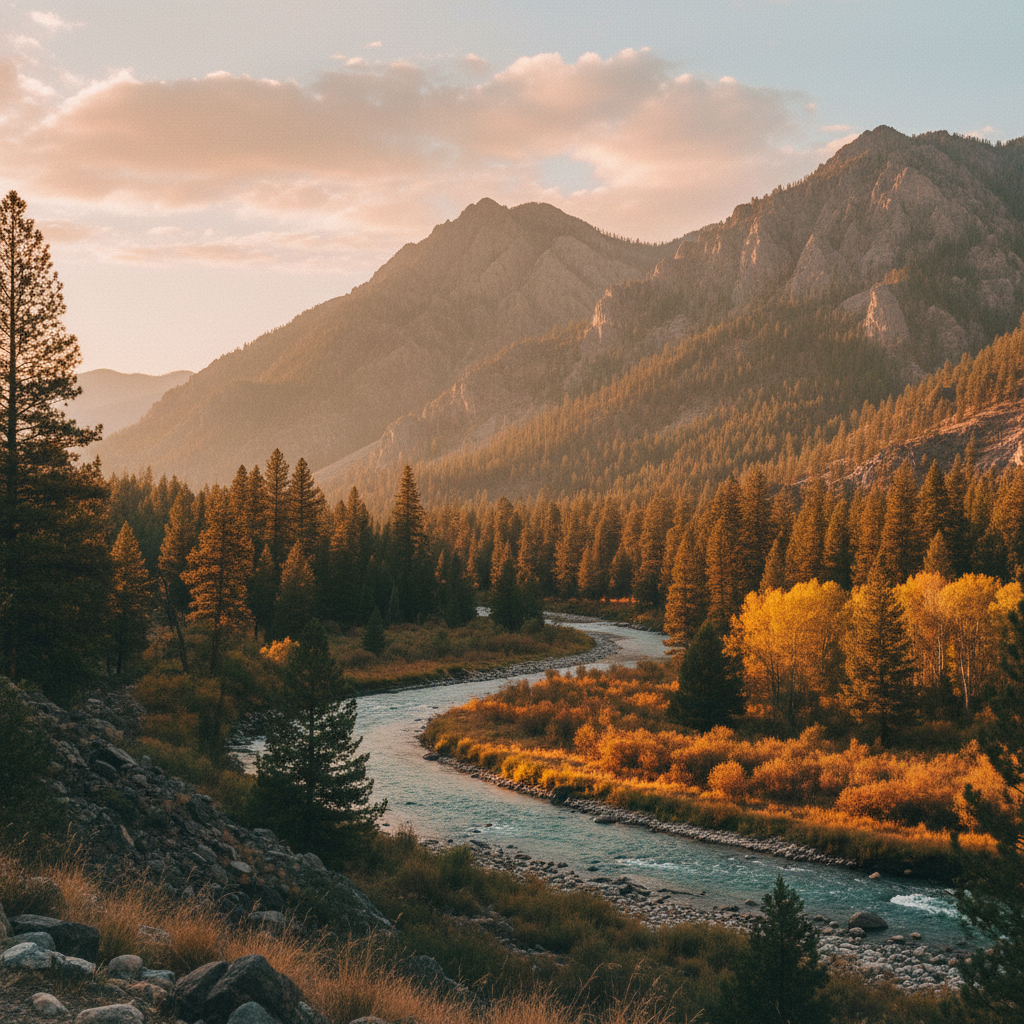
The Middle Fork of the Salmon River flows for 104 miles through Idaho's Frank Church Wilderness, offering a legendary run of Class III and IV rapids, natural hot springs, and sheer granite canyons.
The Middle Fork of the Salmon River flows through the designated Frank Church-River of No Return Wilderness, dropping over 3,000 feet from its headwaters near Stanley, Idaho, to its confluence with the Main Salmon. Originating at the confluence of Bear Valley and Marsh Creeks, this free-flowing, undammed waterway spans approximately 104 miles of granite canyons, old-growth forests, and sheer rock walls. The river represents a sacred homeland for the Tukudeka, or Sheepeater Shoshone, who inhabited these steep canyons for generations before their forced removal in 1879. Today, their legacy is preserved in the numerous pictographs and pithouse depressions that dot the banks, offering a quiet, physical connection to the past amid the rush of the current.
Navigating this wild corridor requires a keen understanding of seasonal flows, as the river's character shifts dramatically between June's high-water snowmelt and August's technical, low-water channels. Trips typically begin at the Boundary Creek launch site, though lower water levels later in the summer often require rafters to fly into the Indian Creek Airstrip to start their journey. Along the run, more than 100 named rapids test the mettle of kayakers and rafters alike. Velvet Falls, which was altered by a major landslide at Velvet Creek in August 2023, remains a legendary obstacle, while the tight, S-turn walls of Pistol Creek Rapid demand precise, high-stakes maneuvering. Farther downstream, the river gains volume from tributaries like Loon Creek and Big Creek, building power as it enters the sheer granite walls of the Impassable Canyon, where rapids like Tappan Falls, Redside, and Rubber provide a final, thundering crescendo.
Off the water, the Middle Fork provides remarkable opportunities for grounding and recovery. Six natural hot springs are scattered along the first half of the journey, including the terraced pools of Sunflower Hot Springs and the riverside soaking spots at Trail Flat, Loon Creek, and Hospital Bar. Campsites are situated on sandy benches under towering ponderosa pines, where the scent of woodsmoke mingles with the cold, clean air of the canyon. As twilight settles, the lack of light pollution reveals the stars with exceptional clarity. The surrounding wilderness supports a thriving ecosystem where bighorn sheep navigate dizzying cliffs, river otters play in the emerald pools, and westslope cutthroat trout rise to dry flies in what remains one of the world's premier catch-and-release fisheries. The journey ends at the Cache Bar take-out, leaving travelers with a lasting imprint of a river that dictates its own terms.
If you are launching in late summer when water levels drop, prepare to fly into the Indian Creek Airstrip to begin your trip, and always pack barbless hooks for the river's strictly regulated catch-and-release cutthroat fishery.