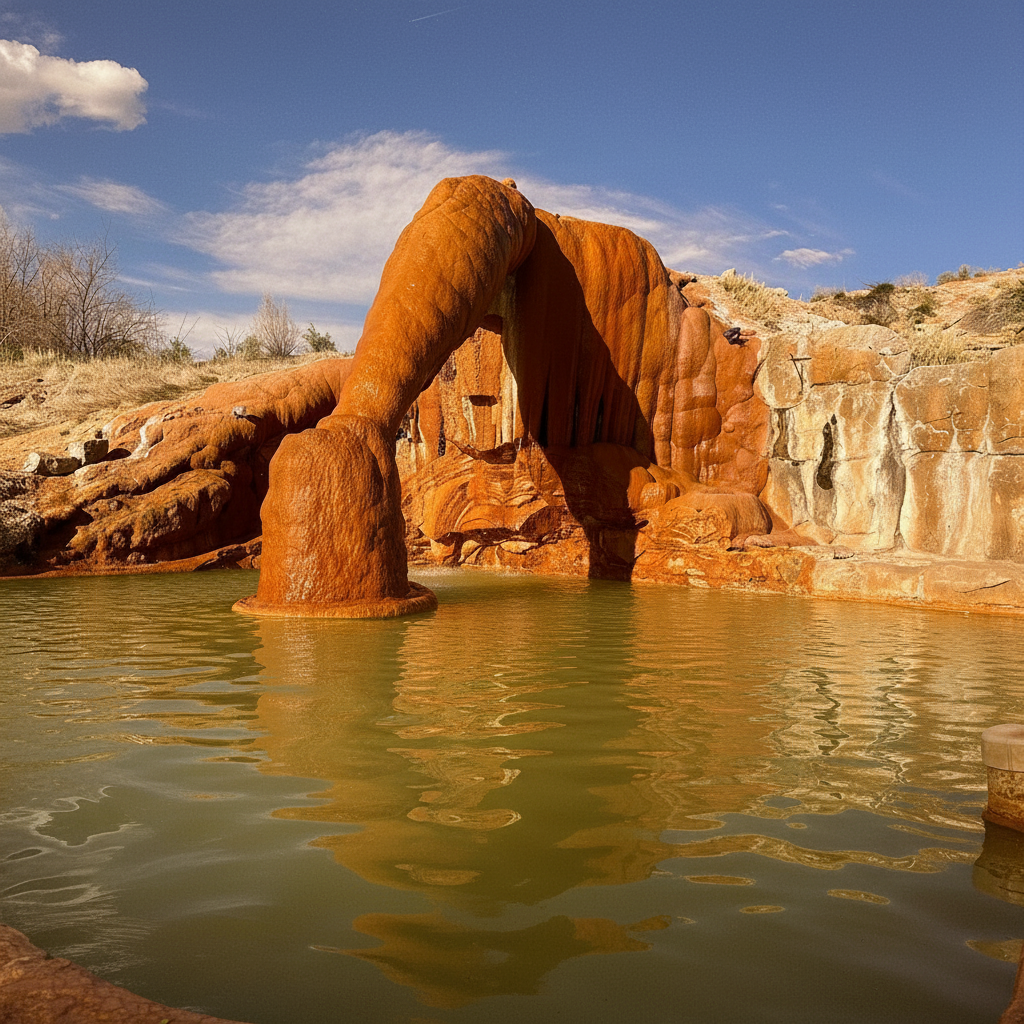
A historic geothermal resort in Monroe, Utah, featuring odorless mineral pools, vintage clawfoot bathtubs encased in travertine, and overnight stays in restored pioneer cabins or converted school buses.
Mystic Hot Springs, located at the base of the Rocky Mountains in Monroe, Utah, is defined by its massive, rust-colored travertine mounds and mineral-rich geothermal waters. The water emerges from a deep fault line at a scalding 168 degrees Fahrenheit, carrying heavy loads of calcium carbonate, magnesium, silica, and iron. As the water cascades down the hillside, it cools to a comfortable 99 to 110 degrees Fahrenheit, feeding two concrete soaking pools and six vintage cast-iron clawfoot bathtubs. Unlike many geothermal sites in the West, the water here is completely odorless and free of sulfur, leaving no heavy scent on the skin. Over decades of continuous flow, the minerals have precipitated directly onto the tubs, encasing them in thick, bulbous formations of orange and white rock that seem to grow organically out of the hillside.
The springs have a deep history of human use, starting with the nomadic bands of the Ute, Paiute, and Shoshone tribes who camped on the warm ground. Later, the site served as a vital rest stop along the Old Spanish Trail. In 1886, Thomas Cooper homesteaded the property, building a wooden collecting pool and eventually adding a dance hall where locals would gather. The modern era of the property began in 1995 when artist and musician Mike Ginsburg, traveling back from a Grateful Dead concert in Las Vegas, stumbled upon the then-dilapidated resort. Ginsburg purchased the property the following year and set about transforming it into an eclectic, working-class sanctuary for art, music, and relaxation. He established a tradition of hosting live music on an outdoor stage, turning the springs into a celebrated gathering place for touring bands and travelers alike.
Accommodations at the hot springs are as unconventional as the pools themselves. Guests can book overnight stays in a collection of restored 19th-century pioneer cabins, salvaged from across the Sevier Valley and rebuilt with rustic comforts like wood-burning stoves and heated blankets. Alternatively, the property features several converted vintage school buses, including the Ripple Bus and the Nature Bus, outfitted with cozy beds and bohemian decor. The grounds are also home to a roaming menagerie of peacocks, llamas, and ducks, as well as several tropical fish ponds kept warm by the runoff water. To preserve the quiet, meditative atmosphere of the springs, the resort now operates on a strict reservation-only system, requiring visitors to book two-hour soaking passes in advance, ensuring the hillside tubs remain a peaceful, uncrowded space.
Book your soaking reservation well in advance, especially for evening slots when you can stargaze from the tubs. Bring your own towel and a reusable water bottle to fill at the freshwater spigot.
Where to Stay — Curated accommodations hand-picked by Basecamp West. Glamping, boutique hotels, historic lodges, and unique stays across the American West.