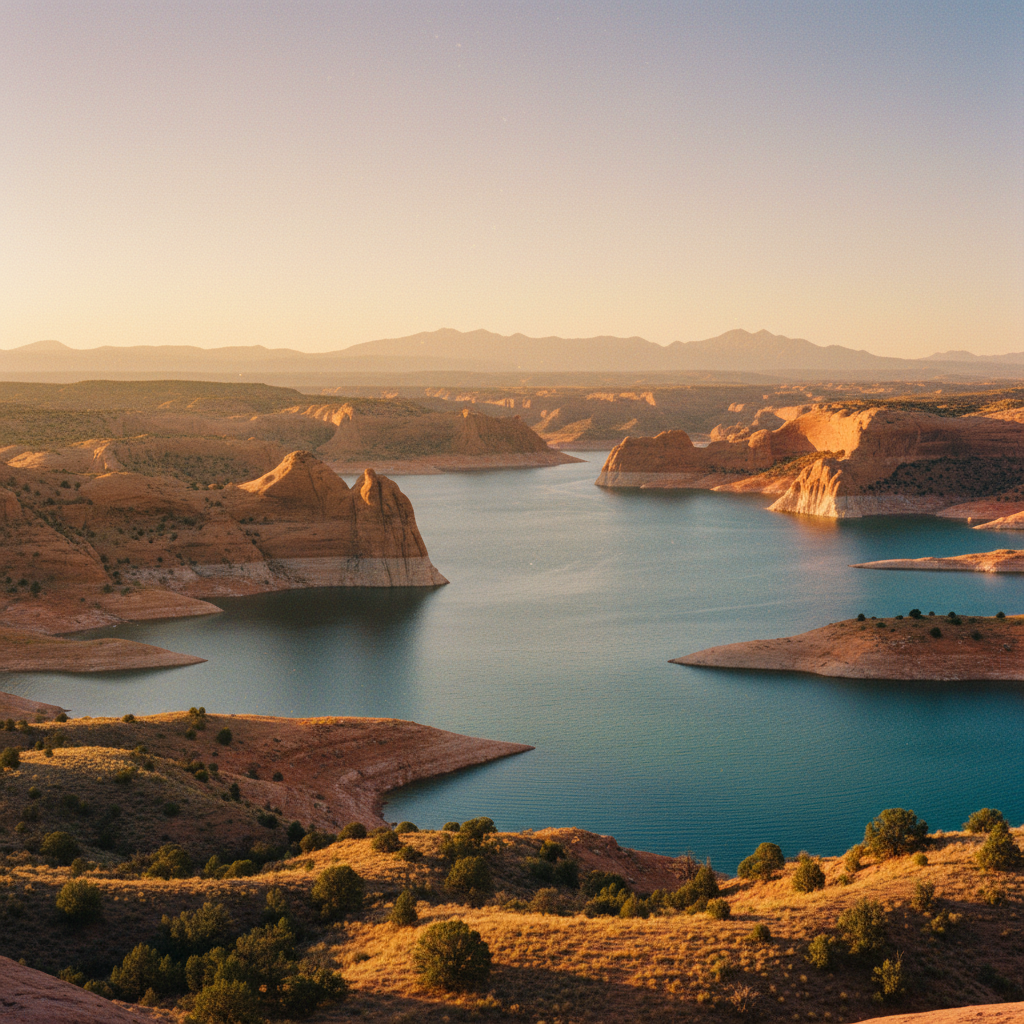
A massive high-desert reservoir and world-class trout fishery on the San Juan River.
Navajo Lake State Park encompasses New Mexico's second-largest reservoir, a 15,000-acre expanse of deep blue water carved into the arid sandstone mesas of the San Juan Basin. The park owes its existence to the Navajo Dam, completed in 1962 by the U.S. Bureau of Reclamation as a core component of the Colorado River Storage Project. Standing 402 feet high and stretching nearly three-quarters of a mile across the San Juan River canyon, this massive earth- and rock-fill structure permanently altered the landscape. While it created a premier destination for water recreation, the reservoir also flooded sacred Diné (Navajo) sites and inundated historic agricultural communities. The rising waters drowned the towns of Rosa, Los Arboles, Los Pinos, and Los Martinez, displacing nearly 200 families, many of whom had farmed these fertile valleys for generations. Today, during periods of prolonged drought, the foundations of these submerged homesteads occasionally reemerge from the mud, serving as quiet monuments to the area's complex history.
Recreational activity at the park is concentrated around three distinct zones, each with its own character. The Pine River Recreation Area, located on the west side of the reservoir, serves as the main hub. It features the Pine Visitor Center, a notable structure built in 1965 under the National Park Service's Mission 66 program and meticulously restored in 2016. Here, visitors can browse interpretive exhibits detailing the archaeological and geological heritage of the basin. The nearby Pine River Marina is the state's largest full-service marina, providing boat rentals, houseboats, and a seasonal restaurant. Across the reservoir, reached via New Mexico State Road 527, the Sims Mesa Recreation Area offers a more tranquil experience. Sims Mesa features its own marina, campgrounds, and three original Mission 66 group picnic shelters. Surrounding both areas, the classic high-desert ecosystem of piñon pine, Utah juniper, sagebrush, and prickly pear cactus clings to the rugged ochre cliffs, providing habitat for mule deer, elk, and soaring peregrine falcons.
Fishing is a central draw, split between the deep waters of the lake and the cold river below. The reservoir itself is home to smallmouth bass, northern pike, black crappie, and a thriving, introduced population of land-locked sockeye known as kokanee salmon. From October 1 through December 31, the lake hosts a highly anticipated kokanee snagging season, drawing anglers to the rocky shorelines as the salmon gather to spawn. Below the dam, the environment shifts dramatically into the San Juan River Recreation Area, where lush cottonwood bosques line the banks. This tailwater includes the legendary "Quality Waters," a 4.25-mile catch-and-release section renowned worldwide for its prolific populations of rainbow and brown trout, which average over 17 inches in length. Anglers congregate at famous pools like the Texas Hole, which features wheelchair-accessible fishing platforms. For those seeking dry-land exploration, the nearby Simon Canyon Recreation Area, located just west of the park, contains a scenic trail leading to the Simon Ruins, a remarkably preserved Navajo pueblito built atop a boulder in 1754.
To experience the park's dual personalities, spend the morning fly-fishing the San Juan River Quality Waters below the dam, then head to the Pine River Marina to rent a pontoon boat for exploring the sandstone canyons of the reservoir. If visiting in the autumn, plan around the kokanee salmon snagging season from October to December, but be sure to check the New Mexico Department of Game and Fish regulations for specific permit requirements.