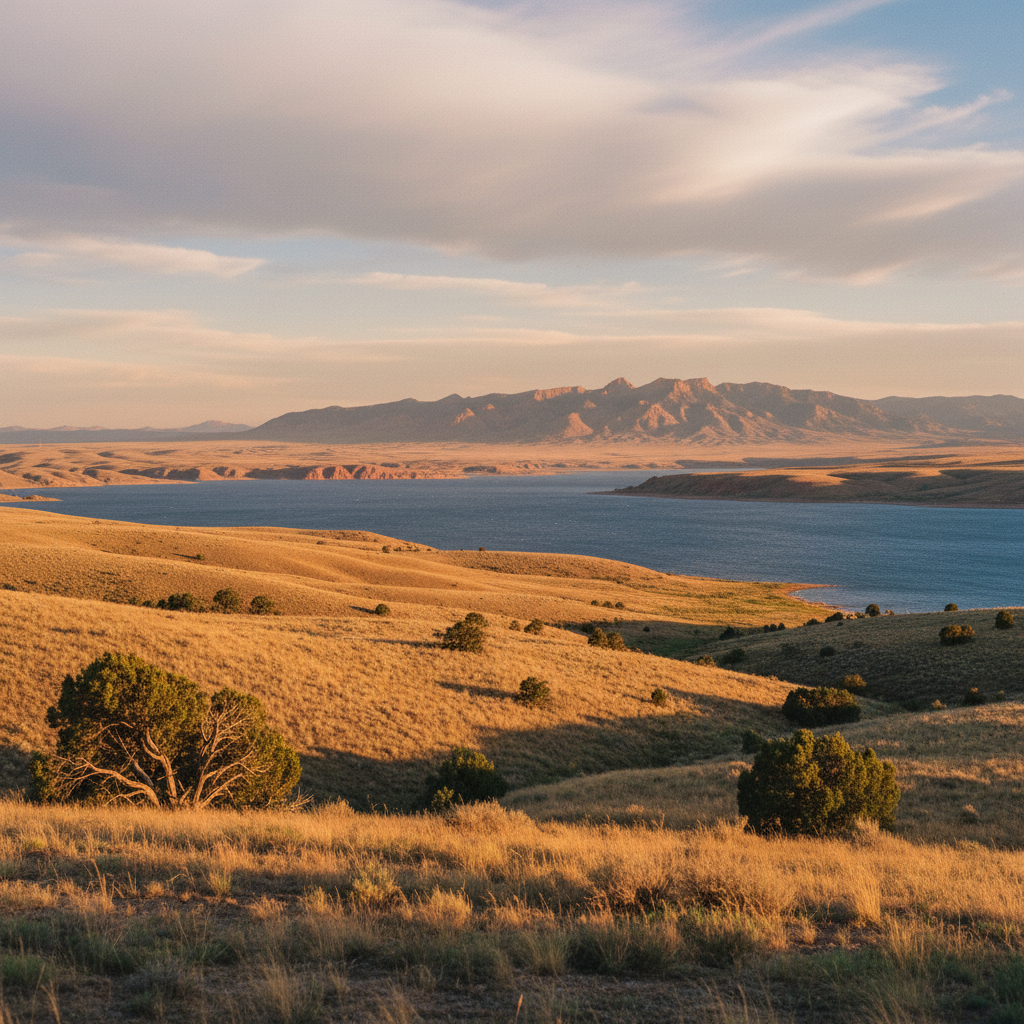
A raw high-desert playground in Wyoming featuring a massive reservoir, rugged mountains, and shifting sand dunes.
Seminoe State Park occupies a stark, wind-scoured corner of Carbon County, Wyoming, where the high desert plains collide with the rugged, pine-dotted Seminoe Mountains. Established in 1965 through a cooperative agreement between the U.S. Bureau of Reclamation and the state of Wyoming, the park surrounds the massive Seminoe Reservoir, which covers 19,000 acres of water and boasts 180 miles of shoreline. The name Seminoe itself carries a layer of frontier history: though often mistaken for a reference to the Seminole Tribe, it is actually an Americanized spelling of Cimineau, honoring Basil Cimineau Lajeunesse, a French trapper who worked these valleys in the 1800s. Long before the reservoir was filled, the surrounding mountains drew prospectors during a late-1800s gold rush, leaving behind a landscape rich with historical echoes and exposed geological formations.
The lifeblood of the park is the Seminoe Dam, a 295-foot-tall concrete arch structure completed in 1939 as a key component of the Kendrick Project. This engineering feat tamed the wild waters of the North Platte River, pooling them into a deep, cold basin that has become one of Wyoming's premier cold-water fisheries. Anglers frequent the reservoir for its robust populations of walleye and rainbow and brown trout, while the legendary Miracle Mile section of the North Platte sits just to the north, offering world-class fly fishing. Above the high-water mark, the park's terrestrial environment is equally compelling. Sagebrush hillsides provide habitat for pronghorn, mule deer, and bighorn sheep, while golden and bald eagles ride the thermal drafts overhead. Along the southern reaches of the reservoir, the Seminoe Sand Dunes, an extension of the vast Killpecker Sand Dune complex, present a shifting playground of fine sand that contrasts sharply with the deep blue of the water.
Overnight visitors can choose from several distinct camping areas spaced along the reservoir's edge, including the gravel sites at North Red Hills, the multi-tiered South Red Hills, and the shoreline-adjacent Sunshine Beach. These campgrounds offer primitive and semi-improved sites where the constant high-desert wind serves as a reminder of the region's raw exposure. Days here are spent launching boats from the park's ramps to explore secluded coves, searching the shoreline for fragments of petrified wood, or off-roading on the designated sand dunes. As night falls, the complete absence of nearby municipal light pollution reveals a brilliant canopy of stars, casting a pale glow over the quiet waters. It is a place of immense solitude, defined by the elements and the vastness of the Wyoming sky.
The high-desert wind at Seminoe can be relentless, so secure your tents and boat covers thoroughly. For the calmest water and the best fishing, launch your boat at dawn, and keep an eye out for bighorn sheep along the rocky shorelines of the canyon.