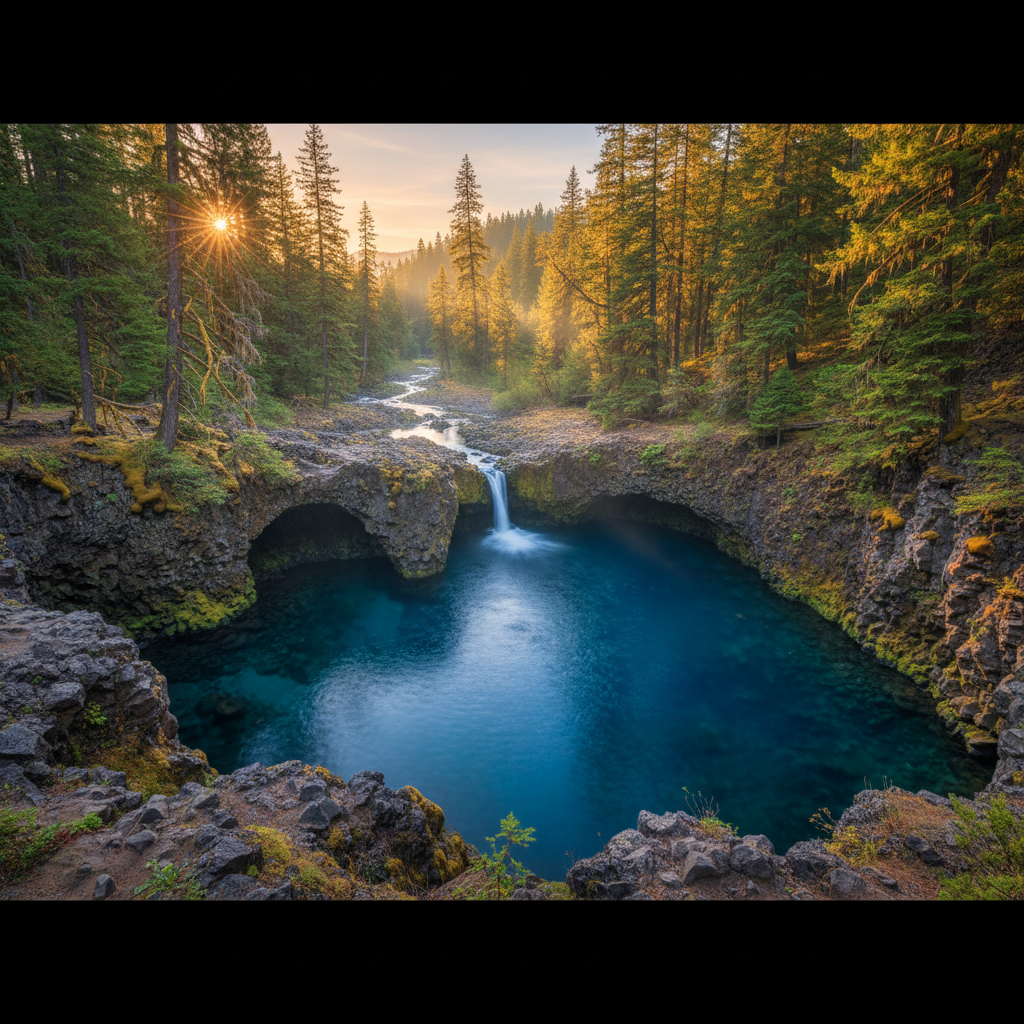
The ancient volcanic basin where the McKenzie River resurfaces from subterranean lava tubes as a brilliant blue pool.
Tamolitch Blue Pool, situated in the Willamette National Forest along the McKenzie River, is a striking geological phenomenon where a river rises directly from the earth. In 1933, William Parke, a recreational engineer for the forest, named this deep volcanic basin using the Chinook Jargon word for "bucket". The name is fitting: the pool is a sheer-walled, basalt-rimmed amphitheater holding some of the clearest, coldest water in the Pacific Northwest. For most of the year, the towering cliffs above the pool remain dry, but the basin itself is constantly replenished from below, glowing with an intense, saturated turquoise hue that seems to generate its own light. This surreal color is a direct result of extreme water purity and depth, which filters out longer red wavelengths of light and reflects only the brilliant blues.
The origins of this pool date back roughly 1,600 years, when a massive basaltic lava flow erupted from nearby Belknap Crater. The molten rock poured into the canyon, burying a three-mile stretch of the McKenzie River between Carmen Reservoir and the historic Tamolitch Falls. Today, the river still plunges underground at Carmen Reservoir, flowing through the porous, subterranean lava tubes that act as a massive, multi-mile natural filtration system. When the water finally resurfaces at the base of the dry falls, it has been stripped of all suspended sediment. The pool is surprisingly deep, plunging more than 30 feet, though the absolute clarity of the water creates an optical illusion that makes the rocky bottom look only a few feet away. Because this water travels through underground basalt, it remains at a constant, bone-chilling temperature of 37 to 38 degrees Fahrenheit year-round, too cold to support significant aquatic life or microorganisms.
The landscape surrounding the pool underwent a dramatic shift in the 1960s with the construction of the Carmen-Smith Hydroelectric Project. The project diverted the surface waters of the upper McKenzie River for power generation, permanently drying up the active waterfall that once roared over the cliff edge into the basin. Today, Tamolitch Falls only flows during periods of exceptional winter runoff or when upstream dams release excess water, transforming the dry basalt cliff into a temporary cascade. To reach this remarkable site, hikers typically follow the McKenzie River Trail #3507, embarking on a moderate two-mile hike from the trailhead near Trail Bridge Reservoir. The trail winds through a classic Cascade forest of towering Douglas firs, western hemlocks, and damp carpets of sword fern, gradually transitioning into a rugged, uneven landscape of ancient, moss-covered lava rock before opening up to the dramatic overlook of the pool itself.
Do not attempt to jump or dive into the pool from the surrounding cliffs. The water is a bone-chilling 37 degrees Fahrenheit year-round, which can cause immediate cold-shock response and hypothermia, and the extreme clarity of the water makes the rocky bottom appear deceptively shallow. To avoid the heavy crowds that pack the small trailhead parking lot, plan your hike for early morning on a weekday.