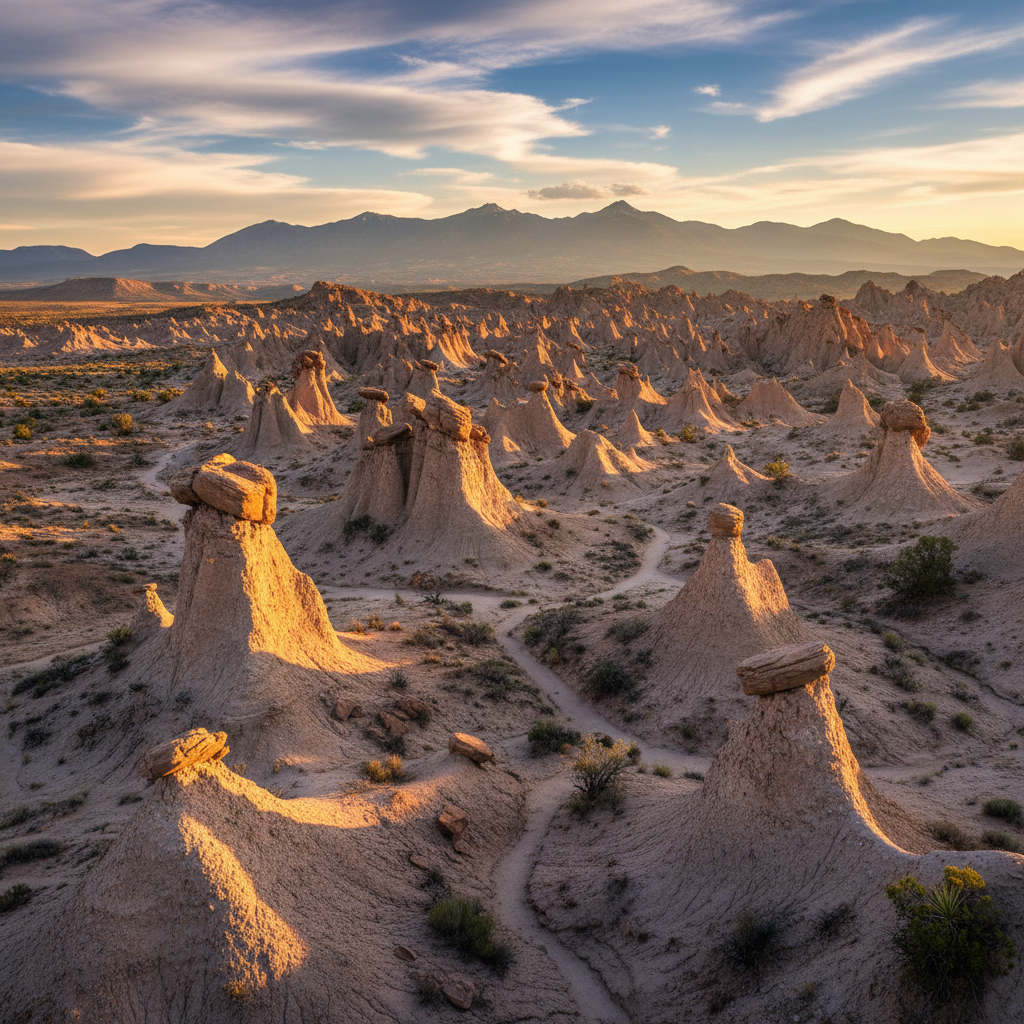
Towering, cone-shaped volcanic hoodoos and narrow slot canyons on the ancestral lands of the Pueblo de Cochiti.
Kasha-Katuwe Tent Rocks National Monument is a surreal, high-desert landscape of towering, cone-shaped hoodoos sculpted from volcanic ash, pumice, and tuff. Located on the Pajarito Plateau about 40 miles southwest of Santa Fe, the monument sits within the ancestral homeland of the Pueblo de Cochiti. In the Keresan language of the Pueblo, Kasha-Katuwe translates to "white cliffs," a fitting description for the pale, bone-white formations that rise up to 90 feet into the New Mexico sky. These striking structures are the result of explosive volcanic eruptions in the Jemez Mountains volcanic field six to seven million years ago. Pyroclastic flows deposited thick layers of Peralta Tuff, which wind and water have spent millennia sculpting. The iconic "tent" shapes persist because harder, weather-resistant boulders remain perched on top of the softer, chalky ash beneath them, acting as protective caprocks that shield the spires from rapid erosion.
Exploring the monument on foot reveals a dramatic transition of environments, starting from open piñon-juniper woodlands and heading deep into the rock. The premier route is the Canyon Trail, a 1.5-mile one-way trek that leads hikers directly into a narrow, water-carved slot canyon. Here, the towering tuff walls curve and contour, narrowing so closely in places that hikers must turn sideways to squeeze through. Beyond the slot canyon, the trail transitions into a steep, 630-foot climb up to the flat mesa top. This final ascent requires a scramble over loose gravel, but it culminates in a panoramic vantage point overlooking the entire valley of cones, with the Rio Grande Valley and the distant peaks of the Sangre de Cristo, Jemez, and Sandia mountains framing the horizon. For those seeking a gentler journey, the 1.2-mile Cave Loop Trail winds easily around the base of the cliffs, passing a small, human-carved alcove known as a cavate, while the flat, paved Veterans Memorial Trail offers a wheelchair-accessible one-mile loop.
Following a four-year closure to address over-visitation and protect cultural resources, the monument reopened in late 2024 under a landmark co-stewardship agreement between the Bureau of Land Management and the Pueblo de Cochiti. The Pueblo now manages day-to-day operations, ensuring the protection of this sacred cultural landscape while welcoming a limited number of respectful visitors. Entry is strictly regulated and requires two separate advance permits: a Bureau of Land Management reservation booked through Recreation.gov, and a Cochiti Pueblo Tribal Access Pass purchased online. The monument operates on a day-use schedule from Thursday through Monday, closing entirely on Tuesdays, Wednesdays, and during a seasonal winter closure from mid-December through January. Visitors check in at the Cochiti Visitor Center before being guided to the trailhead, a system designed to preserve the peace of the surrounding Pueblo lands and maintain a quiet, uncrowded experience on the trails.
You must secure two separate advance permits to visit: a BLM reservation via Recreation.gov and a Cochiti Pueblo Tribal Access Pass online. The monument is closed Tuesdays, Wednesdays, and seasonally from December 15 to January 31, as well as on specific Pueblo cultural days, so verify the schedule before booking.