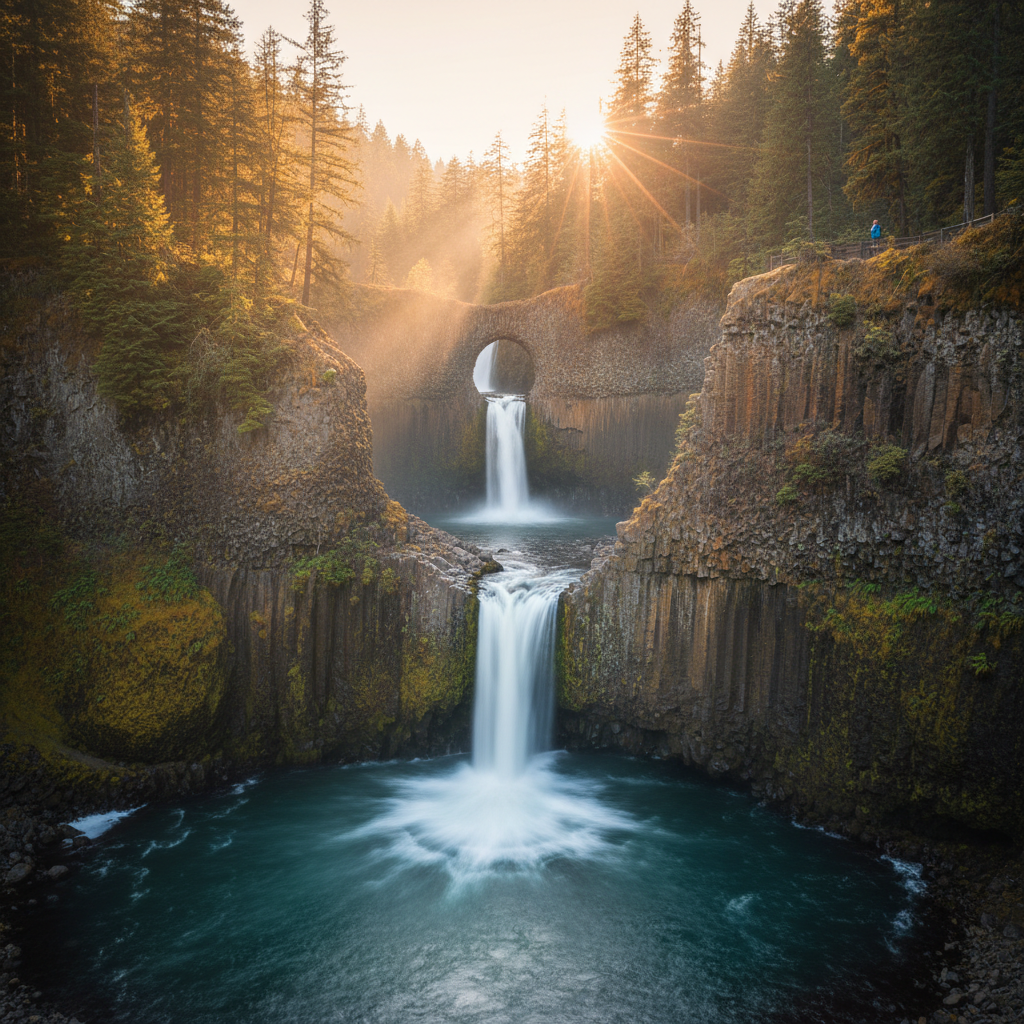
A two-tiered waterfall in the Umpqua National Forest, celebrated for its dramatic plunge through a canyon of hexagonal basalt columns.
Toketee Falls, a two-tiered cascade in Oregon's Umpqua National Forest, plunges a total of 113 feet over a sheer wall of columnar basalt. The name derives from the Chinook Jargon word for "pretty" or "graceful," a title officially designated in 1916 by the United States Board on Geographic Names over alternate proposals like Ireland Falls. The upper tier drops 40 feet into a basalt alcove, pausing briefly before the lower tier makes its dramatic 83-foot plunge into a deep pool. Unlike many other waterfalls in the Cascade Range that dwindle to a trickle by late summer, this flow remains robust and consistent year-round. This reliable volume is maintained by a PacifiCorp dam built upstream in 1949, which forms Toketee Lake and regulates the flow of the North Umpqua River.
The geologic architecture framing the falls is a striking display of columnar basalt, formed approximately 750,000 years ago when slow-cooling lava flows from the High Cascades contracted into tight, hexagonal pillars. Over millennia, the relentless force of the North Umpqua River carved through the softer surrounding rock, exposing this natural amphitheater of dark, geometric columns. At the trailhead, visitors encounter an unexpected monument to human engineering: a massive, 12-foot-diameter redwood-stave pipeline constructed in 1949. This historic wooden conduit, which still carries water to a downstream powerhouse to generate electricity, often sprouts small, pressurized leaks that spray mist into the surrounding forest of old-growth Douglas fir, Western red cedar, and Pacific yew.
The journey to the falls follows a 0.8-mile round-trip trail that winds along the edge of the river gorge. While short, the path is an active climb, incorporating nearly 200 wooden steps and boardwalks that traverse the steep terrain. The air remains cool and damp under the dense canopy of bigleaf maple and moss-draped hemlock. The trail culminates at a sturdy wooden viewing platform suspended over the canyon, offering a direct view of the double cascade. From this vantage, the contrast between the white water, the wet basalt columns, and the deep pool is fully visible. The constant, deep rumble of the river echoing off the canyon walls provides a powerful sensory reminder of the geological forces still shaping this corner of the Pacific Northwest.
Because upstream damming regulates the flow, the waterfall remains impressive year-round, making late summer and fall excellent times to visit with fewer crowds. Avoid climbing past the viewing platform's safety railings, as the steep canyon descent is highly unstable and has caused numerous serious injuries.