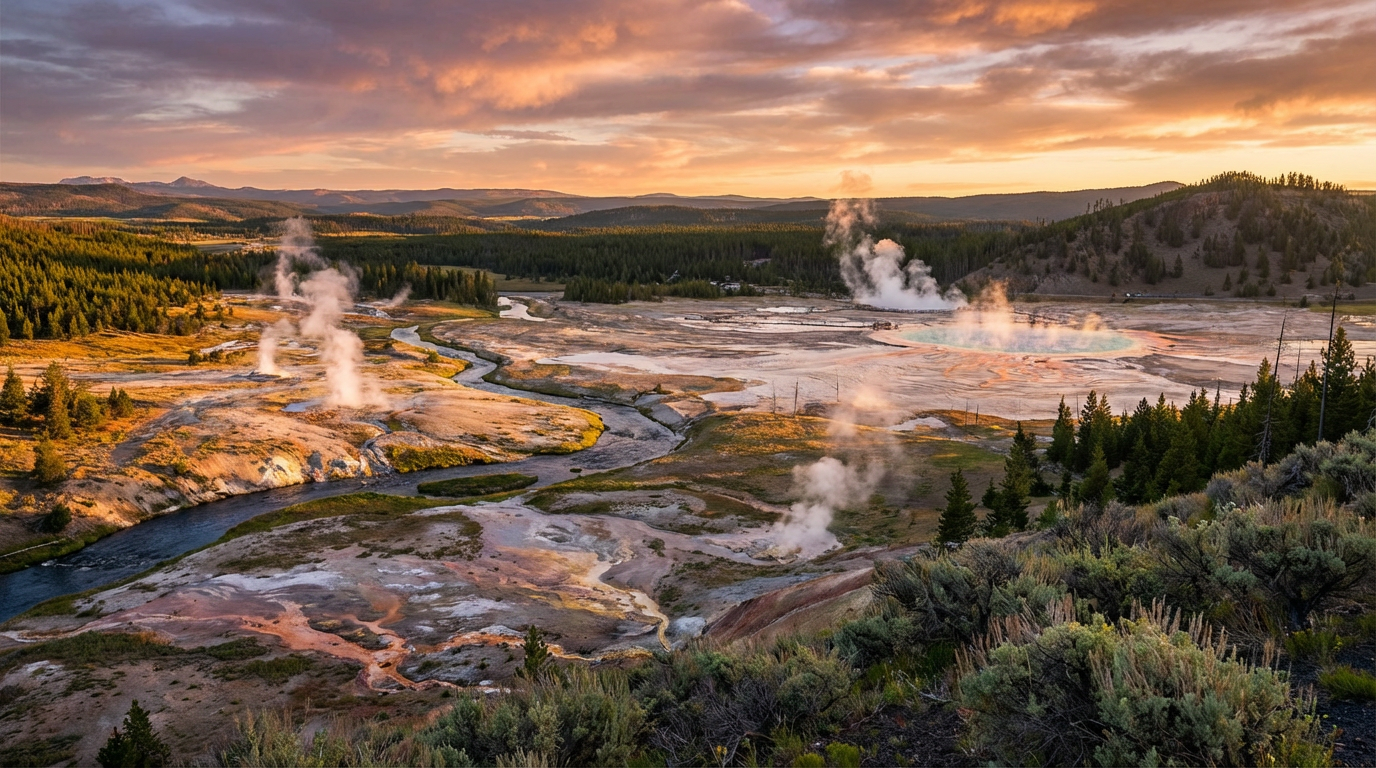
Yellowstone — the world's first national park — sits atop one of Earth's largest active volcanic systems. Its 2.2 million acres span a high-elevation plateau averaging 8,000 feet, holding more than half of the world's active geysers, the largest high-elevation lake in North America, a 1,000-foot-deep river canyon, and the most diverse large-mammal ecosystem in the lower 48 states. The park's Grand Loop Road links its major thermal basins, waterfalls, and wildlife corridors in a figure-eight that defines most visitor itineraries.
Late June through mid-September when all roads and facilities are open. July–August is peak season with the best weather but heaviest crowds. September offers thinner crowds, fall color, and elk rut. Late May and early June provide good wildlife viewing as roads open incrementally.
3–5 days is recommended. The Grand Loop Road alone is 142 miles and takes 2 days to drive without rushing. Budget a half-day each for Old Faithful area, Grand Canyon of the Yellowstone, Lamar Valley wildlife watching, and Mammoth Hot Springs. Add days for hiking.
Yes, but access is very different. Only the Mammoth–Cooke City road stays open to cars. Old Faithful and most of the interior are accessible only by guided snowcoach or snowmobile tours from West Yellowstone or Mammoth. Winter offers surreal thermal landscapes and excellent wolf watching.
Lamar Valley (wolves, bison, bears — best at dawn), Hayden Valley (bison, grizzly bears, waterfowl), and the Madison River area (elk rut in fall). Mammoth Hot Springs often has elk on the lawns. Bring binoculars and a spotting scope.
No timed-entry system currently. However, in-park lodging (Old Faithful Inn, Lake Yellowstone Hotel) books 12+ months in advance. Backcountry camping permits can be reserved starting January 1. Campgrounds (Bridge Bay, Madison) have reservation and first-come options.