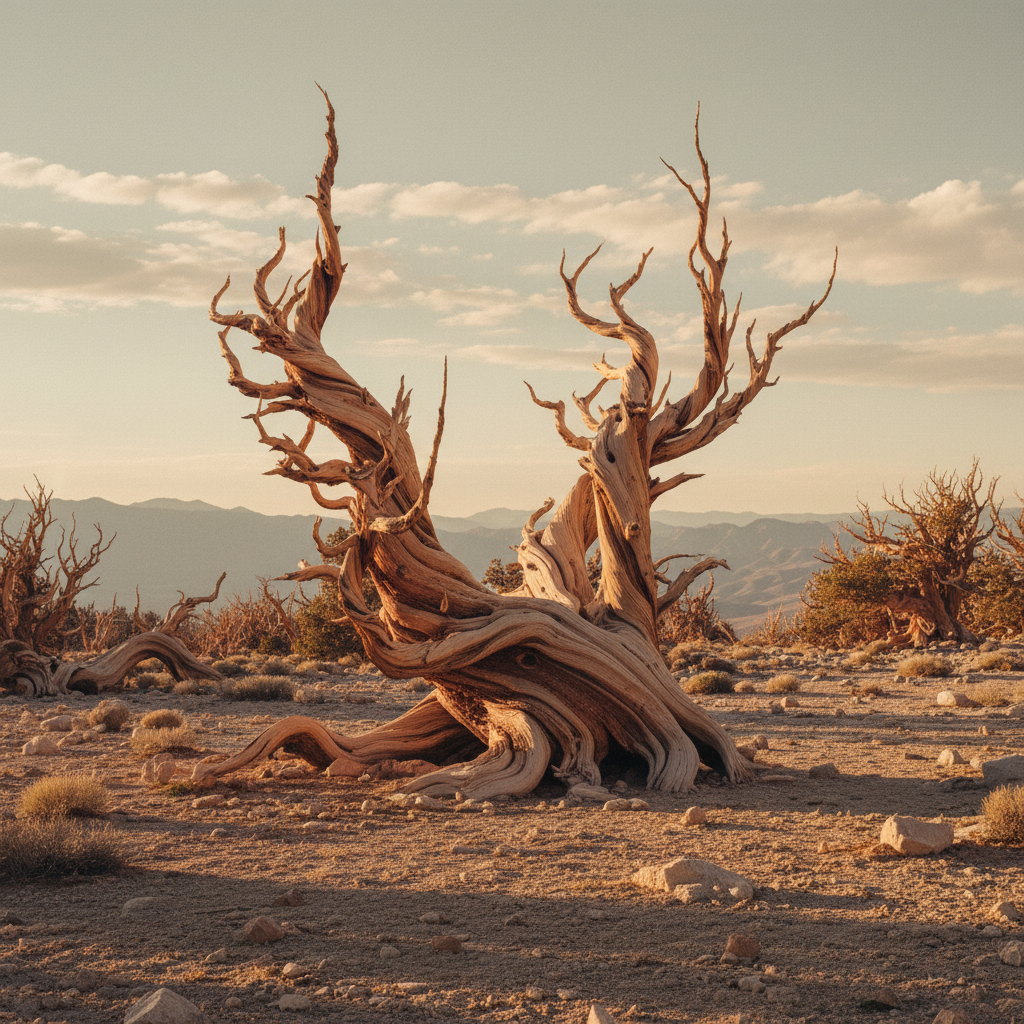
Walk among gnarled, ancient sentinels reaching for the sky, their exposed roots gripping the thin, rocky soil. The air here, at over 10,000 feet, carries the scent of pine and silence.
Climbing White Mountain Road from the Owens Valley floor, the air cools rapidly as desert scrub gives way to pinyon pine and eventually to the stark heights of the White Mountains. At over 10,000 feet, the sky turns a deep indigo and the wind carries a sharp, cold clarity. Here, growing from barren, chalky dolomite soil, are the Great Basin bristlecone pines. They are living ruins: massive, gnarled trunks of polished amber and gray wood, strip-barked by centuries of ice and sand, with only a narrow ribbon of living bark supporting a few green needles. Standing in Schulman Grove, the silence is absolute, broken only by the dry hiss of the wind. It is a landscape of survival stripped of all excess, where these ancient beings have stood since before the rise of Rome.
This high-altitude sanctuary is defined by its geology. The white dolomite soil is highly alkaline, nutrient-poor, and retains little moisture, keeping faster-growing species from encroaching and allowing the bristlecones to thrive without competition. The trees grow so slowly that their wood is incredibly dense, resisting rot, fungi, and insects for millennia. The Methuselah Tree, hidden within the grove to protect it from harm, is estimated to be over 4,800 years old. Long before scientist Edmund Schulman began studying these rings to reconstruct climate history, the Owens Valley Paiute (the Numu) traveled these mountains, living in harmony with the high desert. The trees are a living archive, their rings holding the chemical memory of volcanic eruptions and epic droughts.
To walk the Discovery Trail or the longer Methuselah Loop is to step outside of human time. The trail crunches underfoot, a mix of dolomite gravel and ancient cones. You find yourself stopping before individual trees, studying the intricate grain of wood polished by windblown ice crystals for three millennia. In the late afternoon, the low sun catches the exposed resin, making the trunks glow with a warm, golden light that contrasts with the jagged Sierra Nevada peaks rising across the valley. As twilight falls, the temperature drops and the stars emerge with incredible brilliance. It is a place that invites quiet contemplation, urging you to slow your pace to match the glacial rhythm of the forest.
Acclimatize in Bishop or Lone Pine first; at 10,000 feet, even short walks can leave you winded. Bring twice the water you think you need and a heavy windbreaker, as temperatures plunge when the sun dips. If your vehicle has decent clearance, brave the rough, unpaved twelve-mile road past Schulman Grove to reach the stark, surreal Patriarch Grove.