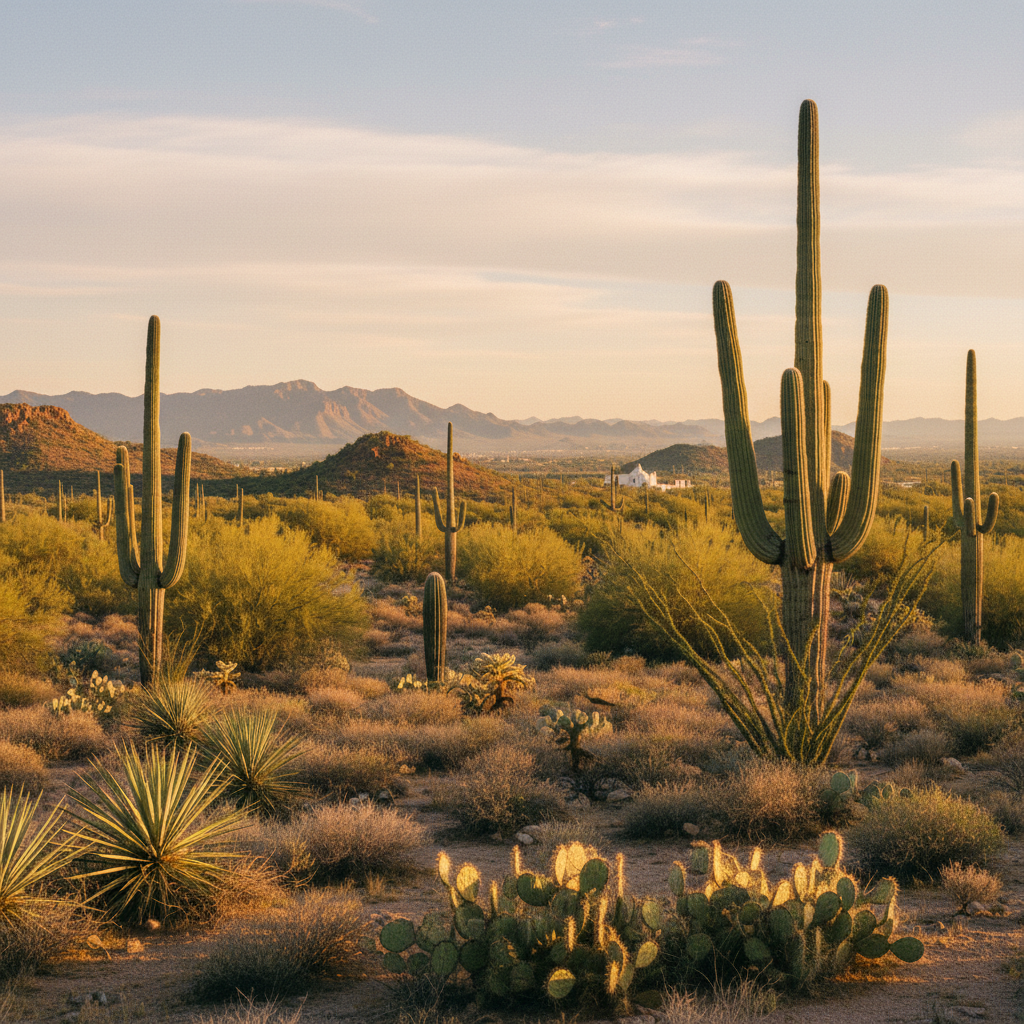
Follow winding trails through a living desert where hummingbirds dart between giant saguaros and javelinas root in the dust. This 98-acre outdoor museum and botanical garden brings the Sonoran Desert's complex ecology into sharp focus.
The Arizona-Sonora Desert Museum, founded in 1952 by conservationists William H. Carr and Arthur Pack, stands on the ancestral homelands of the Tohono O'odham in the Tucson Mountains. Rather than a traditional museum or standard zoo, this 98-acre institution was designed to give the Sonoran Desert a voice by displaying native plants, animals, and geology together in integrated, ecological exhibits. The public-facing 21 acres showcase a living collection of more than 230 animal species and 1,200 plant taxa, illustrating the rich biodiversity of a region where the United States and Mexico meet. Here, the giant saguaro, known traditionally to the Tohono O'odham as ha:sañ and respected as a relative, rises alongside ironwood and paloverde trees, framing a landscape that is both harsh and incredibly fertile.
Two miles of walking paths wind through distinct habitats, guiding visitors from the arid uplands to lush riparian corridors. Along the Desert Loop Trail, low-profile fences keep the desert feeling vast and open, allowing views of javelinas rooting in the dust and coyotes trotting through the brush. In Cat Canyon, steep rocky walls mimic the natural grottoes where bobcats, gray foxes, and ocelots seek shade from the desert sun. Deep beneath the surface, the Earth Sciences Center houses a replica limestone cave featuring cool chambers, damp arches, and a 75-foot tunnel that displays a world-class mineral collection. Nearby, the Life Underground exhibit reveals the nocturnal habits of kit foxes, kangaroo rats, and burrowing owls, showing how these resilient creatures escape the intense midday heat.
The museum's avian programs offer some of the most intimate wildlife encounters in the Southwest. In the walk-through hummingbird aviary, multiple species of these iridescent birds dart and hover mere inches away, their wings creating a constant, low hum. From mid-October through mid-April, the Raptor Free Flight demonstration takes place in the open desert, where native birds of prey fly completely untethered. Visitors watch from a central viewing area or elevated perches as great horned owls, red-tailed hawks, and highly social Harris's hawks sweep low over the crowd, their feathers occasionally brushing past. This dynamic presentation, along with daily docent-led interpretations and live animal presentations in the Warden Oasis Theater, underscores the museum's enduring commitment to conservation, education, and regional preservation.
Arrive right at opening to catch the desert at its coolest and see the animals at their most active. If visiting between mid-October and mid-April, plan your morning around the spectacular Raptor Free Flight demonstration.