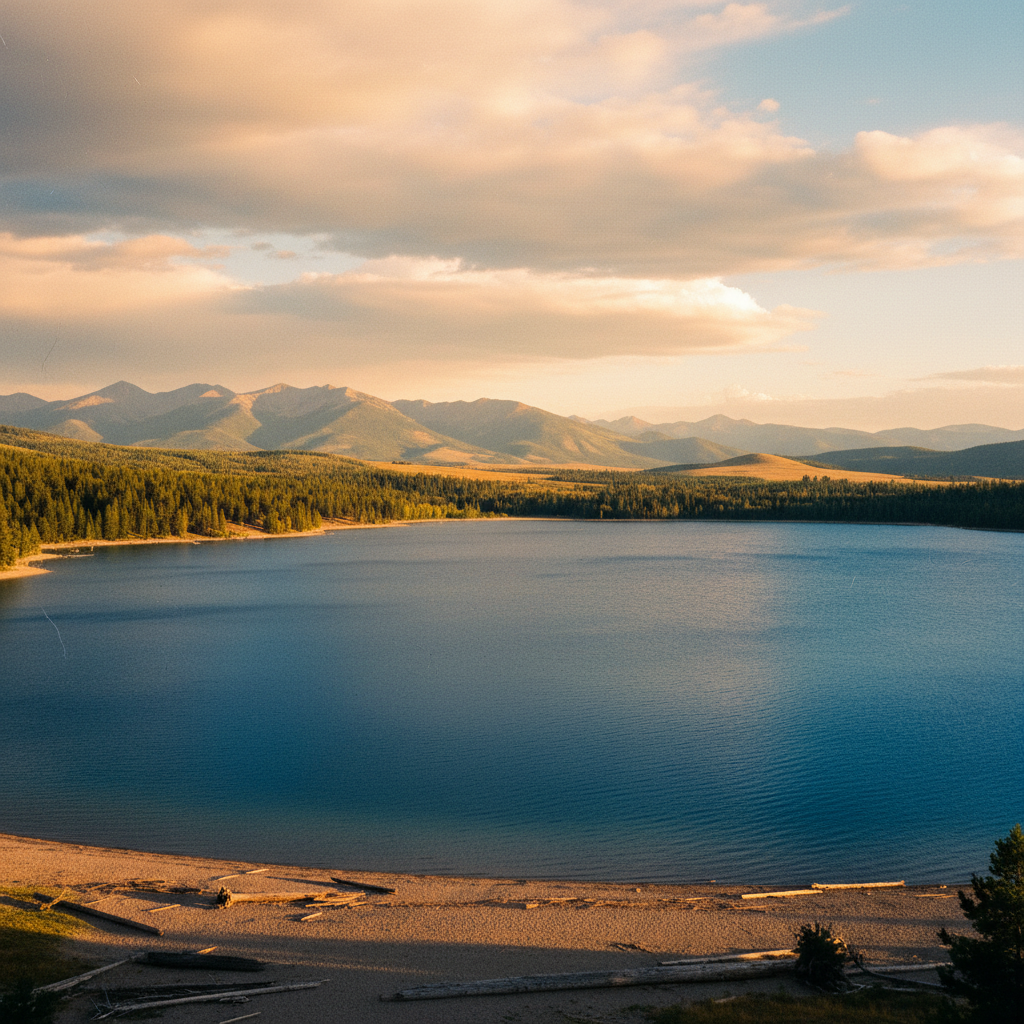
A brilliant turquoise playground on the Idaho shore of an ancient, limestone-rich lake, featuring expansive sandy beaches.
Bear Lake State Park occupies the northern and eastern shores of Bear Lake, a massive, 109-square-mile body of water straddling the Idaho-Utah border. Located in Bear Lake County near the quiet town of St. Charles, this 966-acre park is celebrated for water that radiates an intense, tropical-looking turquoise hue, earning it the nickname "Caribbean of the Rockies". This distinct coloration is not an optical illusion but a geological phenomenon caused by microscopic particles of calcium carbonate, or limestone dust, suspended in the water column. When sunlight hits these floating minerals, it scatters light in the blue-green spectrum, creating a luminous, milky-blue surface that contrasts sharply with the arid, sagebrush-covered slopes of the surrounding Cache mountain range.
The lake itself is an ancient tectonic body of water, formed more than 250,000 years ago when a graben, a block of the Earth's crust, dropped between parallel fault lines. This extreme age and geographic isolation allowed a unique aquatic ecosystem to develop, resulting in four endemic fish species found nowhere else on Earth: the Bonneville cisco, Bonneville whitefish, Bear Lake whitefish, and Bear Lake sculpin. For thousands of years, the Shoshone and Bannock peoples utilized these abundant waters for seasonal fishing and hunting. In 1819, explorer Donald McKenzie of the North West Fur Company named the water Black Bear Lake, which was later shortened. By the late 19th century, early settlers like Joseph C. Rich, who famously popularized the legend of the serpentine Bear Lake Monster in 1868, had developed hot spring pools near the northern shoreline, paving the way for the area's transition into a popular recreational retreat.
Today, the park is split into two primary areas managed by the Idaho Department of Parks and Recreation. The North Beach Unit, leased from PacifiCorp since 1963, features an expansive, one-mile-long sandy shoreline with an exceptionally gradual, shallow slope that is ideal for wading, swimming, and launching motorized watercraft. To the east, just north of the state line, lies the quieter East Beach Unit, which was acquired from the Bureau of Land Management in 1969. This section houses the Mountain Fawn Campground, offering serviced campsites, group facilities for up to 50 people, and a more tranquil stretch of shoreline. Whether launching a kayak into the cool waters or setting up camp under the stars, visitors find a spacious, relaxed alternative to the highly developed marinas on the southern, Utah side of the lake.
To guarantee entry to the incredibly popular North Beach Unit during peak summer weekends, reserve your vehicle parking permit online well in advance. For a quieter experience, head to the East Beach Unit's Mountain Fawn Campground, or visit in late January to witness the unique winter spectacle of the Bonneville cisco run.