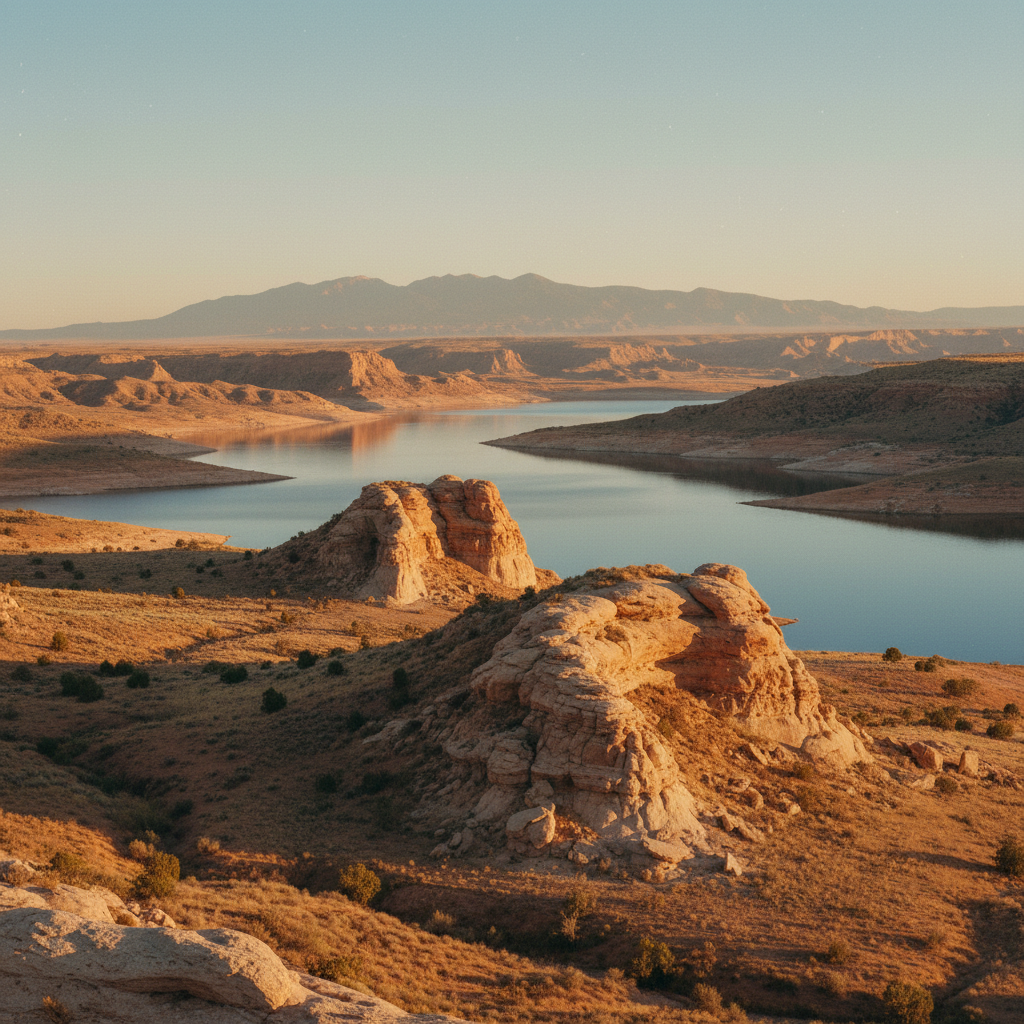
A vast high-desert state park in central Wyoming centered around a massive reservoir, featuring dramatic canyon geology, diverse fishing, and 13 lakeside campgrounds.
Boysen State Park spans over 35,000 acres of water and high-desert shoreline at the southern edge of the Owl Creek Mountains, where the Wind River emerges from its dramatic canyon. The park's central feature is the 19,560-acre Boysen Reservoir, a massive body of deep blue water that contrasts sharply with the arid, ochre-colored badlands of central Wyoming. This landscape, bordered to the west by the Wind River Indian Reservation, carries deep cultural and historical significance. The reservoir and park are named after Asmus Boysen, a Danish immigrant who built the area's first masonry dam in 1908 on land leased from the Eastern Shoshone and Northern Arapaho tribes. While high water eventually claimed much of Boysen’s original structure, remnants of his early engineering feat can still be spotted near the modern railroad tunnels by the Lower Wind River Campground.
The modern incarnation of the park took shape after the Bureau of Reclamation completed the current 220-foot-tall earth-fill dam in 1951, leading to the formal establishment of the state park in 1956. Today, the park manages 13 distinct campgrounds distributed along the reservoir’s 76 miles of shoreline. At the northern end, near the park headquarters and the marina, Brannon and Tamarask campgrounds provide immediate access to boat launches, shaded picnic shelters, and a sandy swim beach. On the east side, Tough Creek Campground occupies a narrow peninsula, offering water views from nearly every campsite. For those seeking a quieter experience, western loops like Sand Mesa, Cottonwood Bay, and Wilson Bay offer dispersed, primitive camping where the scent of sagebrush dominates the air and the night skies remain exceptionally dark.
Recreation at Boysen revolves around its diverse fishery and water sports. Anglers from across the region visit the reservoir to target walleye, sauger, yellow perch, crappie, and several species of trout, including rainbow and brown. Below the dam, the cold waters of the Wind River continue to flow northward, creating a productive tailwater fishery. On land, the park's geology provides a dramatic backdrop for exploration. The tilted rock strata of the nearby Wind River Canyon expose billions of years of geological history, with ancient Precambrian granite and colorful Paleozoic sedimentary layers rising steeply above the water. Visitors exploring the park's rocky shorelines and upland trails frequently spot Rocky Mountain bighorn sheep grazing on the steep canyon walls, while the wetlands on the southern end of the reservoir attract migratory waterfowl, including sandhill cranes and white pelicans.
To secure the best lakeside views, reserve a site at Tough Creek Campground, which sits on a narrow peninsula jutting into the reservoir, or opt for the shaded, tree-lined sites at the Upper and Lower Wind River campgrounds near the canyon mouth.