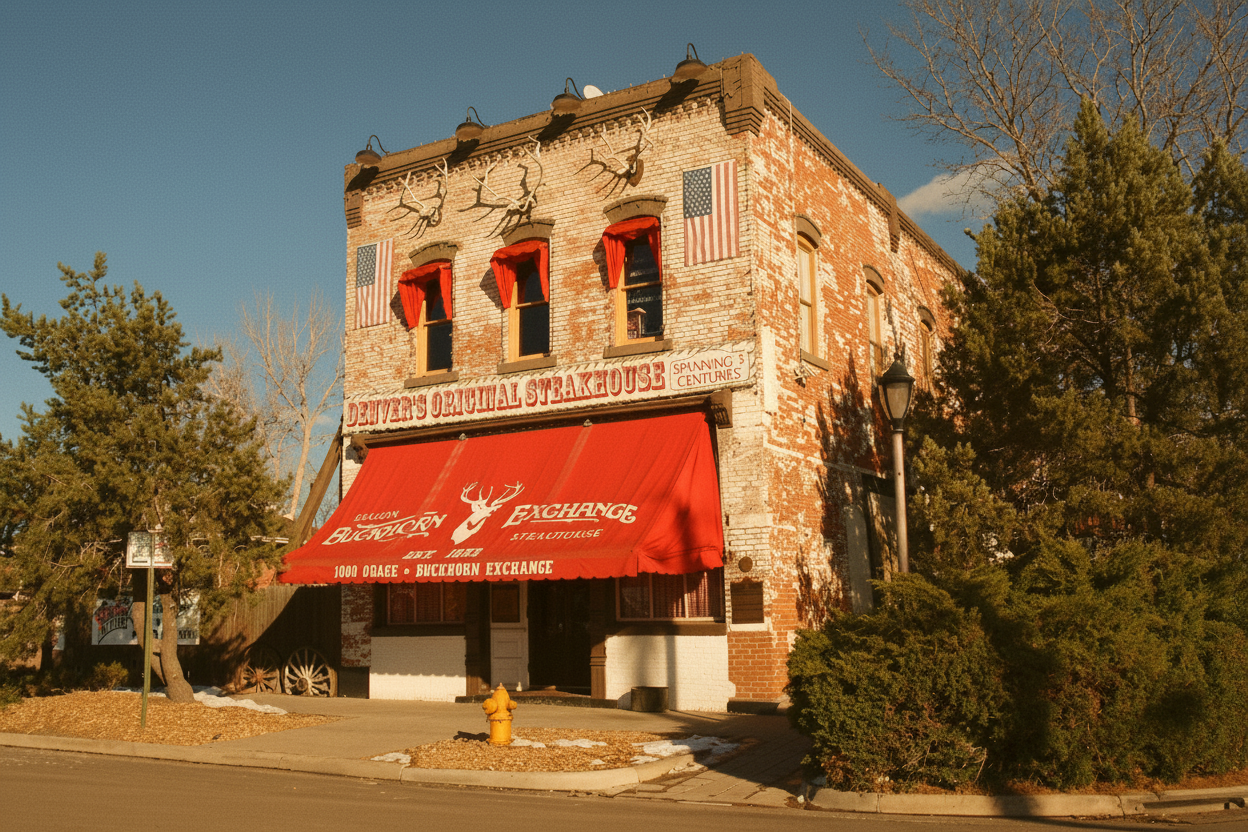
Denver's oldest restaurant, opened in 1893. Home to Colorado's first liquor license, over 570 taxidermy mounts, and a legendary wild game menu.
The Buckhorn Exchange opened its doors at 1000 Osage Street in November 1893, founded by Henry H. "Shorty Scout" Zietz. Zietz, who earned his nickname from Chief Sitting Bull while riding as a scout with William F. "Buffalo Bill" Cody, designed the saloon to serve the cattlemen, miners, and railroad workers of early Denver. Its location directly across from the Rio Grande Railroad yards defined its early identity: every Friday, workers flocked across the street to exchange their paychecks for gold and silver. Zietz offered a free lunch and beer to those who exchanged their pay, prompting the addition of "Exchange" to the restaurant's name. When Prohibition went into effect, Zietz kept the business alive as a grocery store, famously hollowing out loaves of bread to smuggle bottles of his own brand of whiskey to trusted regulars. Upon the repeal of Prohibition in 1933, the establishment secured Colorado's very first liquor license, and Colorado Liquor License No. 1 remains proudly on display today.
The interior of the Buckhorn Exchange functions as a living museum of Western history, housing an extraordinary collection of over 570 taxidermy mounts and historical artifacts. Suspended above the front window booth is a golden eagle with a six-foot wingspan, which legend says Chief Sitting Bull gave Zietz permission to hunt. Along the main staircase hangs a massive 2,000-pound bison, once a world-record mount, which Zietz shot near Genesee. The walls also display a Cape buffalo head shot by President Theodore Roosevelt, who stopped his Presidential Express train at the adjacent rail yards in 1905 and recruited Zietz as his personal hunting guide. Upstairs, the Victorian lounge is anchored by an ornate white-oak bar and back-bar with a diamond-dust mirror, crafted in Essen, Germany, in 1857 and transported to Denver by oxcart. Other notable historical artifacts on display include Sitting Bull's niece's wedding dress, a 125-piece antique gun collection featuring Colt .45s and Winchesters, and a military saber gifted to the Zietz family by Chief Red Cloud in 1938, which was reportedly taken from General George Custer at the Battle of the Little Bighorn.
The culinary offerings at the Buckhorn Exchange are as historic and robust as the surroundings, specializing in classic steaks and exotic wild game. Diners can begin their meal with adventurous appetizers like Rocky Mountain oysters served with a spicy horseradish dipping sauce, smoked buffalo sausage accompanied by red chile polenta, or fried alligator tail. The main menu features hearty cuts of beef, elk tenderloin, quail, and a signature slow-roasted buffalo prime rib. For larger groups, the kitchen prepares "The Big Steak," a massive cut of beef designed to feed two to five people. Over the decades, this hearty fare has attracted Hollywood stars, astronauts, and five United States presidents: Theodore Roosevelt, Franklin Roosevelt, Dwight Eisenhower, Jimmy Carter, and Ronald Reagan. Today, the Buckhorn Exchange remains Denver's oldest continuously operating restaurant, offering an authentic taste of Colorado's frontier legacy.
Order the Rocky Mountain oysters or the buffalo prime rib, then head upstairs to the Victorian lounge to see the 1857 German white-oak bar and the military saber gifted by Chief Red Cloud.
Coffee & Craft — Roadside fuel stops curated by Basecamp West. The best coffee shops, craft breweries, diners, and eateries worth the detour on your next Western road trip.