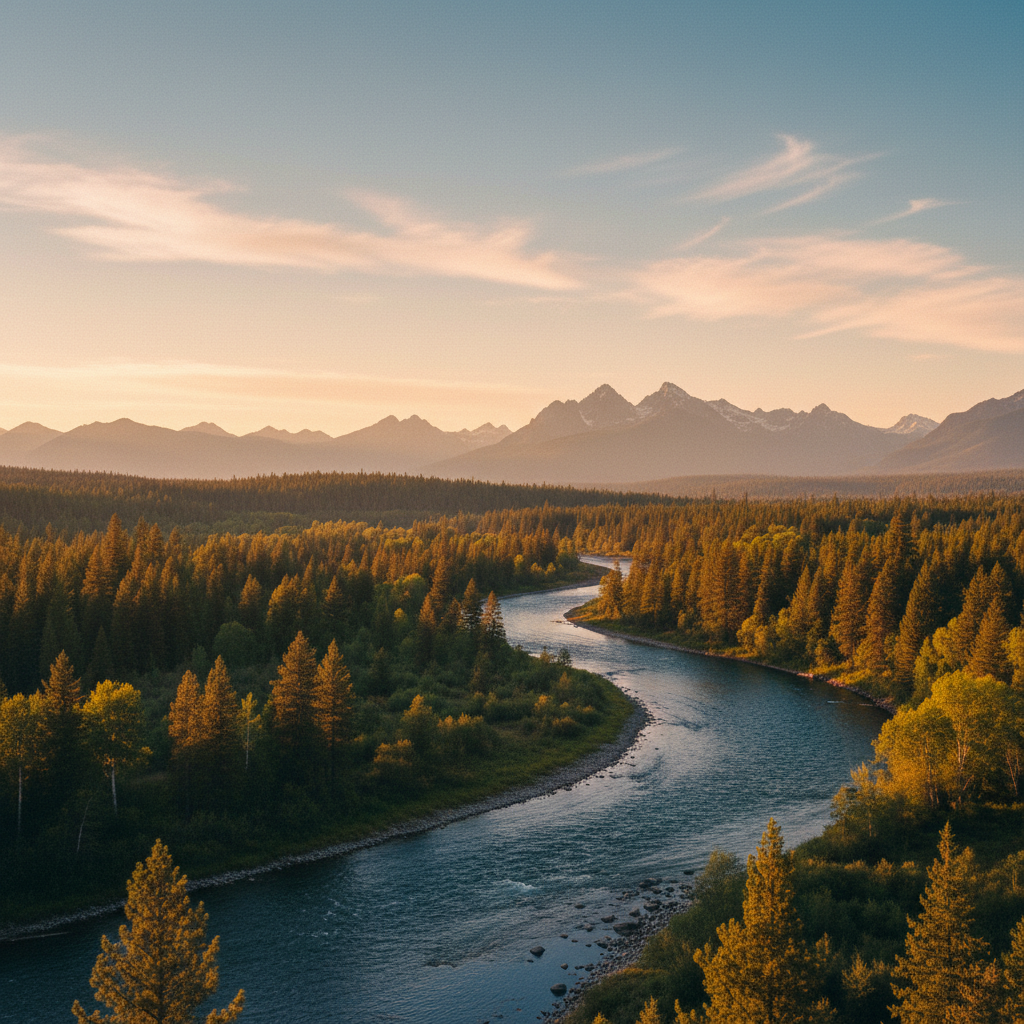
The Clearwater River, known to the Nez Perce as Kooskooskia (clear water), flows cold and clear, a living artery where wild salmon and B-run steelhead still run deep, drawing anglers and history buffs alike.
The Clearwater River begins its journey in the rugged Bitterroot Mountains of north-central Idaho, formed by the confluence of its Middle and South forks near the town of Kooskia. Known to the Nez Perce (Nimíipuu) people as Kooskooskia, meaning clear water, the river is the largest tributary of the Snake River by volume, draining a massive watershed of more than 9,600 square miles. Along its 74.8-mile main stem, the river carves a deep canyon through the basalt layers of the Columbia Plateau, running northwest past historic settlements like Kamiah, Greer, and Orofino before emptying into the Snake River at the Washington-Idaho border between Lewiston and Clarkston. The river remains a vital cultural artery for the Nez Perce, who have lived along its banks, fished its rapids, and gathered in its fertile valleys for thousands of years.
The historical significance of the Clearwater River is forever linked to the Lewis and Clark Expedition, which descended the river in the autumn of 1805. Exhausted, starving, and severely weakened after their grueling crossing of the Lolo Trail, the Corps of Discovery arrived at a site on the river's north bank just downstream from modern-day Orofino. Here, at what is now known as Canoe Camp, the expedition spent 11 days in late September and early October working alongside the Nez Perce. Using traditional Nez Perce methods of burning out the centers of massive ponderosa pine logs, the explorers constructed five dugout canoes. This cooperative effort, built on mutual trust, allowed the expedition to launch into the Clearwater on October 7, 1805, navigating downstream to the Snake and Columbia rivers, and ultimately reaching the Pacific Ocean.
Today, the Clearwater River is legendary among anglers, particularly for its runs of wild Chinook salmon and famously large B-run steelhead trout. Unlike the smaller A-run steelhead found in other Idaho rivers, the B-run fish spend two or three years in the ocean before returning to the Clearwater, often reaching weights of over 20 pounds. The fishery is heavily supported by conservation efforts, most notably at the Dworshak National Fish Hatchery located at the confluence of the North Fork Clearwater River near Ahsahka. Constructed to mitigate the loss of fish spawning habitat caused by the building of the massive, 717-foot-tall Dworshak Dam, the hatchery is one of the largest of its kind in the world. Visitors can explore the facility to understand the complex, hands-on science required to raise and release millions of steelhead and salmon smolts annually, ensuring these iconic species continue to migrate through the Clearwater's cold, pristine waters.
Swing by Canoe Camp near Orofino to stand where Lewis and Clark built their dugout canoes, then visit the nearby Dworshak National Fish Hatchery to see how millions of B-run steelhead are raised for release.