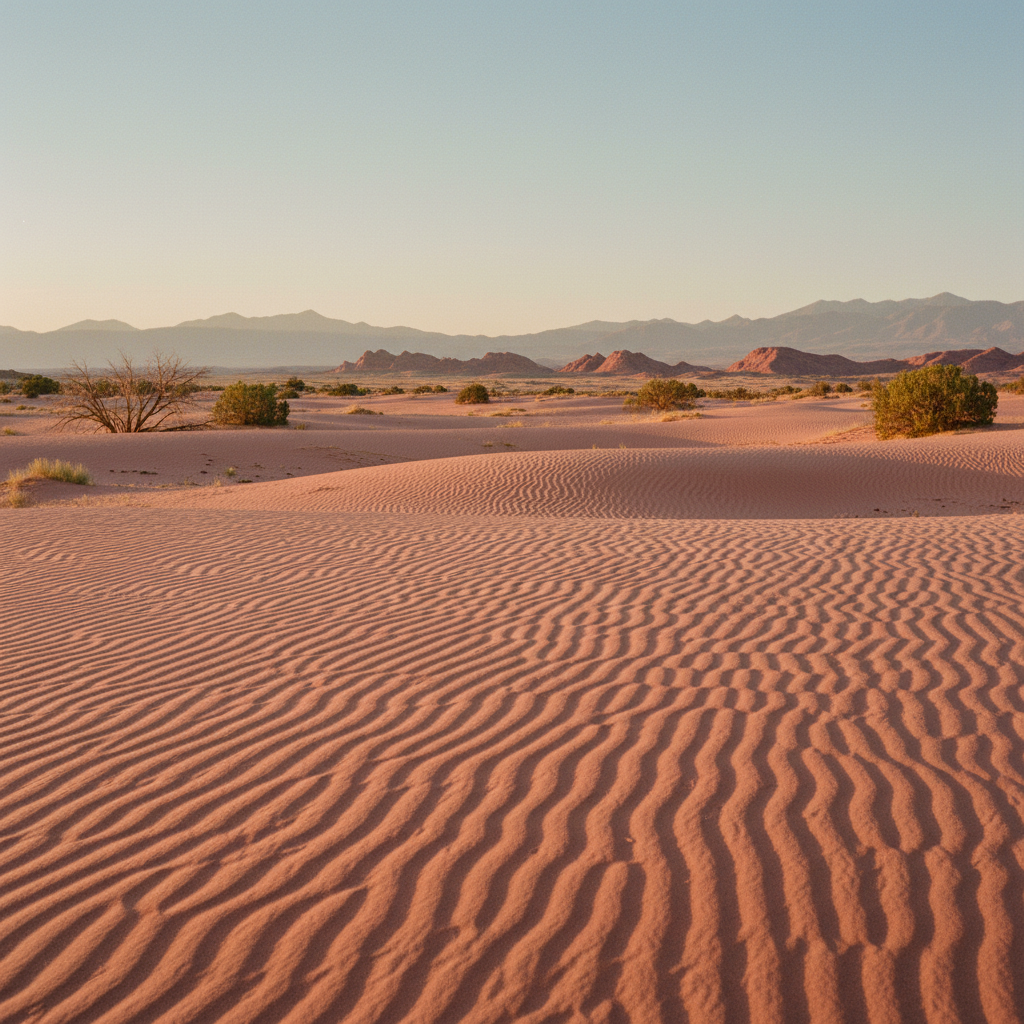
A 3,730-acre expanse of shifting, rose-colored sand dunes in southern Utah, sculpted by the Venturi effect and home to unique endemic wildlife.
Coral Pink Sand Dunes State Park covers 3,730 acres of shifting, rose-hued sand in Kane County, Utah, situated between Mount Carmel Junction and Kanab. Established in 1963, this high-desert park sits at an elevation of 6,000 feet, surrounded by ancient juniper, pinyon, and ponderosa pines. The namesake dunes, estimated to be between 10,000 and 15,000 years old, owe their distinct apricot and blush tones to the erosion of nearby Navajo Sandstone. This geologic phenomenon is driven by the Venturi effect: prevailing winds are funneled through a narrow gap between the Moquith and Moccasin mountains, accelerating to a velocity high enough to carry heavy sand grains before dropping them into this natural basin. The resulting dunes constantly shift, reshape, and ripple, reaching heights of up to 100 feet.
Beyond the striking scenery, the park protects a highly specialized and fragile ecosystem. A dedicated 265-acre conservation area is completely closed to motorized vehicles to safeguard endemic species that exist nowhere else on Earth. Chief among these is the Coral Pink Sand Dunes tiger beetle (Cicindela albissima), an insect that has adapted to match the precise coloration of the sand to evade predators. The park also serves as a critical refuge for Welsh's milkweed (Asclepias welshii), a federally threatened plant species that grows directly in the active sand dunes. Other native flora like the rough mulesear, Kanab yucca, and silvery sophora anchor the margins of the dunes, while wildlife such as the kit fox, mule deer, jackrabbit, and coyote navigate the peripheral forests.
Recreation at the park is split between high-energy off-highway vehicle (OHV) riding and quiet, non-motorized exploration. Approximately 90 percent of the dunes are open to ATVs and UTVs, allowing riders to carve tracks across the open sand. Popular routes include the Sand Highway, a narrow one-way trail through a small canyon on the park's boundary, and the multi-mile South Boundary Trail. For those exploring on foot, the park offers a couple of short, scenic paths: the half-mile Kisva Trail is a popular, family-friendly option, and the Sand Dune Arch trail leads to a hidden sandstone arch. Visitors can also rent specialized sandboards and sand sleds from the visitor center to slide down the face of the massive dunes.
The park features a well-equipped campground divided into two loops, offering convenient access to the dune field. The older loop contains 22 dry-camping sites suitable for smaller rigs and tents, while the newer loop features 12 sites equipped with water and electrical hookups. All campers have access to modern restrooms with hot showers, a welcome amenity after a day spent in the fine, powdery sand. Day-use visitors can explore the small visitor center, which provides interpretive exhibits on the local geology and the life cycle of the endemic tiger beetle. The park is open year-round during daylight hours, with a standard day-use entry fee of 15 dollars per vehicle, though discounted rates are available for Utah residents and seniors.
Rent a sandboard or sand sled at the visitor center to slide down the dunes, and plan your hike for early morning or late afternoon when the sand is cool and the low sun casts dramatic shadows.