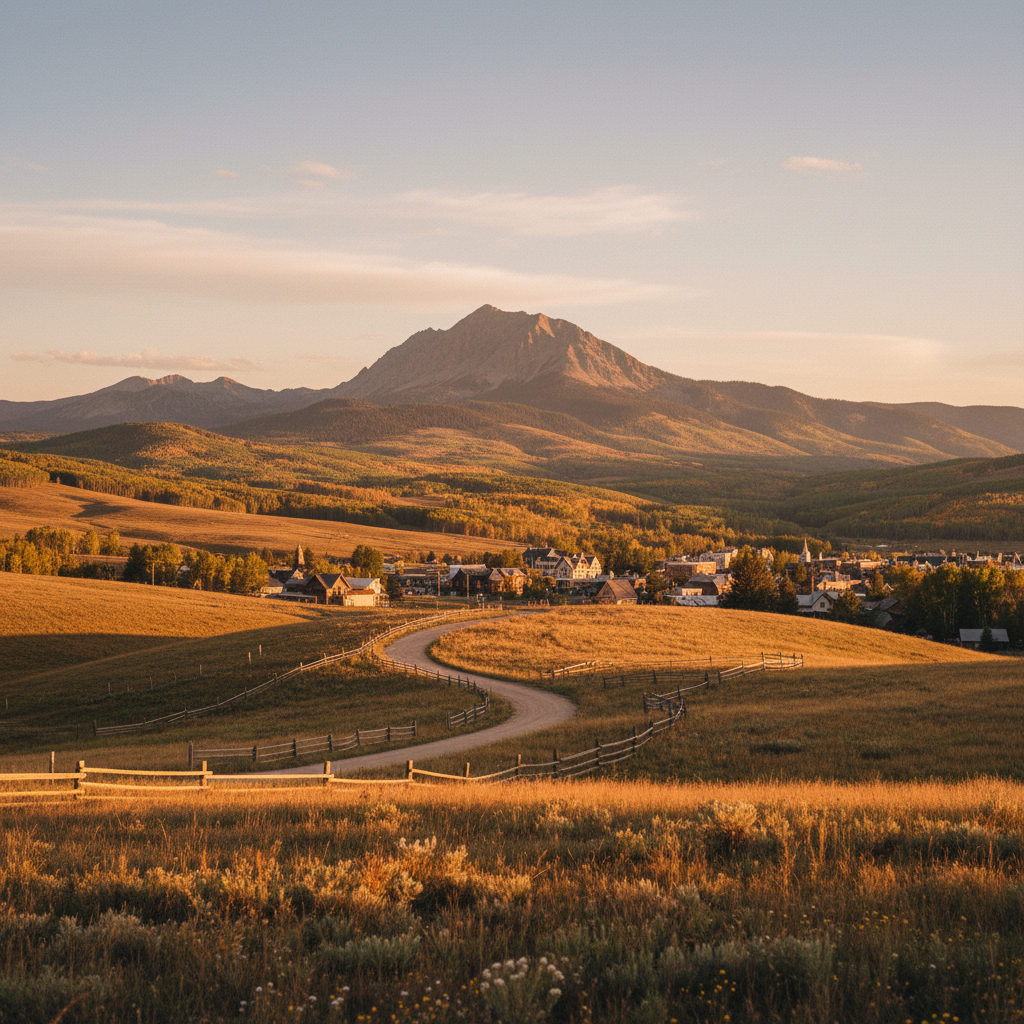
High-altitude singletrack ribbons through shoulder-high fields of lupine and columbine beneath the jagged Elk Mountains, capturing the brief, intense rush of Rocky Mountain summer.
Crested Butte rises as a sharp peak of dark igneous rock, standing sentinel over a high-altitude valley cradled by the jagged peaks of the Elk Mountains at nine thousand feet. In mid-summer, this mountain basin transforms into an overwhelming wash of color, where fields of waist-high lupine, scarlet Indian paintbrush, and delicate columbine roll out in every direction. The thin, cool air is thick with the scent of warm pine needles and wildflower pollen, crowding the edges of the dirt singletrack. This is a landscape where the transition from alpine winter to brief, explosive summer happens with sudden intensity, drawing travelers to its high-altitude meadows. The town itself, designated the Wildflower Capital of Colorado, sits at the base of the mountain, serving as a base camp for backcountry exploration.
This valley was originally the summer hunting grounds of the Parianuche and Tabeguache bands of the Ute people, who followed seasonal game trails through the high passes for centuries before the Brunot Agreement of 1873 led to their forced displacement. Coal mining soon defined the region, dominated by the Colorado Fuel and Iron Company, which built a narrow-gauge railroad to transport fuel from this isolated basin. Unlike many Colorado mining camps that withered into ghost towns when the resource booms ended, Crested Butte preserved its late-nineteenth-century wooden storefronts along Elk Avenue. This historic core was designated a National Historic District in 1974, protecting its distinctive Victorian architecture. Just eight miles north, past the end of the pavement, lies the ghost town of Gothic. Established during the silver rush of 1879, Gothic now houses the Rocky Mountain Biological Laboratory, founded in 1928. Here, scientists gather each summer to study high-altitude ecology, making the surrounding meadows the subject of some of the longest-running ecological research in the world.
Experiencing this landscape requires moving through it under your own power, a pursuit that has made the area a birthplace of modern mountain biking. Riders make a sacred pilgrimage to the legendary 401 Trail, a route that begins with a demanding climb up Schofield Pass to an elevation of 11,350 feet. From this high ridge, the singletrack plunges through spruce forests and alpine meadows where the wildflowers grow so tall they brush your handlebars. For those seeking gravity-fed descents, the lift-served trails on Crested Butte Mountain Resort offer fast, flowing routes with views that shift with every banked turn. In the afternoons, when summer clouds build over the high peaks, the daily ritual shifts north to the Gothic townsite. Inside the historic 1880 Gothic Town Hall, The Coffee Lab serves espresso and locally sourced pastries. Every cup purchased supports the scientific research at the biological laboratory, offering a quiet moment to sit on the wooden porch and watch the shadows of the clouds race across the face of Gothic Mountain.
To experience the wildflowers at their peak, plan your visit for mid-July, and ride the 401 Trail starting at dawn to avoid both the afternoon thunderstorms and the midday trail traffic. Afterward, head north to the ghost town of Gothic for an espresso at The Coffee Lab, housed in the historic 1880 Town Hall, where all proceeds support the Rocky Mountain Biological Laboratory.