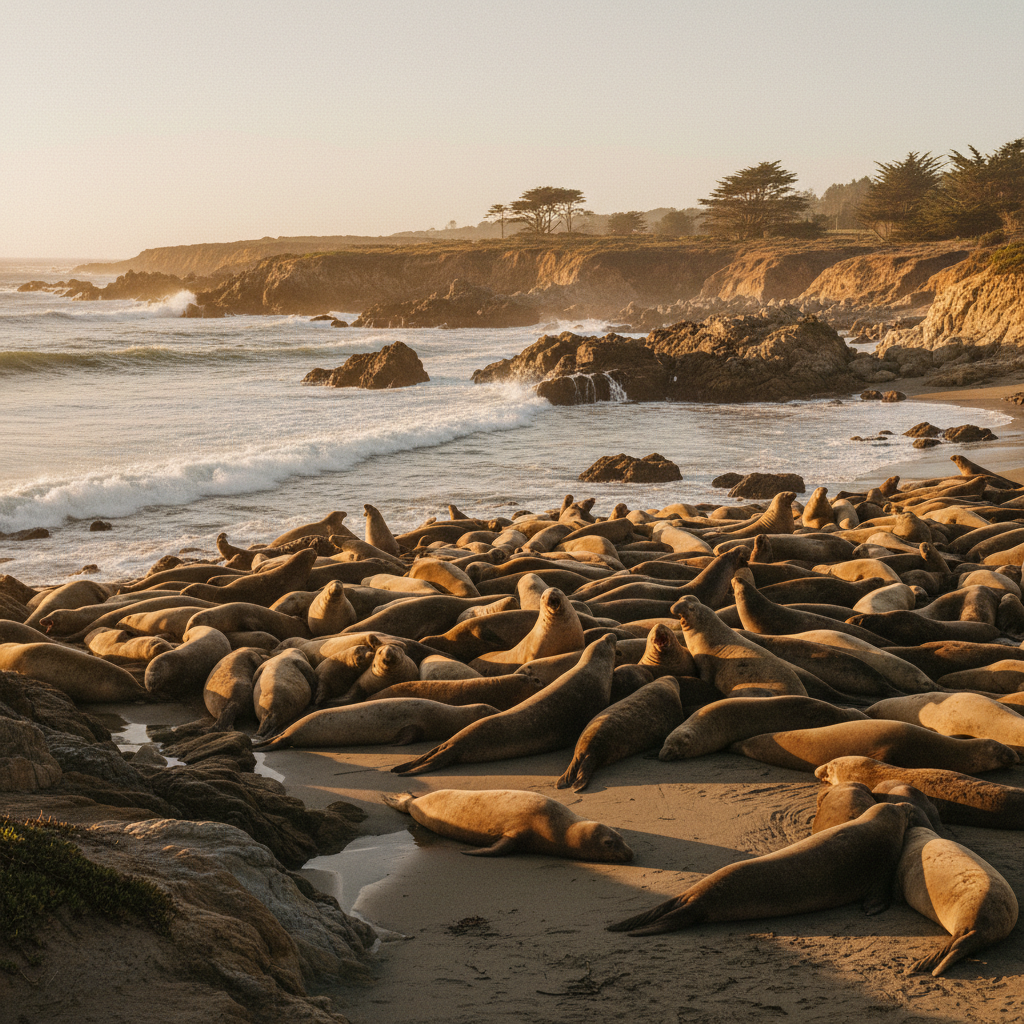
Along the rugged shore of Piedras Blancas, the air is thick with the wild scent of the Pacific and the thunderous, guttural bellows of thousands of northern elephant seals.
The Piedras Blancas Elephant Seal Rookery, located seven miles north of San Simeon on Highway 1, is one of the most remarkable wildlife recovery stories on the Pacific coast. Spanning six miles of shoreline in the shadow of the historic 1875 Piedras Blancas Lighthouse, this protected sanctuary is home to thousands of northern elephant seals (Mirounga angustirostris). The presence of these massive pinnipeds here is a relatively recent phenomenon. Once hunted nearly to extinction for their oil-rich blubber, a small surviving colony off Guadalupe Island was granted protected status in 1922. It was not until 1990 that the first pioneering seals were observed hauling out on the beaches south of the lighthouse. By 1992, the first pup was born on this sand, and today, the colony has grown to an estimated 25,000 seals that migrate here annually to breed, birth, and molt.
Visitors observe this raw natural spectacle from a network of wheelchair-accessible boardwalks and viewing platforms that extend both north and south of the main parking area. These elevated walkways hover just feet above the beach, offering an intimate look at the colony while keeping a safe, respectful distance from the wild animals. Standing along the railings, the sheer scale of the rookery becomes clear through a symphony of sound: the low, thunderous rumbling of mature bulls and the high-pitched cries of pups. To help make sense of the chaotic scene, volunteer docents from the non-profit organization Friends of the Elephant Seal, founded in 1997, patrol the boardwalks daily from 10:00 AM to 4:00 PM. Dressed in distinctive royal blue jackets, these knowledgeable guides explain the complex social hierarchies of the colony, point out the differences between the sexes, and help visitors identify the various age groups resting on the sand below.
The drama on the beach changes constantly depending on the season, making every visit unique. The year begins in late November when the massive adult bulls, which can weigh up to 5,000 pounds and sport a trunk-like proboscis, arrive to establish dominance through violent, bloody battles. December brings the pregnant females, weighing up to 1,800 pounds, who quickly give birth to plump, black-coated pups. January and February represent the peak of activity, filled with birthing, nursing, and aggressive mating rituals. By March, the adults return to the sea, leaving behind the newly weaned pups, known as weaners, to practice swimming in the shallows. Spring and summer usher in the molting seasons, a physiological process where the seals haul out to shed their old skin and fur, revealing sleek new silver-gray coats. Whether watching the juveniles during the fall haul-out or witnessing the clash of titans in the winter, the rookery offers a rare, unfiltered window into the wild rhythms of the Pacific.
For the most engaging experience, look for the volunteer docents in royal blue jackets who stand along the boardwalk daily between 10:00 AM and 4:00 PM; they carry binoculars and can point out specific behaviors, like a mother bonding with her newborn or an alpha bull defending his harem. Also, remember that there are no public restrooms at the viewing platforms, so plan a quick stop at the Friends of the Elephant Seal Visitor Center in San Simeon before heading north.