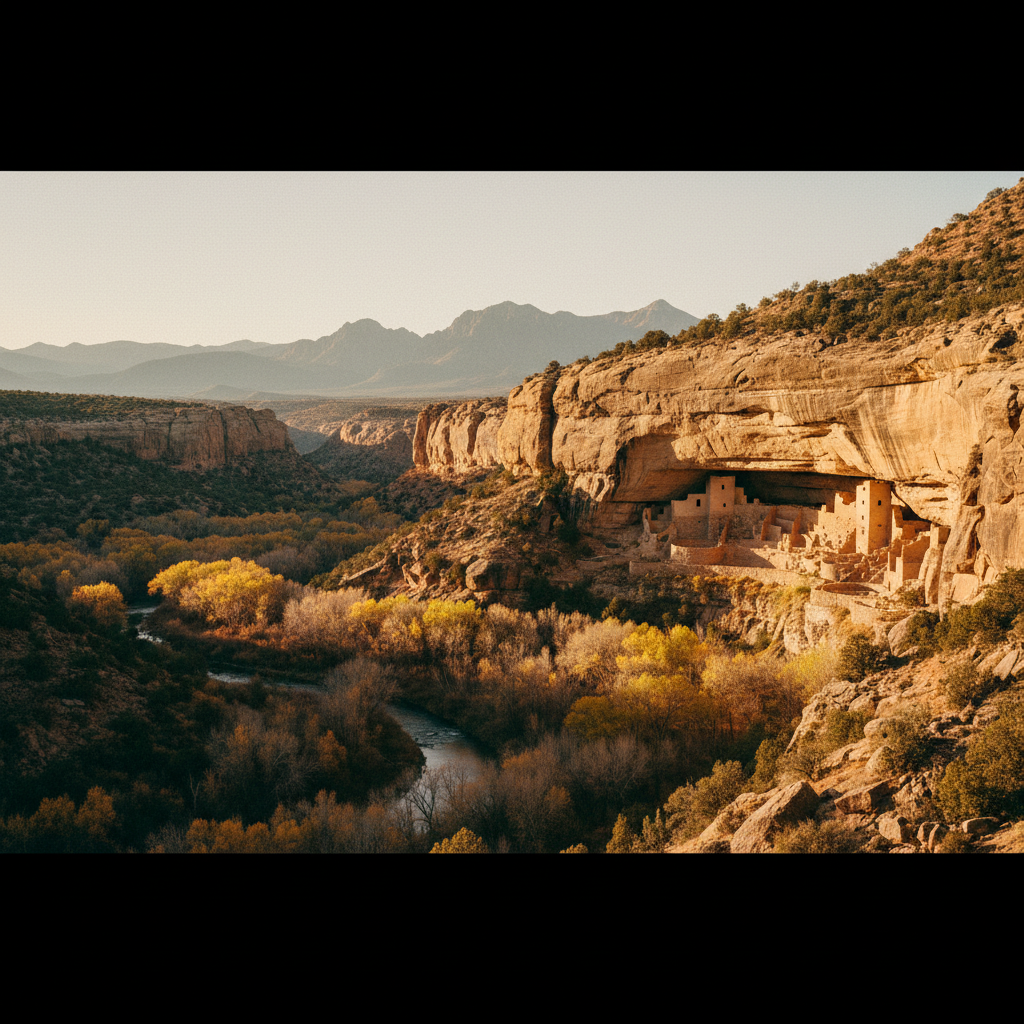
Climb into massive volcanic alcoves to walk among the remarkably preserved thirteenth-century stone homes of the Mogollon people, suspended high above a forested canyon in the Gila Wilderness.
The Gila Cliff Dwellings National Monument preserves a remarkable collection of thirteenth-century homes hand-built into the volcanic alcoves of Cliff Dweller Canyon, deep within southwestern New Mexico. Established as a national monument by President Theodore Roosevelt in 1907, this 533-acre archaeological site protects forty-two rooms constructed across five natural caves. These south-facing shelters, carved by wind and water out of the soft Gila Conglomerate formation, sit roughly 180 feet above the canyon floor. To reach them, a one-mile loop trail winds along Cliff Dweller Creek, crossing wooden footbridges before ascending a series of stone switchbacks. The approach reveals the silent masonry of the ancient village piece by piece, framed by the dark, yawning mouths of the caves against a backdrop of ponderosa pines and alligator junipers.
These stone dwellings were built and occupied during a remarkably brief window in the late 1200s, primarily between 1270 and 1300, by the agricultural Mogollon people (specifically the Tularosa Mogollon, whom contemporary Pueblo descendants recognize as Southern Ancestral Puebloans). Seeking relief from the Great Drought that gripped the region, approximately ten to fifteen families settled in these caves, cultivating corn, beans, and squash on the mesa tops and along the well-watered banks of the Gila River's West Fork. They constructed their rooms using flat stones held together with adobe mortar, leaving behind original wooden vigas and lintels that remain intact today. Dendrochronology, or tree-ring dating, has verified that these original timbers were harvested in the 1270s and 1280s. By the turn of the fourteenth century, after only one or two generations, the inhabitants abandoned the canyon, leaving behind a remarkably preserved record of their daily lives, including soot-blackened cave ceilings from ancient cooking fires and intricate T-shaped doorways that reflect architectural influences shared with the Ancestral Puebloans of the Four Corners.
Stepping inside the caves provides a direct, tactile connection to this ancient community. Visitors can climb wooden ladders to peer into the multi-room structures, where the cool mountain air inside the alcoves offers immediate relief from the desert sun. The preservation here is extraordinary: the dry microclimate of the caves has kept the seven-hundred-year-old masonry and original wooden beams from decaying. You can observe the fingerprints of the builders pressed into the dried mud mortar and look out through the signature T-shaped windows to see the same rugged canyon landscape that the Mogollon families viewed centuries ago. The silence within these stone rooms is profound, broken only by the wind moving through the canyon and the echoing call of canyon wrens. The monument also includes the un-excavated TJ Ruin on a nearby mesa, which preserves evidence of earlier pit houses dating back to 100 C.E., illustrating over a thousand years of continuous human presence in this remote mountain valley.
The winding, forty-four-mile drive on NM-15 from Silver City takes a full two hours each way and is not recommended for large RVs. To experience the dwellings in quiet solitude, arrive right at the 9:00 AM opening to hike before the midday sun and crowds. Afterward, stop at the nearby, privately owned Gila Hot Springs for a soak in their rustic mineral pools right along the West Fork of the Gila River.