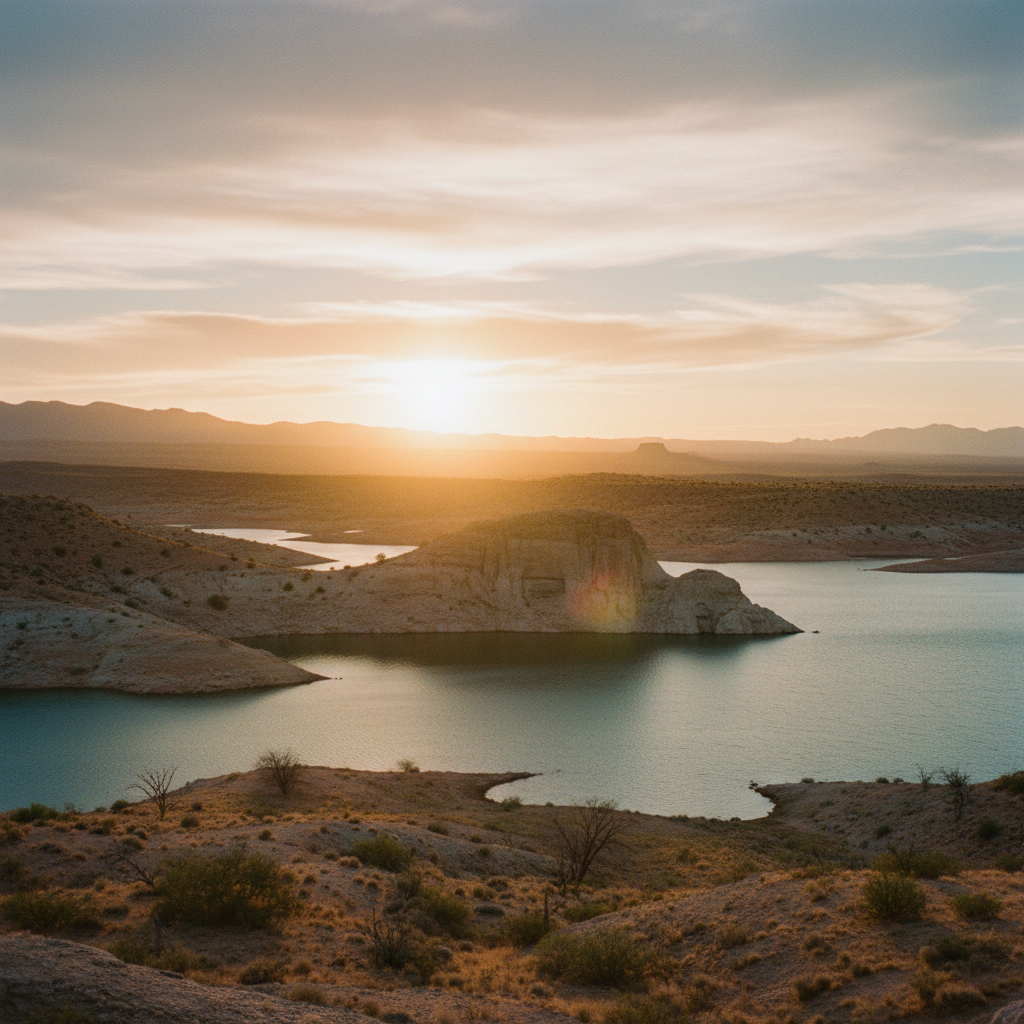
New Mexico's largest state park wraps around a massive, 40-mile reservoir on the Rio Grande, anchored by a historic 1916 concrete dam and a towering basalt volcanic neck.
Elephant Butte Lake State Park encompasses New Mexico's largest body of water, a 40,000-acre reservoir carved out of the south-central Chihuahuan Desert. Located five miles north of Truth or Consequences, the park revolves around a 43-mile-long pool of the Rio Grande that serves as a premier playground for boaters, anglers, and campers. The lake's defining visual landmark is the namesake Elephant Butte, a massive, brownish-black volcanic neck of basalt that rises directly from the water near the dam. This geological relic, dating back millions of years, resembles a reclining elephant with its sloping back and vertical head, standing as a silent sentinel over the modern reservoir. The surrounding landscape features Cretaceous sandstones and shales, while the eastern shores are carved from the colorful, purplish-maroon McRae geological formation, creating a stark contrast against the deep blue water.
The reservoir began filling in 1915 following the completion of the Elephant Butte Dam in 1916, a monumental concrete structure standing 301 feet tall and stretching 1,674 feet across the canyon. Built as part of the Rio Grande Project, it was once the largest irrigation dam in the world, designed to tame the wild seasonal surges of the river and secure water for agricultural lands in southern New Mexico, West Texas, and Mexico. Today, the historic Damsite Recreation Area preserves this early 20th-century heritage, blending engineering history with public recreation. Visitors can explore rock-lined paths, stone walls, and rustic cabins crafted by the Civilian Conservation Corps (CCC) during the 1930s. The historic Dam Site Lodge, which originally served as the project's administration building in 1911, still stands as a testament to the early days of reclamation in the American West.
Recreational life at the park centers on the expansive shoreline, which stretches for over 200 miles and features sandy beaches where campers can pitch tents or park RVs directly by the water's edge. Popular campgrounds like Lions Beach, Ridge Road, Rock Canyon, and South Monticello offer a range of setups, from primitive shoreline spots to developed sites with utility hookups. Anglers gather here to chase record-breaking striped bass, largemouth and smallmouth bass, walleye, crappie, bluegill, and catfish. The lake's three marinas provide boat rentals, slips, and supplies for those launching pontoon boats, jet skis, or kayaks. Beyond the water, the park's desert trails provide opportunities for birding, where visitors can spot wintering sandhill cranes, white pelicans, herons, and bald eagles against the stark volcanic ridges of the surrounding basin.
Avoid the massive crowds of the major summer holiday weekends by visiting in late spring or early autumn, and remember that out-of-state visitors pay a ten-dollar daily vehicle fee while New Mexico residents pay five dollars.