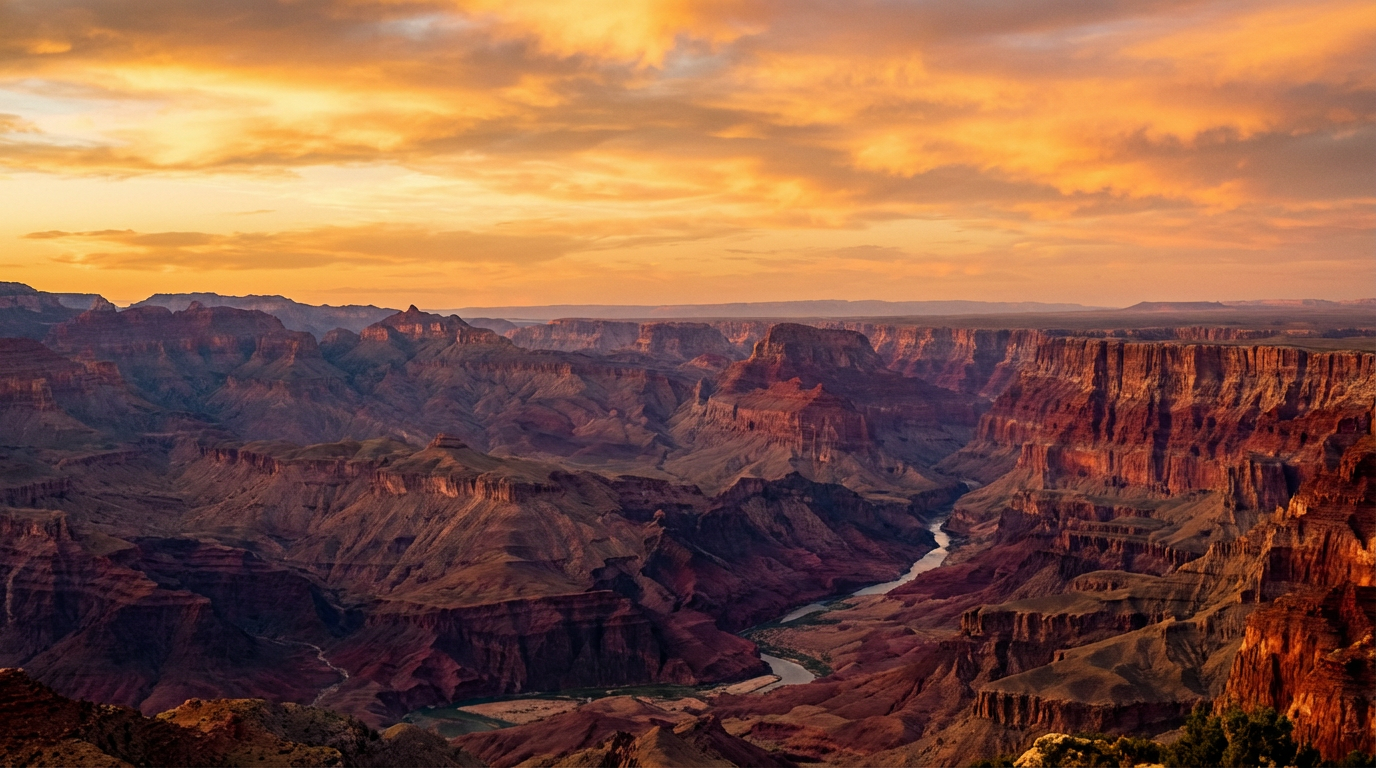
The Grand Canyon is a mile-deep, 277-mile-long gorge carved by the Colorado River through 2 billion years of exposed rock. The South Rim, open year-round at 7,000 ft elevation, offers the most accessible viewpoints and trails. The North Rim, 1,000 ft higher, opens mid-May through mid-October and sees a fraction of the crowds.
May, September, and October offer the best balance of comfortable temperatures, manageable crowds, and clear skies. The South Rim sits at 7,000 ft, so summer rim temperatures are pleasant (70-80°F), but inner canyon temps exceed 110°F. October is the connoisseur's pick — warm days, cool nights, fall color on the North Rim, and the post-monsoon clarity that produces the sharpest long-distance views of the year.
Two days minimum for the South Rim: one full day for rim overlooks and the Hermit Road shuttle loop, a second for a day hike partway down Bright Angel or South Kaibab Trail. Add a third day for Desert View Drive to the eastern boundary. If you're including the North Rim (open mid-May through mid-October), budget a full day plus the 4.5-hour drive between rims via US-89A and AZ-67. Rim-to-rim backpackers need 3-4 days plus advance permit planning.
October is arguably the single best month for Grand Canyon. South Rim highs average 65°F with lows around 36°F — perfect hiking weather. The inner canyon cools to the 70-90°F range, making corridor trails viable again after summer's heat. Crowds drop sharply after Labor Day. The North Rim aspens turn gold in late September through mid-October. Monsoon season ends, leaving crystalline air and the best photography conditions of the year.
The most direct route is approximately 450 miles and takes about 7 hours via I-40 West to Needles, then south on CA-62 to the park's north entrance at Twentynine Palms. The stretch through Kingman, AZ and across the Mojave Desert is remote — fuel up in Kingman and again in Needles. An alternative route drops south via Flagstaff and I-17 to Phoenix, then west on I-10 to the Cottonwood Springs entrance (south side), covering about 500 miles in 7.5 hours but with more services along the way.