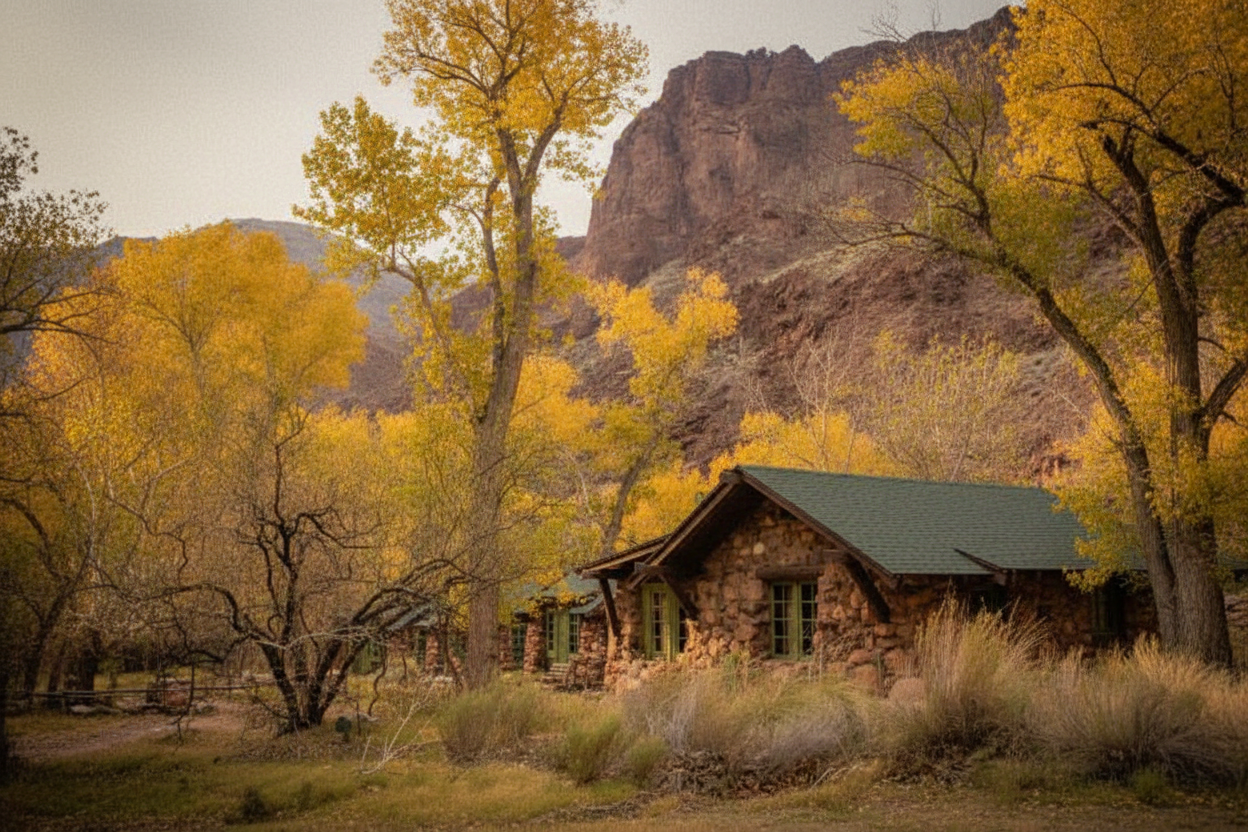
Mary Colter's historic stone and wood outpost sits near the confluence of Bright Angel Creek and the Colorado River, providing the only lodging at the bottom of the Grand Canyon.
Phantom Ranch stands as a monumental achievement of National Park Service Rustic architecture, designed by the pioneering architect Mary Colter and completed in June 1922. Originally proposed by the Fred Harvey Company and the National Park Service as Roosevelt's Chalets, Colter famously rejected the name, threatening to withhold her blueprints unless the property was named Phantom Ranch, after nearby Phantom Creek and Phantom Canyon. Colter designed the original structures using native Supai sandstone harvested directly from the canyon floor, combined with heavy wood timbers and green-shingled roofs. This deliberate choice of materials not only eased the logistical burden of packing construction supplies down the steep trails on mules but also ensured the cabins would blend seamlessly into the rugged geology of the inner canyon. Over the decades, this aesthetic became the template for "Parkitecture" throughout the American West, defining the visual identity of national park lodges for generations.
The lodge consists of a small collection of rustic cabins, a central dining hall known as the Phantom Ranch Canteen, and several hiker dormitories. While the dormitories (originally built in the 1970s to replace the 1925 tent cabins) remain closed indefinitely due to the massive Transcanyon Waterline utility project, the individual cabins continue to host overnight guests. These cabins are minimalistic and purposefully simple, equipped with bunk beds, clean linens, a private toilet, and a cold-water sink, while hot showers are located in a central communal Shower House. The Canteen serves as the social heart of the ranch, where guests gather for family-style breakfasts of pancakes and eggs, and hearty dinners of beef stew or vegetarian chili, all of which require strict advance reservations. Outside of meal times, the Canteen operates as a rustic general store, selling snacks, cold beverages, postcards, and first-aid supplies to weary hikers and river rafters seeking a brief respite from the elements.
Securing a stay at this remote outpost requires navigating a highly competitive, randomized lottery system managed by the concessionaire, with submissions accepted fifteen months in advance. Accessible only by foot, mule, or raft, the ranch sits a vertical mile below the canyon rims, situated near the confluence of Bright Angel Creek and the Colorado River. In recent years, the ranch's operations have been closely tied to the multi-year, $208 million Transcanyon Waterline replacement project, which aims to replace the fragile 1960s-era pipeline that supplies water to both rims. This ongoing construction has caused periodic closures of the Silver Bridge and the River Trail, meaning hikers must currently access the ranch via the steep South Kaibab Trail. Despite these modern infrastructure challenges, the ranch remains a timeless sanctuary, offering a rare opportunity to disconnect entirely from cellular service and experience the deep, silent rhythms of the inner canyon.
Submit your lottery entry online between the 1st and 25th of the month, exactly 15 months prior to your desired stay. If you miss out, check the general availability calendar daily for last-minute cancellations, and make sure to book your Canteen meals at the same time you secure your cabin.
Where to Stay — Curated accommodations hand-picked by Basecamp West. Glamping, boutique hotels, historic lodges, and unique stays across the American West.