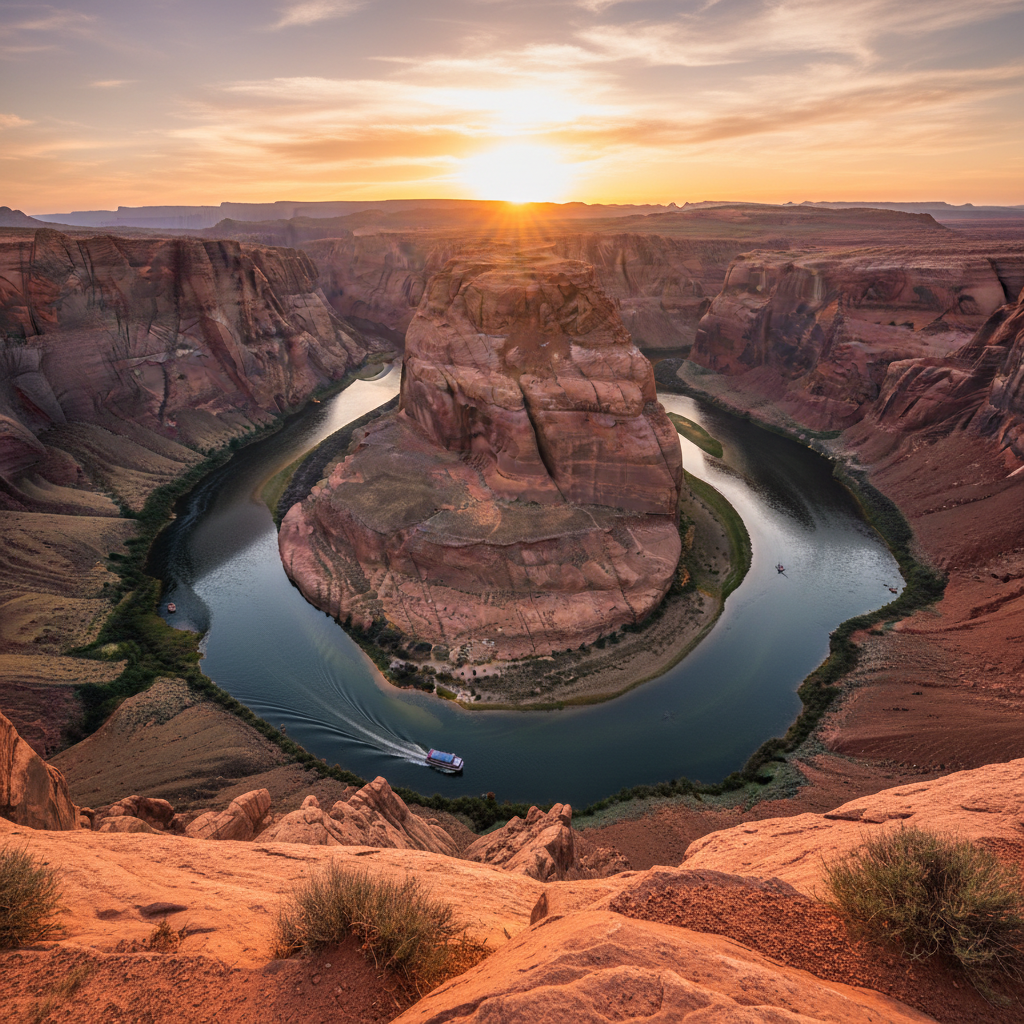
Paddle the emerald waters of the Colorado River a thousand feet below the famous overlook, navigating the dramatic sandstone curve of Horseshoe Bend from river level.
Horseshoe Bend, the colossal, symmetric meander of the Colorado River located just upstream from Lees Ferry, is famous for its dizzying overlook, but the most profound way to experience its scale is from the river level. Paddling this stretch of the river requires launching from the historic Lees Ferry boat ramp (River Mile 0), where adventurers board a backhaul boat operated by local outfitters like Kayak the Colorado, Kayak Horseshoe Bend, or Wilderness River Adventures. These specialized motorboats transport kayakers, paddleboarders, and their gear upriver through the towering Navajo sandstone cliffs of Glen Canyon. The standard drop-off point is at Kayak Beach (Mile 14.9), just below the towering concrete wall of the Glen Canyon Dam, though paddlers seeking a shorter journey can opt for a drop-off at Petroglyph Beach (Mile 10), which cuts the downstream journey to a manageable ten miles.
The downstream float from the dam back to Lees Ferry is a fifteen-mile journey through a deep, sheer-walled chasm where the desert sun bakes the red rock but the water remains a constant, bracing 47 to 50 degrees Fahrenheit. This temperature is a direct result of the water being drawn from the deep, cold depths of Lake Powell. The river here flows at a gentle two to four miles per hour, classifying this stretch as Class I flatwater with no major rapids, though afternoon headwinds and swirling eddies require consistent physical effort. Along the route, paddlers glide past massive blocks of cross-bedded sandstone, ancient sand dunes frozen in geologic time, and vibrant mineral stains of black manganese and iron oxide known as desert varnish. At Mile 10.4, a short pull-out allows paddlers to walk up to a remarkably preserved petroglyph panel, featuring carvings of bighorn sheep and human figures etched into the rock by Ancestral Puebloan hands thousands of years ago.
For those looking to extend the journey, the canyon corridor features five primitive, free, first-come, first-served campgrounds equipped with composting toilets and fire rings. The most iconic of these is the Nine Mile Campground, situated on river right directly within the shadow of the massive peninsula that forms Horseshoe Bend. Camping here allows you to watch the sunset paint the 1,000-foot walls in deep shades of crimson and violet, far beneath the tiny silhouettes of tourists gathered at the overlook above. Wildlife is surprisingly abundant in this riparian corridor: desert bighorn sheep frequently navigate the near-vertical ledges, wild horses graze on the riverbanks, and endangered California condors occasionally roost on the high canyon rims. Planning this adventure requires securing a Glen Canyon National Recreation Area pass and booking backhaul services well in advance, especially during the peak season from April through October when daily vessel capacities are strictly monitored.
Book your backhaul service weeks in advance, and pack a dry bag with warm layers: even in the heat of summer, the Colorado River's water release from the dam remains a cold 47 degrees.