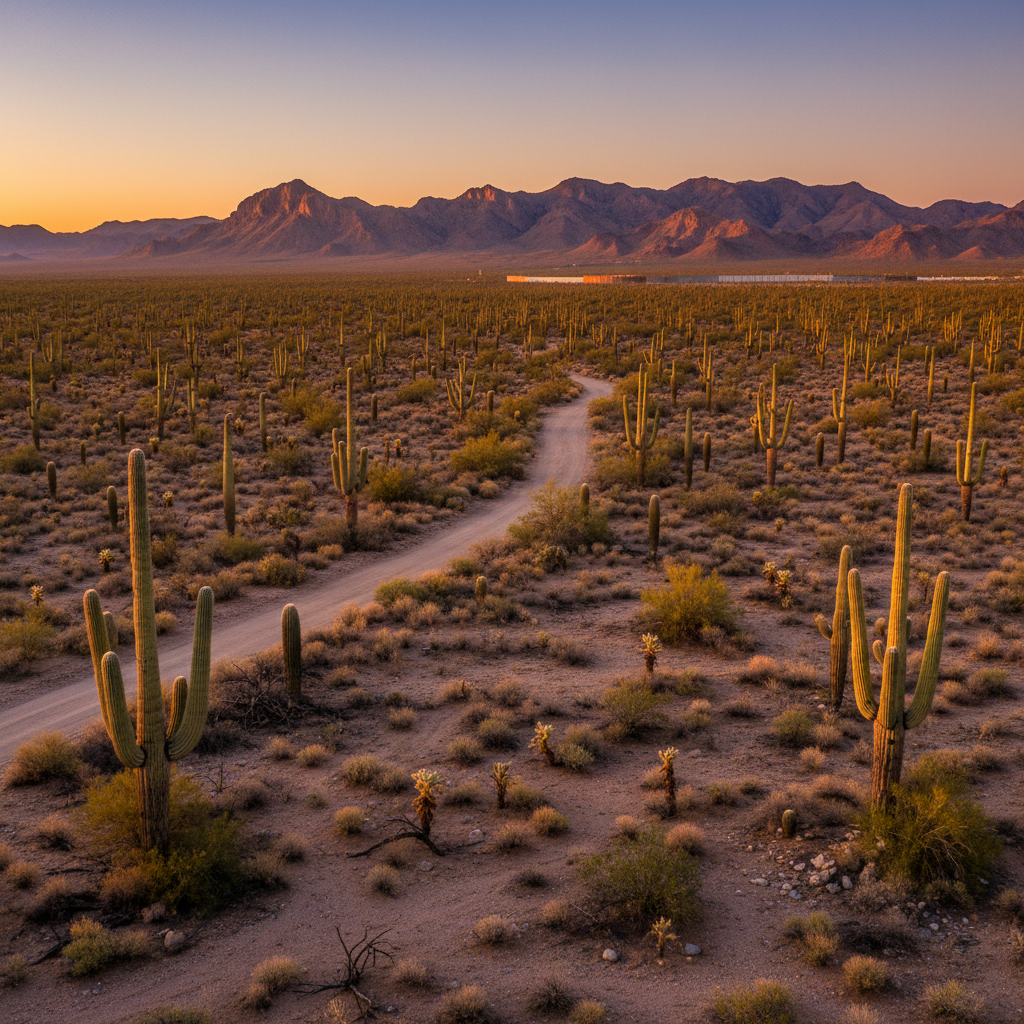
A vast Sonoran Desert wilderness along the Mexican border, defined by rare multi-branched cacti, rugged volcanic peaks, and deep desert silence.
Organ Pipe Cactus National Monument, established by President Franklin D. Roosevelt on April 13, 1937, preserves a massive 330,689-acre expanse of the Sonoran Desert in southern Arizona. Bordered by the Tohono O'odham Nation to the east and Mexico to the south, this protected wilderness is the only place in the United States where the namesake organ pipe cactus (Stenocereus thurberi) grows in large, wild stands. The monument is designated as a UNESCO Biosphere Reserve, a testament to its ecological significance and surprising biodiversity. Over thirty species of cacti thrive here, their silhouettes stark against the volcanic peaks of the Ajo and Puerto Blanco mountain ranges. Visitors begin their journey at the Kris Eggle Visitor Center, named in honor of a dedicated park ranger who lost his life here in 2002, which provides maps, educational exhibits, and the necessary permits to explore this remote borderland.
The cultural and ecological heart of the monument lies at Quitobaquito Springs, a rare oasis located in the southwestern corner of the park, just yards from the international border. For millennia, this natural water source sustained the Hia-C'ed O'odham and Tohono O'odham peoples, who established trade routes and agricultural homesteads around its banks. Today, the spring-fed pond is a critical sanctuary for some of the most endangered species in the Southwest, including the tiny Quitobaquito pupfish (Cyprinodon eremus) and the Sonoyta mud turtle. To protect this delicate desert ecosystem, the National Park Service and the Tohono O'odham Nation work in tandem, monitoring the water levels and managing the clay-lined pond. Historic mining and ranching sites, such as the Victoria Mine and the Bates Well Ranch, also dot the landscape, offering a window into the late nineteenth-century prospecting boom that once drew settlers to these arid hills.
Exploring the monument requires a slow, deliberate pace, best experienced along its two principal scenic routes. The paved and gravel Ajo Mountain Drive winds for twenty-one miles through deep desert washes and past dramatic rock formations, including the impressive span of Arch Canyon and the steep trail up to Bull Pasture. For a more rugged journey, the forty-one-mile Puerto Blanco Drive loops through the western portion of the park, requiring a high-clearance vehicle to navigate the rutted dirt tracks beyond Pinkley Peak. Hikers can wander the gentle Desert View Trail for panoramic views of the Valley of the Ajo, or tackle the strenuous climb to Mount Ajo, which rises to 4,808 feet as the highest point in the monument. As night falls, the exceptionally clear skies, free from urban light pollution, reveal the Milky Way in brilliant detail, casting a soft glow over the giant saguaros and the multi-branched arms of the organ pipe cacti.
Plan your visit between November and March to avoid extreme summer heat, and pick up a paper guide for the Ajo Mountain Drive at the Kris Eggle Visitor Center. If you plan to tackle the rugged Puerto Blanco Drive, ensure you have a high-clearance vehicle, check current road conditions with a ranger, and carry at least one gallon of water per person per day.