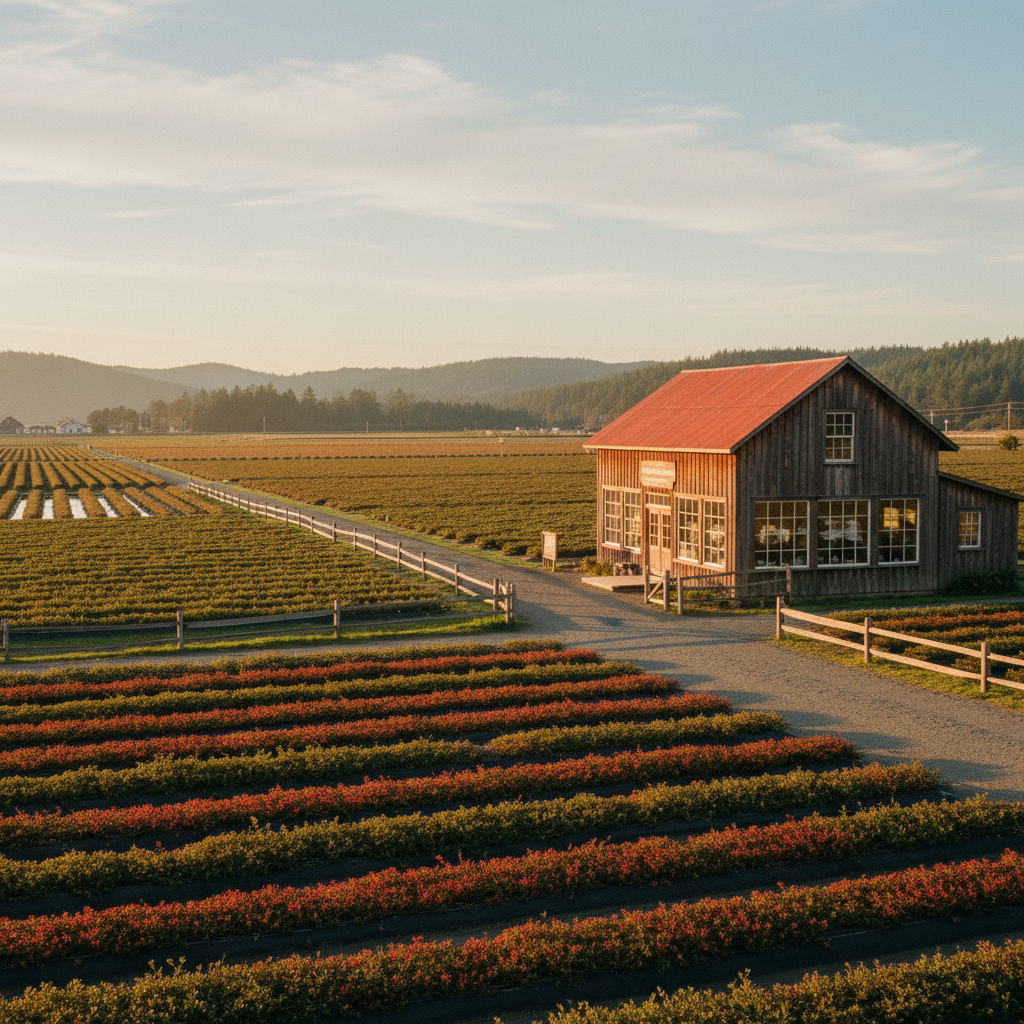
Explore the history of coastal cranberry farming at this grower-owned research station, featuring vintage harvesting tools, active bogs, and local cranberry ice cream.
The Pacific Coast Cranberry Research Foundation Cranberry Museum, located on Pioneer Road in Long Beach, Washington, stands as a working testament to over a century of coastal agriculture. The foundation itself was established as a non-profit in 1992 when Washington State University announced plans to close its historic Cranberry Research Station, which had operated on the site since 1923. Local growers, including Lee Crowley and Malcolm McPhail, refused to let the vital research hub disappear, pooling their resources to purchase the station and its surrounding 40 acres of farmland. The legacy of the site runs deep: it was here in 1925 that D.J. 'Jim' Crowley, the first cranberry researcher in the region and Lee's father, pioneered the use of overhead sprinklers to protect delicate vines from devastating frost, a technique that revolutionized cranberry farming across North America.
Inside the two-room museum, visitors can trace the evolution of cranberry harvesting from backbreaking manual labor to modern mechanization. The exhibits showcase a fascinating collection of vintage farming implements, including the landmark Furford dry harvest picker, invented by local grower Julius Furford. Other historical artifacts on display include a 1940s suction picker that operated much like a giant vacuum cleaner, early hand-hewn cranberry sorters, wooden picker boxes used to measure hand-picked yields, and heavy scalping hoes used to prepare the bogs before the advent of bulldozers. Visitors can also examine unique bog boots designed to minimize damage to the fragile vines, and sections of 1930s-era wooden water pipes made of straight-grained Douglas fir wrapped with wire and coated in tar.
Outside the museum walls, the property features 11.5 acres of active, working bogs split across eight distinct fields. A self-guided walking tour on grassy paths allows visitors to wander the perimeter of these low-lying bogs year-round, observing the vines as they transition from spring blooms to the flooded crimson harvests of October. After exploring the fields, the onsite gift shop provides a taste of the harvest, most notably through its popular cranberry ice cream. The shop also stocks specialized products like cold-pressed cranberry seed oil, regional cranberry wines, and whimsical 'Bog Frog' merchandise created by local artist Don Nisbett. Operating daily from April 1 through December 15, the museum remains an active, grower-funded research facility that continues to collaborate with WSU to study pest management and crop resilience.
Be sure to try the signature cranberry ice cream in the gift shop, and if you visit in October, you can watch the active wet-harvesting demonstrations when the bogs are flooded.