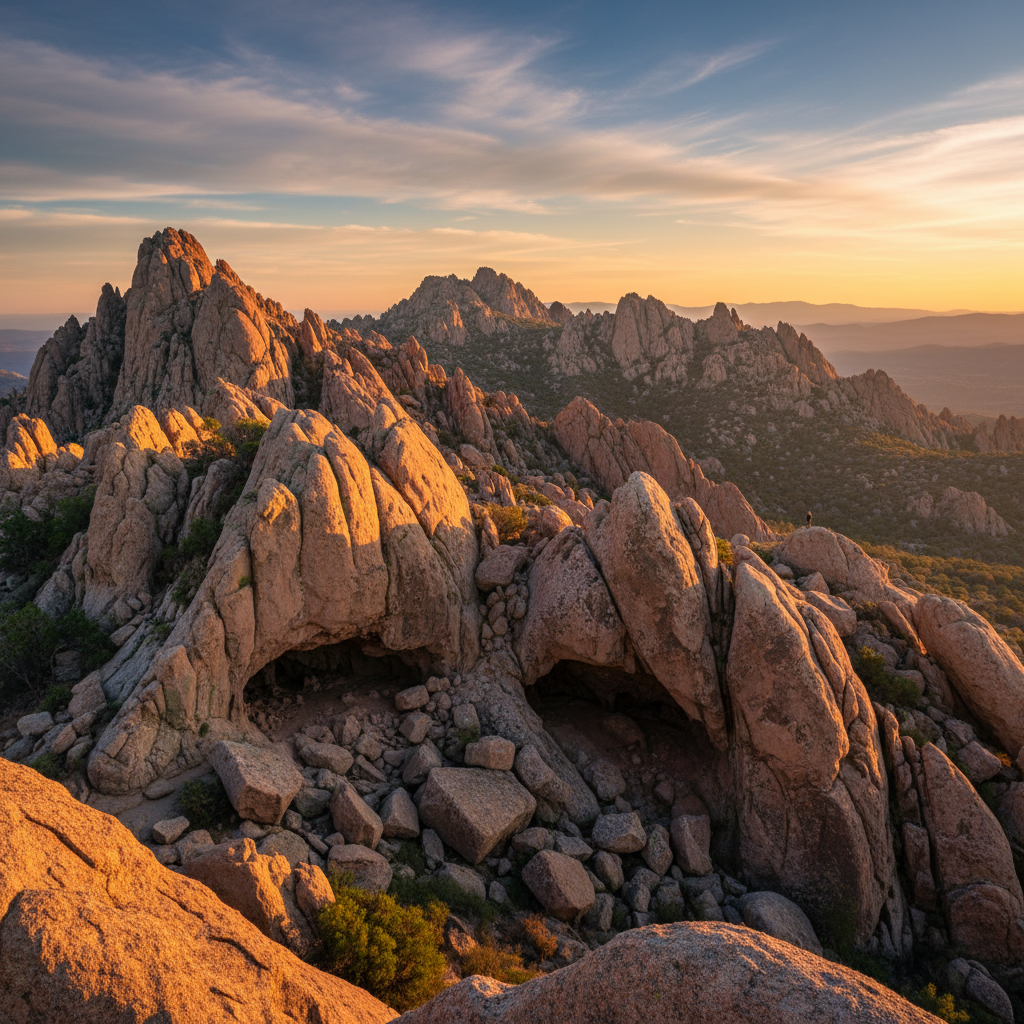
An ancient volcanic landscape of jagged reddish spires, dark talus caves, and soaring California condors.
Pinnacles National Park protects the shattered, eroded remnants of the Neenach Volcano, an ancient geological field that erupted 23 million years ago near present-day Lancaster before being dragged nearly 200 miles north along the San Andreas Fault. Located in the rugged Gabilan Range of central California, this terrain of chiseled volcanic breccia and sheer monoliths is the ancestral homeland of the Chalon and Mutsun Ohlone people, who harvested acorns, chia seeds, and basket-weaving sedge among these canyons for millennia. President Theodore Roosevelt first designated the area as a national monument in 1908, and it was elevated to America's 59th national park in 2013. The park is divided into distinct east and west entrances, connected only by foot trails, where chaparral-covered hillsides give way to dramatic, rust-colored spires that glow intensely in the late afternoon sun.
Beneath these towering crags lie Bear Gulch Cave and Balconies Cave, rare talus passages formed not by water dissolving limestone, but by massive blocks of volcanic rock tumbling into steep, narrow ravines. Navigating these dark, labyrinthine chambers requires a reliable headlamp to scramble over boulders and through narrow crevices where the sound of dripping water echoes off the cold stone. These caves serve as critical sanctuaries for a maternal colony of Townsend's big-eared bats, prompting seasonal closures to protect the rearing of their pups. Above these subterranean passages, the sky is the domain of the California condor. Pinnacles serves as a primary release and management site for these critically endangered birds, which can often be seen riding thermal updrafts over the high ridges. With wingspans stretching nearly ten feet, these massive scavengers nest in the cavities of the volcanic cliffs, sharing the airspace with prairie falcons, golden eagles, and turkey vultures.
The park's trail system offers some of the most intimate encounters with volcanic geology in the American West, highlighted by the strenuous High Peaks Trail. Built by the Civilian Conservation Corps during the 1930s, this historic path features steep staircases carved directly into the solid rock, flanked by heavy iron handrails to guide hikers across narrow ledges with sheer drop-offs. For rock climbers, the volcanic breccia provides unique challenges on classic routes along Machete Ridge, Discovery Wall, and the Tourist Trap, though the crumbly nature of the rock demands careful gear placement and seasoned judgment. Traversing the dripping darkness of the caves or standing atop the windy heights of the Condor Gulch Overlook reveals a raw, sun-baked wilderness where the scent of dry chamise and sagebrush hangs heavy in the California air, rewarding physical effort with some of the most dramatic vistas in the Coast Ranges.
Visit during spring to see the spectacular wildflower blooms and avoid the intense summer heat. Always check the park status before arriving, as Bear Gulch Cave and Balconies Cave close seasonally to protect the nesting bat colonies. Pack a powerful headlamp, not just a phone flashlight, and carry at least a gallon of water per person if you plan to tackle the exposed High Peaks Trail.