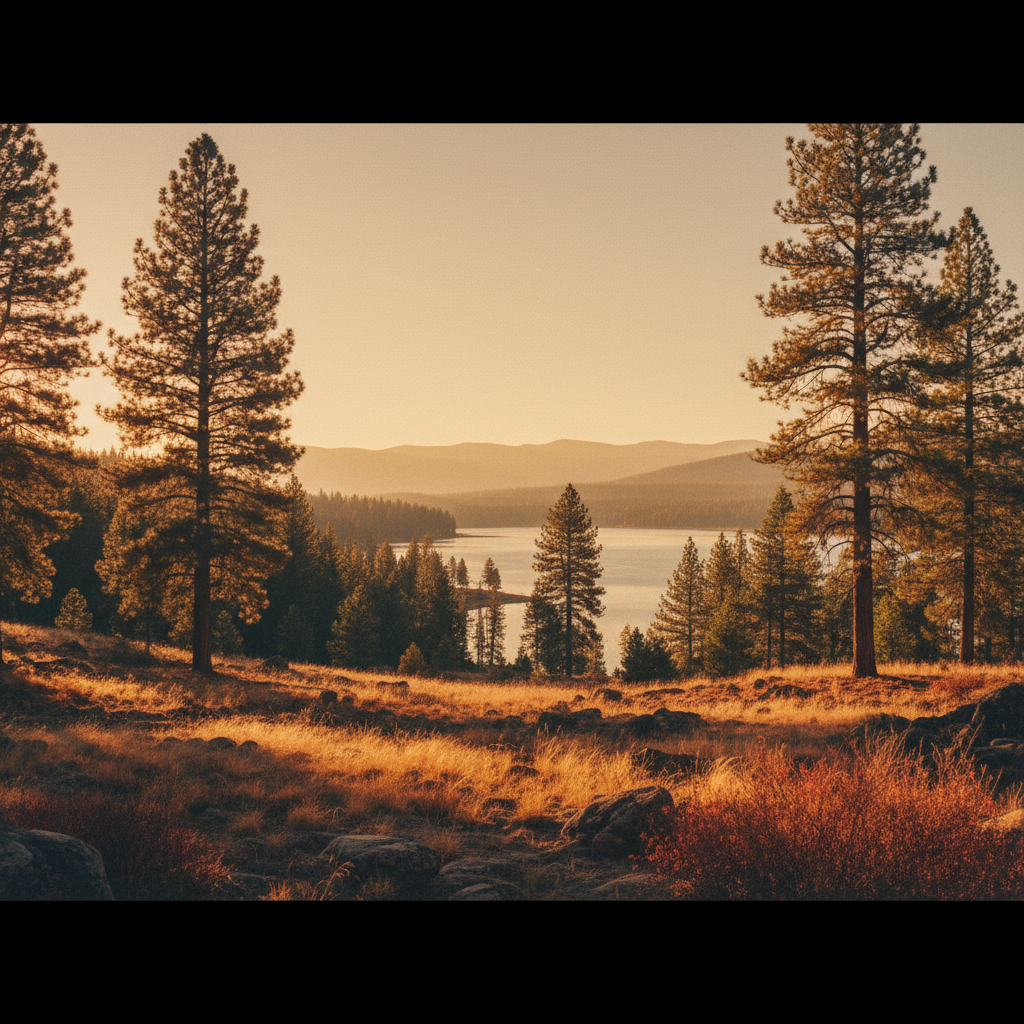
An old-growth pine peninsula jutting into Payette Lake, offering basalt overlooks, glacial waters, and quiet campsites.
Ponderosa State Park covers a 1,515-acre peninsula of old-growth forest jutting into the cold, clear waters of Payette Lake. The park protects a towering canopy of its namesake ponderosa pines, some reaching 150 feet in height and exceeding 500 years in age, alongside western larch, Douglas fir, and grand fir. Geologically, this finger-like peninsula is a basaltic formation resting on a granite base, sculpted approximately 15,000 years ago by glacial activity during the Pleistocene Epoch. Long before the state established the park land in the early twentieth century, these shores and the surrounding Payette River basin served as the ancestral homelands and seasonal migration routes for the Nez Perce (Nimiipuu) and Shoshone-Bannock peoples. Today, visitors entering through the Dirk Kempthorne Visitor Center find a preserved landscape where the scent of warm pine needles mixes with the cool, fresh air rising from the lake.
The interior of the peninsula is traversed by a network of trails that showcase the park's diverse topography, which ranges from arid sagebrush flats to spongy wetlands. The 2.3-mile Lily Marsh Trail offers a gentle route through lush wetlands, while the Huckleberry Bay Trail winds through dense stands of old-growth timber where wild huckleberries and morel mushrooms grow in season. For panoramic vistas, the Ridgeline Trail climbs to the Narrows Overlook and the Osprey Cliff Overlook. The ultimate vantage point is Osprey Point, a rugged basalt promontory at the northern tip of the peninsula rising 300 feet above the water, offering views of Cougar Island and the surrounding West Mountains. This varied habitat supports a rich array of wildlife, including red foxes, bald eagles, osprey, wood ducks, mule deer, and the occasional moose grazing in the grassy shallows of Meadow Marsh.
Overnight stays and water recreation are split between two distinct areas of the park. The primary Peninsula Campground features the Aspen, Blackberry, and Chokecherry loops, offering 113 serviced campsites with water and electricity, alongside a selection of rental cabins and heated yurts. Six miles north of McCall, at the northernmost tip of the lake, lies the 500-acre North Beach Unit. This quieter section features the largest public sandy beach on Payette Lake and the Northwest Passage Campground, which offers 22 non-reservable, first-come, first-served campsites. The North Beach boat ramp serves as the launch point for exploring the Upper North Fork of the Payette River, a designated non-motorized zone where paddlers can rent canoes, kayaks, and paddleboards from Backwoods Adventures to drift through peaceful waters. When winter arrives, the park transitions into a snowy haven with 14.3 miles of groomed Nordic skiing and snowshoeing trails.
To escape the summer crowds on the main peninsula, head six miles north to the North Beach Unit. Here, you can launch a canoe into the non-motorized waters of the Upper North Fork of the Payette River, where moose are frequently spotted feeding in the willow thickets at dawn.