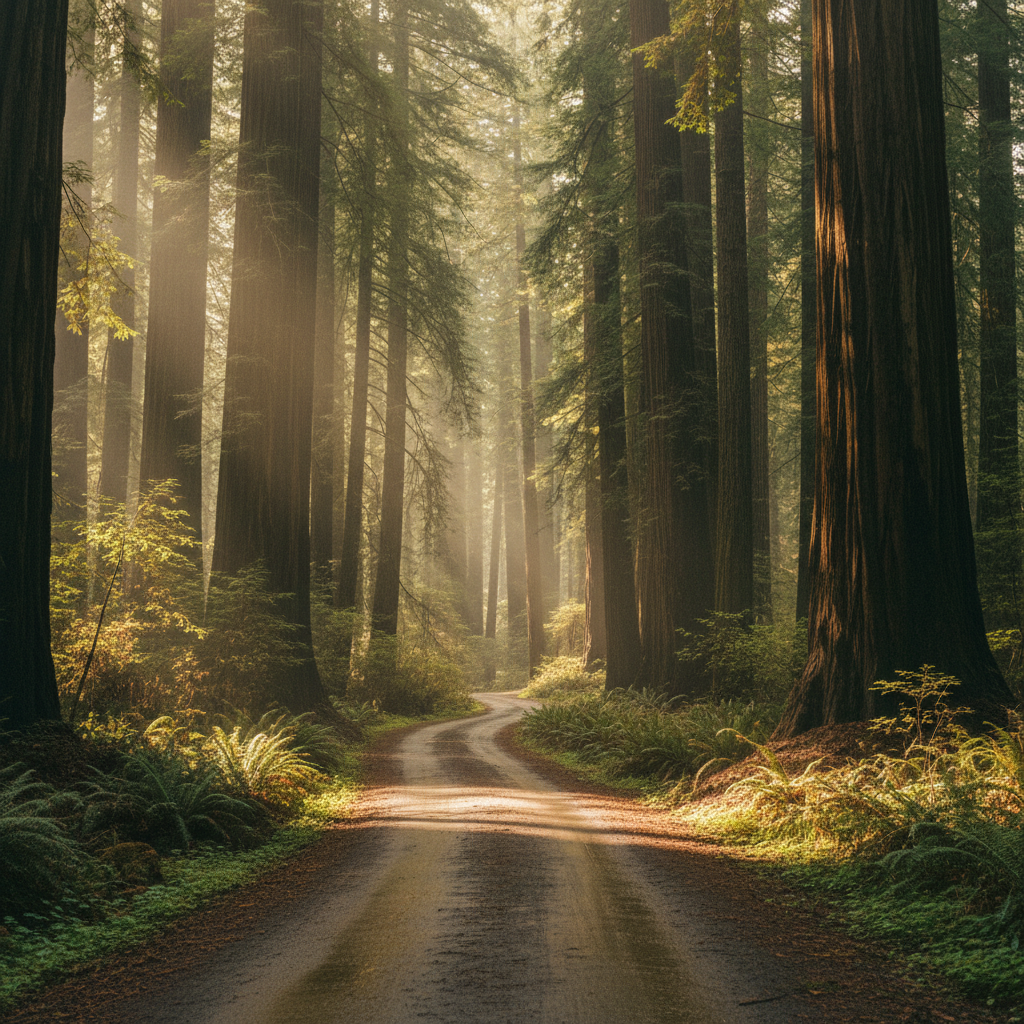
A 14,000-acre sanctuary of old-growth coast redwoods, wild beaches, and grazing Roosevelt elk on the ancestral lands of the Coastal Yurok.
Prairie Creek Redwoods State Park preserves 14,000 acres of ancient coast redwood forest, wild coastline, and open meadows along Northern California's Pacific edge. Located on the traditional homelands of the Ner'-er-nerh (Coastal Yurok) people, who have lived in relationship with these forests for millennia, the park represents a vital sanctuary where old-growth giants meet the sea. The park is jointly managed by the California Department of Parks and Recreation and the National Park Service as a crucial component of the Redwood National and State Parks system. Here, the persistent coastal fog belt provides the exact, damp microclimate required for Sequoia sempervirens to reach heights exceeding 300 feet. Walking through the groves, the air is cool and fragrant with the scent of damp earth, redwood sorrel, and ancient wood, creating an atmosphere of quiet reverence.
The park's conservation history began in earnest during the early 1920s, when the Save the Redwoods League worked alongside the State of California to purchase the first groves to protect them from commercial logging. Today, the park is home to more than 280 memorial groves, including the Russ Memorial Grove, which was established in 1923. Among these protected giants is the famous Big Tree Wayside, a massive coast redwood estimated to be 1,500 years old, standing over 280 feet tall with a circumference of 75 feet. Other notable trees in the park include Iluvatar, the third-largest known coast redwood, which features one of the most complex, multi-layered crowns in the world. This dense forest canopy supports a rich, delicate ecosystem that includes the elusive marbled murrelet, tailed frogs, and the iconic yellow banana slug.
Visitors can experience this ancient landscape through a variety of routes, starting with the ten-mile Newton B. Drury Scenic Parkway, which winds directly through the heart of the old-growth forest. For those on foot, the park features 75 miles of interconnected trails. The Karl Knapp and Cathedral Tree Trails offer accessible loops through towering groves, while the Revelation Trail provides a self-guided sensory experience. On the park's western edge, Gold Bluffs Beach offers ten miles of rugged shoreline where Roosevelt elk, or wapiti, are frequently seen grazing in the coastal meadows. Nearby, the celebrated Fern Canyon features fifty-foot vertical walls completely draped in five species of native ferns, including five-finger and maidenhair ferns, with Home Creek trickling along the canyon floor.
A permit is required to visit Fern Canyon from May 15 to September 15; secure yours online via the Redwood National and State Parks website before arriving. Wear sturdy, waterproof sandals or water shoes, as the trail requires wading directly through the shallow waters of Home Creek. To spot the resident Roosevelt elk, check the meadows surrounding the Elk Prairie Visitor Center or Gold Bluffs Beach in the quiet hours of early morning or dusk.