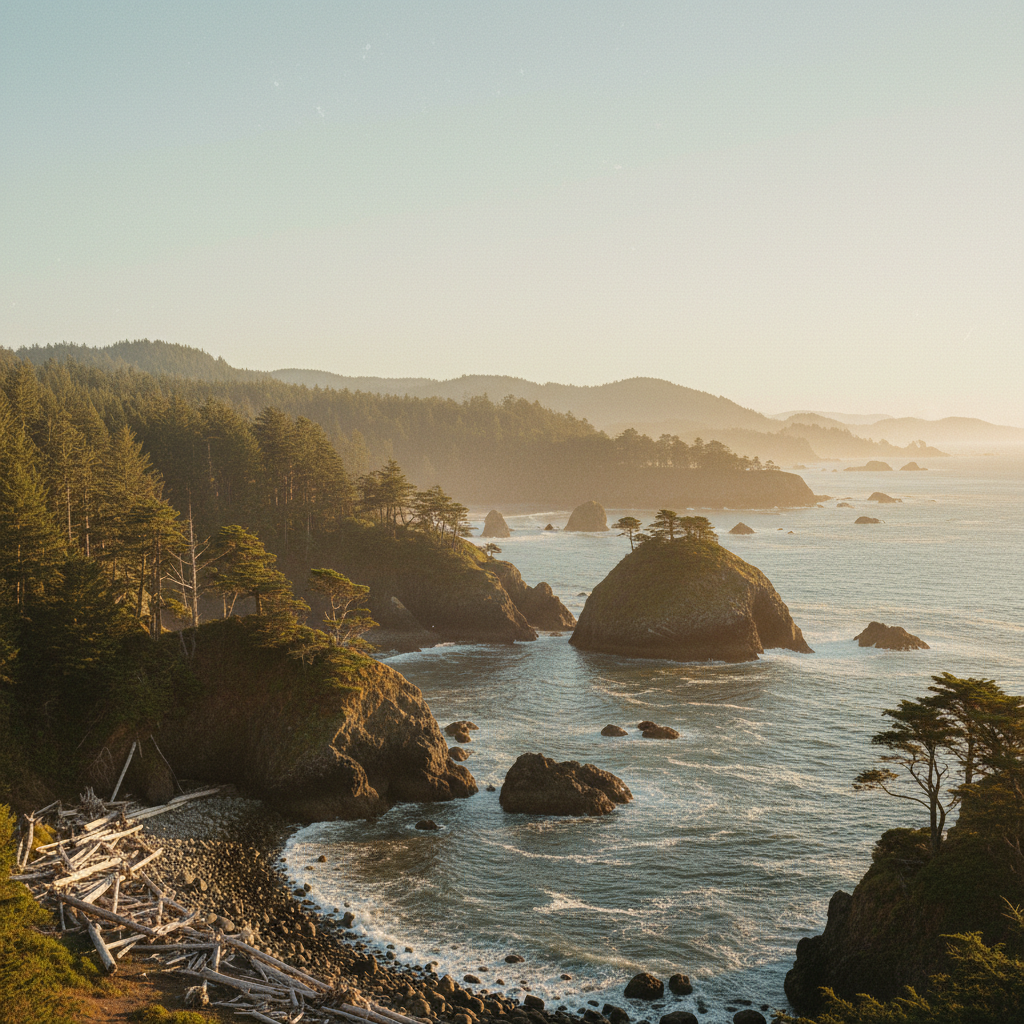
A 640-acre coastal park on the Redwood Coast featuring dramatic sea stacks, tide pools, and a reconstructed Yurok village.
Sue-meg State Park, a 640-acre coastal sanctuary situated 25 miles north of Eureka and five miles north of Trinidad, stands as a dramatic intersection of temperate rainforest and the Pacific Ocean. Historically known as Patrick's Point State Park, the property was officially renamed in September 2021 following a unanimous vote by the California State Park and Recreation Commission. This change marked the inaugural project of California's Reexamining Our Past Initiative, a state-level effort to redress discriminatory names on public lands by restoring the ancestral Yurok name, Sue-meg, which has been used by the indigenous people since time immemorial. The park occupies a broad, forested marine terrace that sits high above the ocean, where sheer cliffs drop down to rocky shorelines, sandy beaches, and tide pools. The canopy is dominated by towering Sitka spruce, western hemlock, Douglas fir, and red alder, with scattered coastal redwoods and a lush understory of huckleberry, salal, and seasonal wildflowers like Douglas iris and trillium.
The cultural heart of the park is Sumêg Village, a reconstructed Yurok settlement built in 1990 by an all-Yurok crew. Constructed from old-growth redwood logs split by hand, the village serves as a living educational site and a venue for tribal ceremonies. Visitors can explore three traditional family plank houses, which feature low, circular entryways designed to keep out drafts and intruders, alongside a subterranean sweathouse, changing houses used during the annual Brush Dance, a dance pit, and a carved redwood dugout canoe. Just south of the village, the Sumêg Native Plant Garden showcases species cultivated by the Yurok for food, medicine, basket weaving, and ceremonial purposes. This deep connection to the land is mirrored in the park's geological features, including Ceremonial Rock, a massive volcanic stack that rises sharply from the forest floor, and Wedding Rock, a prominent headland that juts into the ocean and provides a vantage point for watching migrating gray whales during their spring and winter journeys.
Recreational opportunities within the park are anchored by a network of well-maintained trails and diverse camping facilities. The Rim Trail winds along the edge of the bluffs, connecting major overlooks like Palmer's Point, a premier location for exploring marine life in tide pools filled with sea stars and anemones, and Rocky Point. To the north, a steep trail descends to Agate Beach, a wide, sandy shoreline where visitors search for semi-precious agates washed down from nearby streams. Overnight accommodations are spread across three family campgrounds, Abalone, Agate, and Penn Creek, which collectively offer 124 family campsites equipped with fire rings, cupboards, and tables. Additionally, the park features two group camps, Beach Creek and Red Alder, which include covered cook shelters, as well as a dedicated hike-and-bike campground. Because of the park's exposure to the coastal marine layer, temperatures remain moderate year-round, typically hovering in the low 60s during summer and dropping to the high 30s in winter, with thick fog frequently blanketing the bluffs during the summer months.
Check the local tide tables before heading down to Agate Beach or Palmer’s Point, as the best tide-pooling and agate-hunting occur at low tide. Dogs are permitted in the campgrounds on a leash but are strictly prohibited on all park trails and beaches to protect the native wildlife.