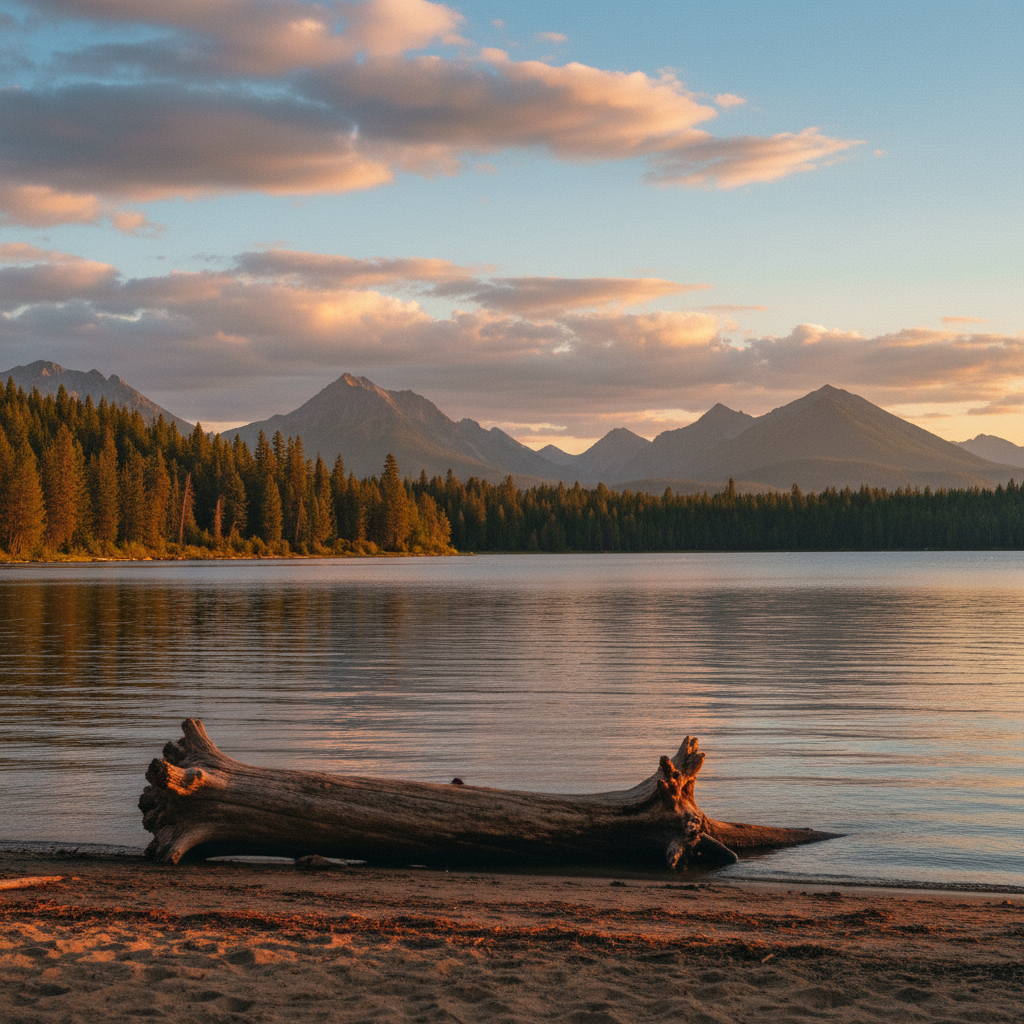
A three-unit state park along Idaho's pristine northern waters, offering old-growth cedar forests, historic logging ruins, and quiet paddling access to the wild Selkirk Mountains.
Priest Lake State Park comprises three distinct units along the eastern shore and outlet of Idaho's northernmost waters, offering a structured gateway to the Selkirk Mountains. Established in 1959 under the Idaho Department of Lands before transitioning to the Idaho Department of Parks and Recreation in 1966, the park spans 755 acres of temperate rainforest dominated by old-growth Western red cedar, Western white pine, and grand fir. The park's name traces back to the Jesuit priests, known as "Black Robes," who traveled the region during the French-Canadian fur-trading era. Long before their arrival, the Kalispel people harvested these shores, navigating the deep, glacially carved waters in sturgeon-nosed canoes crafted from cedar frames and white pine bark. Today, the park serves as a critical access point to both the main 19-mile-long lake and the remote, roadless waters of Upper Priest Lake.
The park's operations and amenities are divided among three geographically separate units: Indian Creek, Lionhead, and Dickensheet. Indian Creek serves as the park headquarters and is the most developed hub. Located mid-lake, it features a visitor center, a camp store that serves hand-scooped ice cream, and 93 campsites, including 11 full-hookup sites and six rental cabins that remain popular with winter fat-bike riders and snowshoers. Trails winding through Indian Creek include the 1.4-mile Flume Trail, which features a replica of a historic logging flume, and the nine-hole Harvey's Hemlock Hideaway junior disc golf course. Farther north, the rustic Lionhead Unit caters primarily to tent campers with 47 primitive sites, a sandy beach, and a boat launch. Lionhead is rich with logging history: it features the Squaw Bay group camp, which occupies the former site of Diamond Match Company's Logging Camp 9, and the sunken wooden hull of the Tyee II, the lake's last wood-burning steam tugboat, resting near the boat ramp. The smallest unit, Dickensheet, covers 46 acres along the Priest River below the lake's outlet, offering 11 primitive sites and a quiet launch point for river floating and wading.
Recreational experiences within the park vary by season, shifting from summer huckleberry picking and paddling to winter Nordic sports. Paddlers launching from the Lionhead Unit can navigate the two-mile Thorofare, a slow-moving, no-wake channel that connects the main lake to the pristine Upper Priest Lake. For those staying on land, the park provides access to over 400 miles of groomed winter trails for snowmobiling, snowshoeing, and cross-country skiing, with snowshoe rentals available directly from the Indian Creek visitor center. Anglers use the park's boat ramps to target kokanee salmon, cutthroat trout, and Mackinaw, while hikers climb the Viewpoint Trail for elevated vistas of the Selkirk crest. As night falls, the park's remote location near the Canadian border ensures exceptional stargazing, with the dark silhouettes of the peaks framing a clear view of the Milky Way.
Rent snowshoes at the Indian Creek visitor center to explore the groomed shoreline trails in winter, or search the shallow waters near the Lionhead boat ramp to spot the sunken wooden ribs of the Tyee II tugboat.