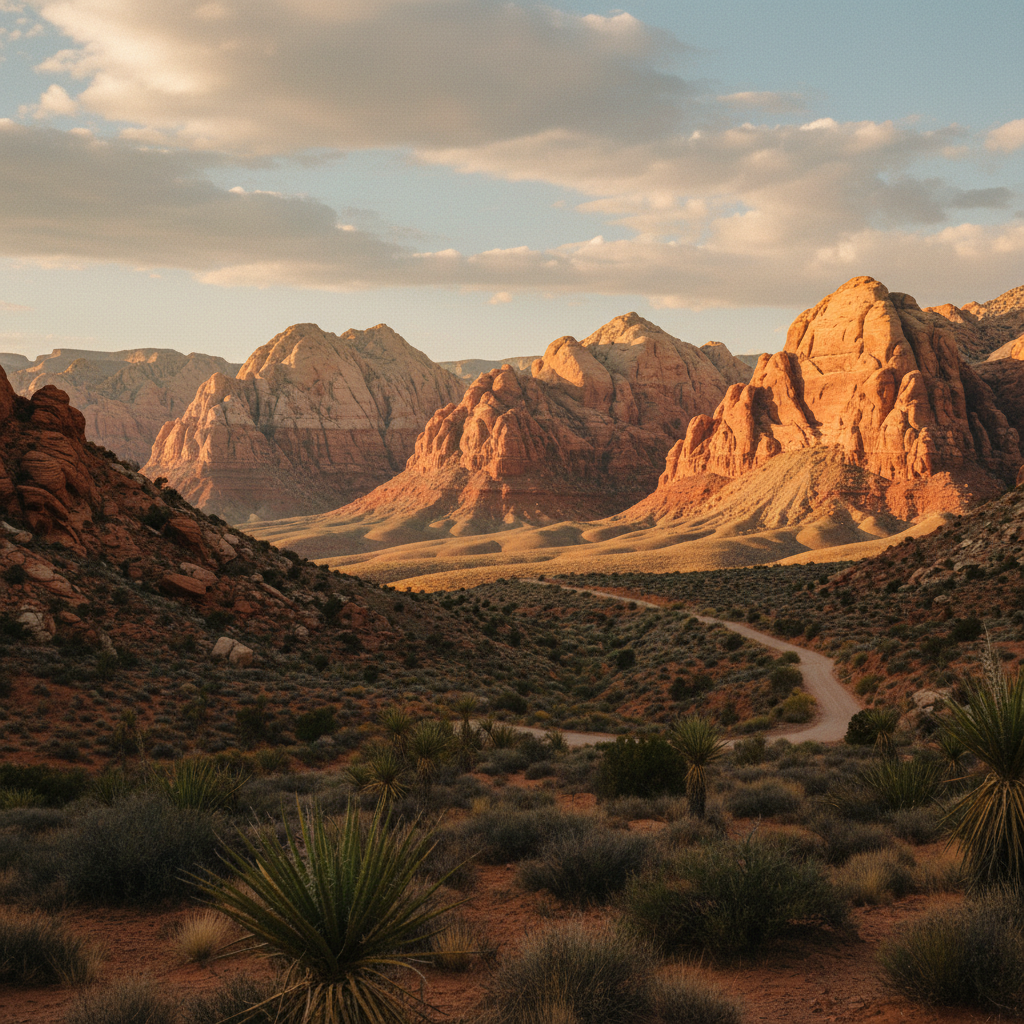
Seventeen miles west of the Las Vegas Strip, towering cliffs of crimson Aztec Sandstone rise sharply from the Mojave Desert floor, carved by wind and rich with ancestral history.
Red Rock Canyon National Conservation Area rises like a geological fortress from the Mojave Desert floor, located just seventeen miles west of the Las Vegas Strip. Here, the neon haze of the valley dissolves into a towering wall of crimson and cream, dominated by the sheer, multi-colored escarpment of the Wilson Cliffs. Standing at the base of these three thousand foot sandstone walls, the sensory shift is absolute: the hum of the city is replaced by the dry rush of desert wind, and the scent of warm dust, creosote, and wild sage fills the air. The afternoon sun strikes the Aztec Sandstone, making the rock faces glow as if lit from within. This is a landscape defined by dramatic scale and stark contrasts, where massive sandstone walls dwarf the Joshua trees, Mojave yuccas, and banana yuccas scattered across the alluvial fans below.
The story of this canyon is written in its contrasting bands of gray limestone and red sandstone, a visual record of a violent geological collision. During the Cretaceous period, approximately sixty-five million years ago, tectonic forces pushed older, gray carbonate rocks up and over younger, red Aztec Sandstone along the Keystone Thrust Fault, creating the striking layered bands that define the conservation area today. Long before Spanish explorers or modern travelers arrived, the Nuwuvi, or Southern Paiute people, called these canyons home. They left behind roasting pits, rock art, and agave hearths, finding water and shelter in the deep sandstone crevices where moisture lingers long after the winter rains. Today, the canyon remains a fragile sanctuary for desert bighorn sheep, which navigate the sheer cliffs with impossible grace, and the threatened desert tortoise, which survives the harsh summer heat in deep underground burrows.
Experiencing Red Rock is a matter of timing and footsteps. A thirteen-mile, one-way scenic drive loops through the park, offering access to trailheads that lead into distinct microclimates. Hiking through the Calico Hills feels like scrambling across a giant, sun-baked sculpture garden of rounded sandstone domes. In contrast, a trek into Ice Box Canyon leads deep into a narrow, shadowed slot where the temperature drops dramatically, and seasonal waterfalls trickle down sheer rock faces. As the sun begins to dip below the Spring Mountains, the canyon walls shift from brilliant orange to deep rust and violet. Sitting on a sandstone ledge as the shadows stretch across the desert floor, the true draw of this place becomes clear: it is not just the dramatic color, but the profound silence that settles over the desert as the day ends.
To secure entry during the busy season from October 1 through May 31, you must book a timed-entry reservation for the scenic loop online for arrivals between 8 a.m. and 5 p.m. Skip the crowded Calico Hills trailheads and head to Sandstone Quarry to hike the Calico Tanks trail: it leads to a hidden water pocket with a view of the Las Vegas skyline framed by red rock.