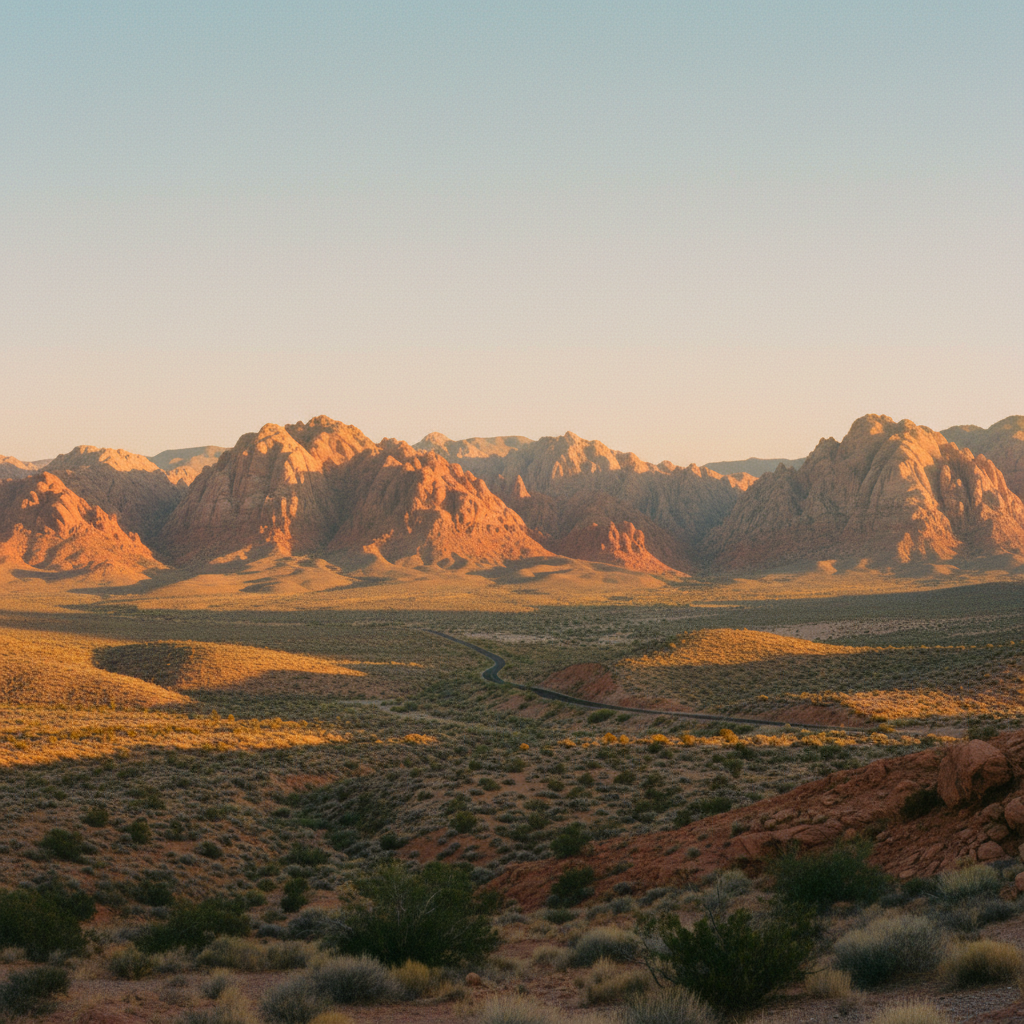
The jarring transition from the Strip's artificial glow to Red Rock's ancient stone is immediate. Here, the desert breathes, alive with a geological history etched into every fold and fault line of the towering escarpment. The predominant Aztec sandstone glows with an almost internal fire, shifting from burnt orange to deep crimson as the sun traces its arc across the sky. This is not a distant wilderness; it is a powerful, accessible testament to the forces that shaped the American West, right on the edge of urban sprawl.
Beyond the visual spectacle, Red Rock Canyon pulses with activity. Its sheer, striated walls draw rock climbers from across the globe, their chalk-dusted hands seeking purchase on routes that spiderweb across the rock face. Hikers find miles of trails, from gentle strolls through creosote and Joshua trees to strenuous ascents offering panoramic views of the entire basin. Even casual observers can spot desert tortoise, burros, and a variety of raptors soaring on thermals above the cliffs, adding a wild pulse to the vivid landscape.
To truly experience the canyon's core, plan on driving the 13-mile scenic loop, a ribbon of asphalt winding through the most dramatic formations. However, this close proximity to a major city means careful planning. From early fall through late spring, specifically October 1 through May 31, securing a timed entry reservation is mandatory to access this iconic drive. Arrive prepared, as the desert heat can be unforgiving, and water sources are scarce once you've left the visitor center.