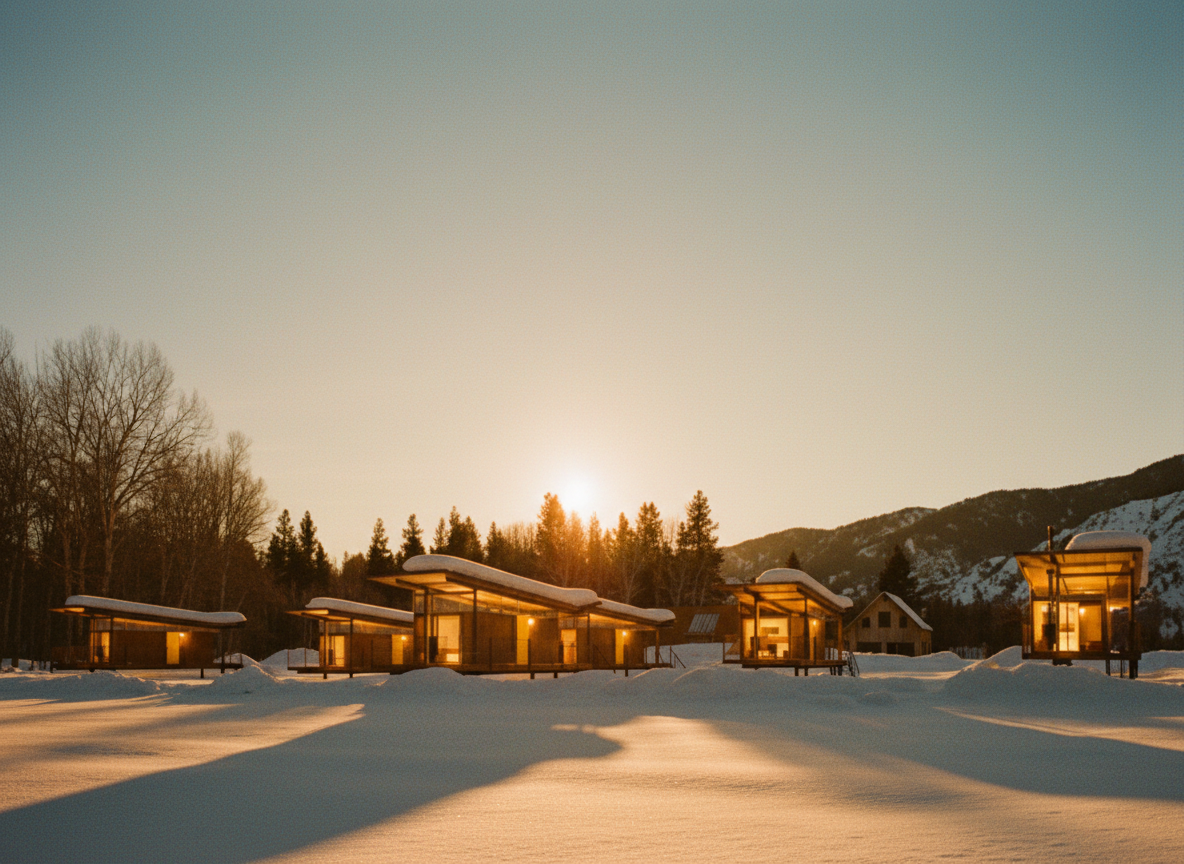
Six modernist micro-cabins on wheels designed by Tom Kundig in the Methow Valley.
Rolling Huts, designed by architect Tom Kundig of Seattle-based Olson Kundig, represents a thoughtful response to both strict local zoning and the fragile ecology of the Methow Valley floodplain. Sited on a forty-acre meadow that once served as an RV campground, the six steel-clad structures are elevated on large steel wheels. This playful yet highly functional choice allows the native grasses to grow undisturbed underneath while lifting guests above the damp ground, granting clear views of the surrounding Cascade peaks. Kundig conceived the cabins as a "herd" of low-impact shelters that sit lightly on the land, evoking the simplicity of Henry David Thoreau's woodland cabin but with a sharp, industrial-chic edge.
Each of the six huts is a masterclass in minimalist utility, packing 200 square feet of interior living space alongside an expansive 240 square feet of covered deck. The construction is intentionally raw and durable: an offset, steel-clad box sits on a platform of steel, plywood, and heavy-duty car-decking. Inside, the finishes are left unadorned, featuring cork floors, warm plywood walls, and modular wooden furniture blocks that can be rearranged to form extra sleeping platforms. Natural light floods the space through clerestory windows running along the top of the walls, capped by a structural insulated panel (SIPs) roof that floats overhead in an inverted, lopsided V. At the far end of each hut, a large double-paned sliding glass door opens directly onto the covered deck, seamlessly blending the indoor living area with the open meadow.
Living in the huts is a deliberate exercise in slowing down, offering a refined, low-tech alternative to traditional camping. Inside, guests will find a platform bed topped with a memory foam pad, a cozy wood-burning fireplace with firewood provided, and a basic kitchenette equipped with a small refrigerator, a microwave, an electric kettle, and a coffee maker. There is no indoor plumbing or running water inside the individual huts; instead, a fresh water faucet is located just outside each unit, and a private, portable outhouse sits adjacent to each deck. For those seeking more modern comforts, a short walk through the meadow leads to the central barn, which houses full shared bathrooms, hot showers, and a winter dishwashing station. It is a setup designed to keep the focus outward, encouraging quiet evenings watching the alpenglow fade over the mountains from the covered deck.
The main platform bed comes with a comforter and pillows, but bring your own sleeping bags if you plan to use the modular wooden blocks for extra guests. The kitchen lacks a stovetop, so pack a portable camp stove alongside your groceries.
Where to Stay — Curated accommodations hand-picked by Basecamp West. Glamping, boutique hotels, historic lodges, and unique stays across the American West.