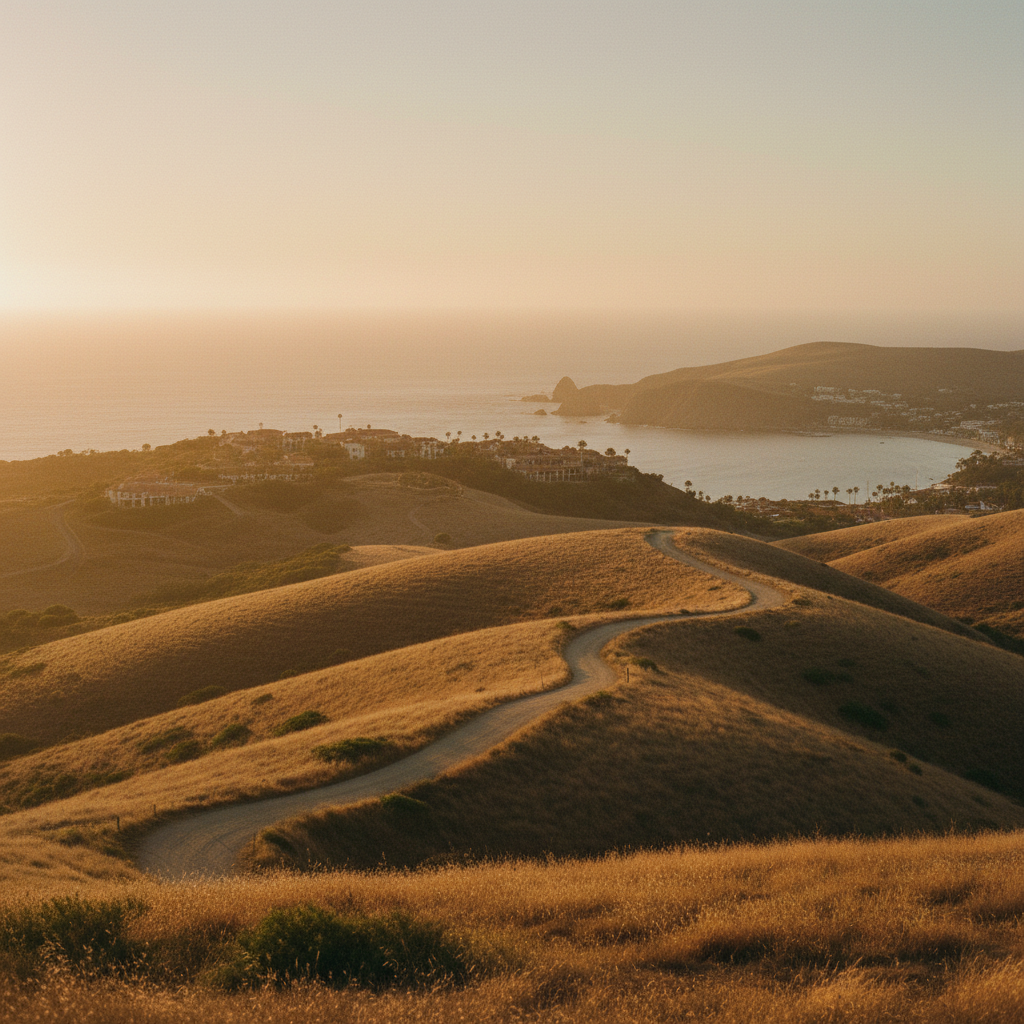
Chaparral-scented breezes sweep across Pimu, the traditional Tongva name for this rugged island where wild bison roam the ridges and kelp forests thrive below.
Santa Catalina Island, known as Pimu or Pimugna to the indigenous Tongva people who stewarded it for millennia, rises from the Pacific Ocean twenty-two miles off the coast of Southern California. Spanning seventy-five square miles, this rugged landmass is defined by a dramatic topography of sheer sea cliffs, deep-cut canyons, and dry-climate chaparral. While the island is politically part of Los Angeles County, it exists in stark contrast to the sprawling metropolis across the channel. This separation is largely preserved by the Catalina Island Conservancy, founded in 1972 by the Wrigley and Offield families, which actively protect eighty-eight percent of the island's forty-seven thousand acres. The highest point, Mount Orizaba, stands at 2,097 feet, offering panoramic views of the surrounding ocean and, on exceptionally clear days, the distant mainland peaks.
The interior of the island is famously home to a free-roaming herd of American bison, a legacy dating back to 1924 when fourteen of the animals were brought to the island for the filming of the silent movie The Vanishing American. Left behind after production ended, the herd multiplied, peaking at over five hundred animals in the late twentieth century. Today, the Catalina Island Conservancy manages the population at a sustainable level of around one hundred individuals, utilizing a humane immunocontraceptive vaccine to prevent overgrazing of native flora. Visitors traversing the dusty backcountry roads on foot, by bike, or via guided open-air jeep tours frequently encounter these massive beasts grazing alongside endemic island foxes, a species that recovered from near-extinction thanks to aggressive conservation efforts.
Human development is concentrated primarily in Avalon, the island's sole incorporated city, which curves around a crescent-shaped harbor on the southeast coast. Avalon's architectural centerpiece is the circular, twelve-story Catalina Casino, commissioned by chewing gum magnate William Wrigley Jr. and completed in 1929. Built in the Art Deco and Mediterranean Revival styles, the building has never been a gambling hall: its name derives from the Italian word for a gathering place, and it houses a massive ballroom and a historic movie theater. On the opposite, narrower end of the island lies Two Harbors, a rustic, unincorporated outpost situated at the isthmus where only a half-mile of land separates the windward and leeward shores. Connecting these two distinct hubs is the 38.5-mile Trans-Catalina Trail, a challenging hiking route that leads backpackers through remote ridges, pristine campgrounds like Little Harbor, and isolated beaches.
To experience the quietest side of the island, hike or kayak to Two Harbors at the west end, and order the original Buffalo Milk cocktail at the Harbor Reef Saloon where the drink was invented in the 1970s.