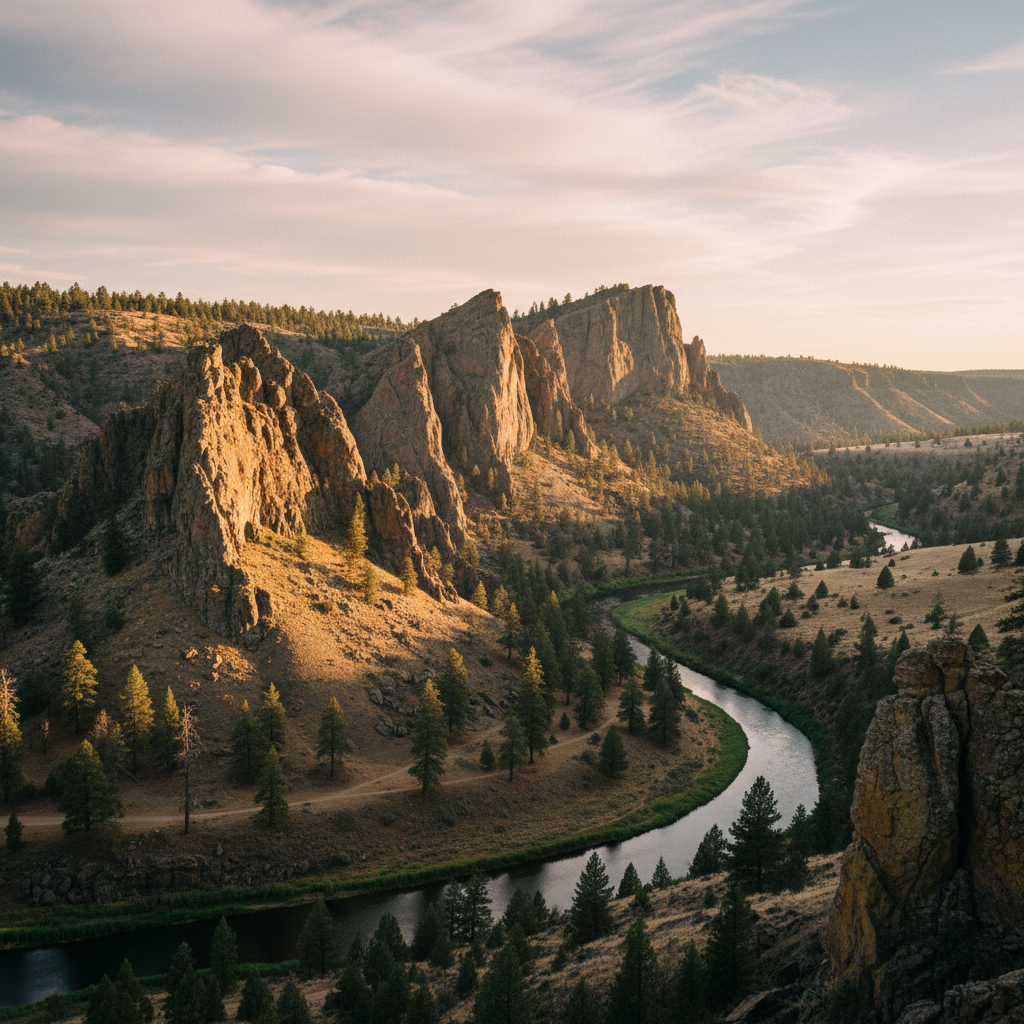
A high-desert cathedral of towering volcanic tuff and basalt cliffs, carved by the Crooked River, celebrated as the birthplace of modern American sport climbing and a sacred sanctuary of the Northern Paiute.
Smith Rock State Park rises abruptly from the sagebrush plains of Central Oregon, a dramatic fortress of sheer volcanic tuff and basalt cliffs sculpted by the winding Crooked River. This landscape is the traditional homeland of the Tenino (Warm Springs), Wasco, and Northern Paiute peoples, who historically referred to the rich canyon and its surrounding plateau as the Animal Village. The towering rock formations hold deep cultural significance: the iconic 350-foot spire known today as Monkey Face is recognized in Paiute lore as the head of Nuwuzo'ho, a legendary giant monster turned to stone by Coyote. Geologically, these cliffs form the northern boundary of the ancient Crooked River caldera, a massive 26-mile-long volcanic depression created by super-volcanic eruptions nearly 30 million years ago. Over millennia, the river slowly carved through the thick layers of welded tuff, exposing the sheer vertical walls and jagged spires that define the park today.
During the 1980s, these vertical walls became the crucible for a revolution in rock climbing. A local climber named Alan Watts began placing permanent bolts on the blank, seemingly unclimbable faces of the park, introducing the style of sport climbing to North America. This controversial approach shifted the focus of the sport from risk-management to pure athletic movement, quickly establishing the park as an international climbing capital. Legendary routes like Chain Reaction (a classic 5.12c) and To Bolt or Not to Be (established by French climber Jean-Baptiste Tribout in 1986 as the first 5.14a in North America) drew elite climbers from across the globe. Today, the park contains more than 1,500 routes, ranging from technical single-pitch sport climbs on the Morning Glory Wall to multi-pitch traditional adventures on the Red Wall and the Marsupials.
For those who prefer to keep their feet on the ground, the park features a network of well-maintained trails that showcase its dramatic geology and diverse wildlife. The River Trail offers a level, scenic loop along the banks of the Crooked River, where visitors can watch climbers scaling the sheer cliffs above or spot river otters, mule deer, and nesting golden eagles. To reach the park's highest vantage points, hikers tackle the steep, switchbacking Misery Ridge Trail. This strenuous climb ascends past the base of Monkey Face and leads to a panoramic summit overlooking the high desert plateau and the snow-capped peaks of the Cascade Range.
Arrive before 8:00 AM on weekends and during the spring and fall shoulder seasons to secure a parking spot in the main lot. Bring at least two liters of water per person, as the high-desert sun is intense, shade is scarce, and there are no water sources once you descend into the canyon.