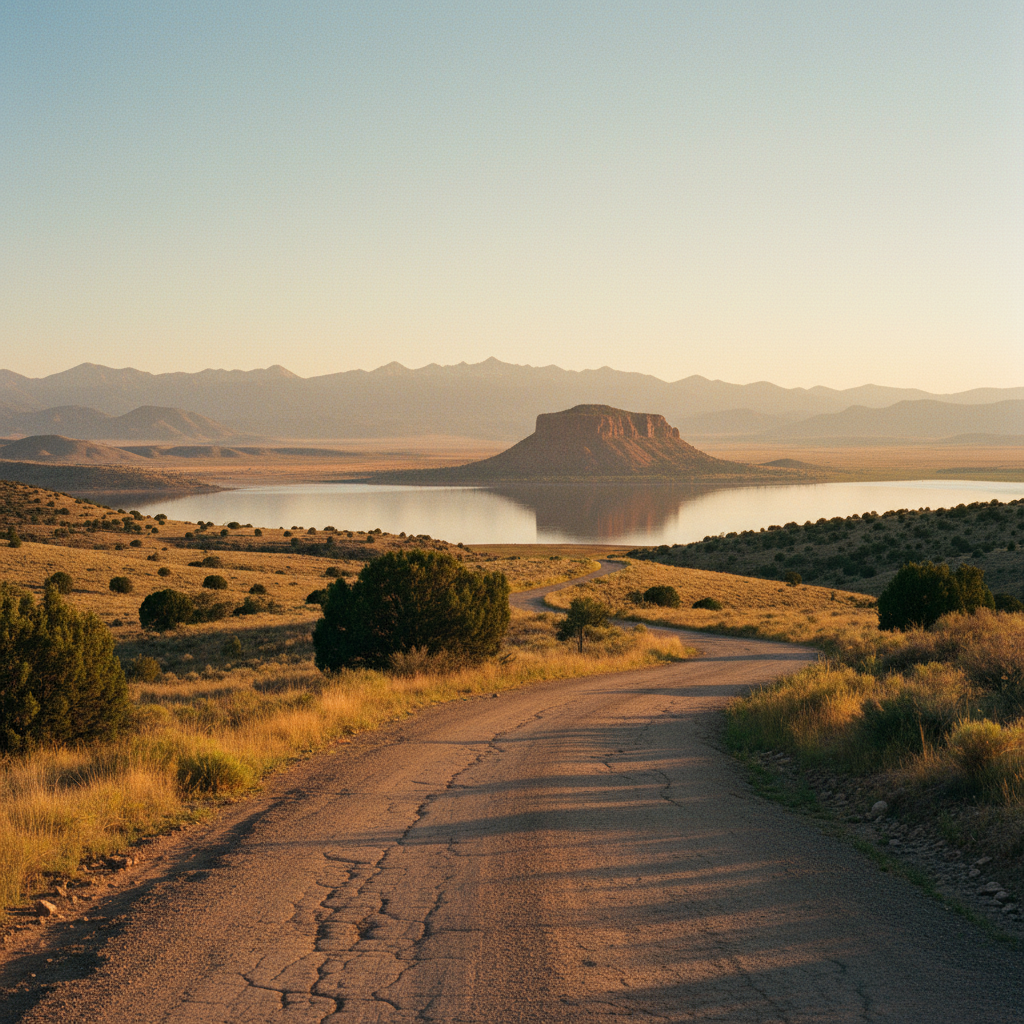
Windsurfers chase whitecaps across this 1,100-acre high-plains reservoir, a windy oasis set against the foothills of the Sangre de Cristo Mountains.
Storrie Lake State Park, located four miles north of Las Vegas, New Mexico, along State Highway 518, sits at an elevation of 6,607 feet where the southern Sangre de Cristo foothills meet the western edge of the Great Plains. The park encompasses an 81-acre land area wrapped around a massive 1,100-acre reservoir. This high-plains impoundment was created by a 1,400-foot-long earthen dam with a concrete core, a major engineering feat of its day. Construction began in 1916 under the direction of San Francisco contractor Robert C. Storrie, who was hired by the trustees of the Las Vegas Land Grant to build an irrigation system. Due to cash and labor shortages during World War I, the project was not completed until 1921. Water is diverted from the Gallinas River to fill the reservoir, which continues to serve as a vital water source for local agriculture and supports the nearby Las Vegas National Wildlife Refuge.
The park is widely recognized as one of the premier windsurfing destinations in New Mexico. Consistent, powerful afternoon winds sweep across the high plains, generated by the temperature differentials between the flat grasslands to the east and the rising peaks of the Sangre de Cristo Mountains to the west. These steady breezes whip the lake's surface into whitecaps, drawing windsurfers who carve wide arcs across the water. Powerboating, jet skiing, and water skiing are also popular here, as Storrie Lake is one of the few bodies of water in the immediate region that allows motorized vessels. Anglers frequent the shorelines and boat ramps to cast for stocked rainbow trout, northern pike, bass, catfish, and tiger muskie. During the spring and autumn migration seasons, the shallows and surrounding grasslands become a sanctuary for migratory waterfowl, including sandhill cranes, ducks, and geese.
For overnight visitors, the park features six distinct campgrounds with a total of 45 developed campsites, including 22 sites equipped with water and 30-amp electrical hookups. Many of these campsites feature distinctive, adobe-style covered picnic shelters that offer shade from the intense high-desert sun. Primitive beach camping is also permitted along the shoreline for those seeking a more rustic experience. The park's visitor center offers historical exhibits and old photographs detailing the history of the Santa Fe Trail and the nearby historic town of Las Vegas, which once hosted legendary frontier figures like Doc Holliday, Wyatt Earp, and Billy the Kid. Visitors should note that while the park remains open year-round, water utilities are typically turned off during the winter months, from mid-September through April.
For the best windsurfing and sailing conditions, plan to be on the water by mid-afternoon when the mountain-plains temperature differential creates steady, strong breezes. If you are camping, try to secure one of the sites with an adobe-style shelter to shield your gear from the persistent high-desert wind, and note that the park's water systems are shut down from mid-September through April.