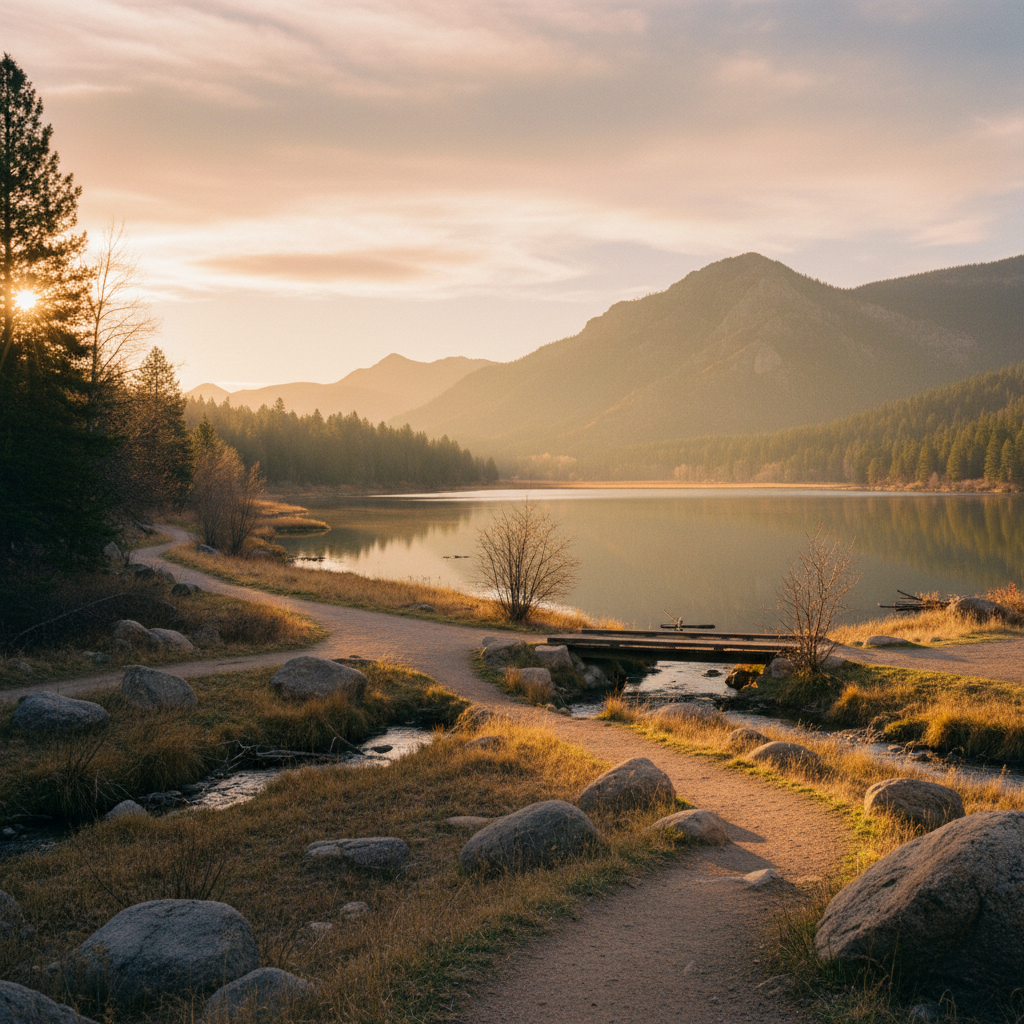
A quiet mountain lake bordered by ponderosa pines and aspens on the edge of the Pecos Wilderness, managed by historic northern New Mexico acequias.
Morphy Lake State Park occupies a high-altitude basin on the eastern slopes of the Sangre de Cristo Mountains, sitting at nearly 8,000 feet on the edge of the Pecos Wilderness. This compact 30-acre park surrounds a 15-acre lake, backed by the towering mass of Cebolla Peak, which rises to 11,879 feet on the western skyline. The geology here is ancient: the lake basin rests on Precambrian granite, schist, and quartzite formations that date back 1.4 billion years, exposed by tectonic uplifts and carved by glacial action. Heavy stands of ponderosa pine, Douglas fir, white-barked aspen, and Gambel oak crowd the steep shoreline, creating a dense canopy that shelters the water from the winds of the plains.
The history of this basin is inseparable from northern New Mexico's traditional water-sharing systems. Over a century ago, the commissioners and parciantes of the Acequia de la Isla and the Acequia de San Jose expanded a small natural pond into a formal depósito, or reservoir, to secure irrigation water for the Ledoux Valley. These two historic acequias still own the lake, leasing it to the New Mexico Department of Game and Fish, which subleases the property to the State Parks Division. The earthen dam, originally constructed by the acequias and formalized around 1940 under designer H.E. Beisman, underwent a major state-funded rehabilitation completed in 2020 to meet modern flood safety standards. In the wake of the devastating Hermits Peak and Calf Canyon Fire of 2022, local mayordomos have actively managed the intake canal to protect the lake's water quality from burn-scar ash and debris, ensuring it continues to serve both downstream agriculture and mountain wildlife.
Visiting the park is an exercise in rustic simplicity. Boating is strictly limited to hand-paddled canoes, kayaks, and vessels with electric trolling motors, as gas-powered engines are prohibited to preserve the quietude of the basin. Anglers gather along the rocky banks or on the water to fish for stocked rainbow trout and wild German brown trout, which thrive in the cold, high-altitude waters. The park features 24 primitive campsites distributed along the northern and eastern shores, positioned to capture sunset views over the western ridges. Because there is no potable running water, electricity, or trash collection, campers must pack in all water and supplies and pack out all waste, utilizing the vault toilets provided on-site. RVs and trailers are strictly limited to a maximum length of 18 feet due to the tight clearances of the campsites and the narrow access road.
The three-mile access road from the village of Ledoux is extremely narrow, steep, and unpaved, with very few turnouts: high-clearance four-wheel-drive vehicles are highly recommended, and trailers or RVs over 18 feet are strictly prohibited. Bring all your own drinking water and pack out all trash, as the park has no running water or waste disposal. For the best views of Cebolla Peak, pitch your tent at one of the primitive campsites along the northern shore.