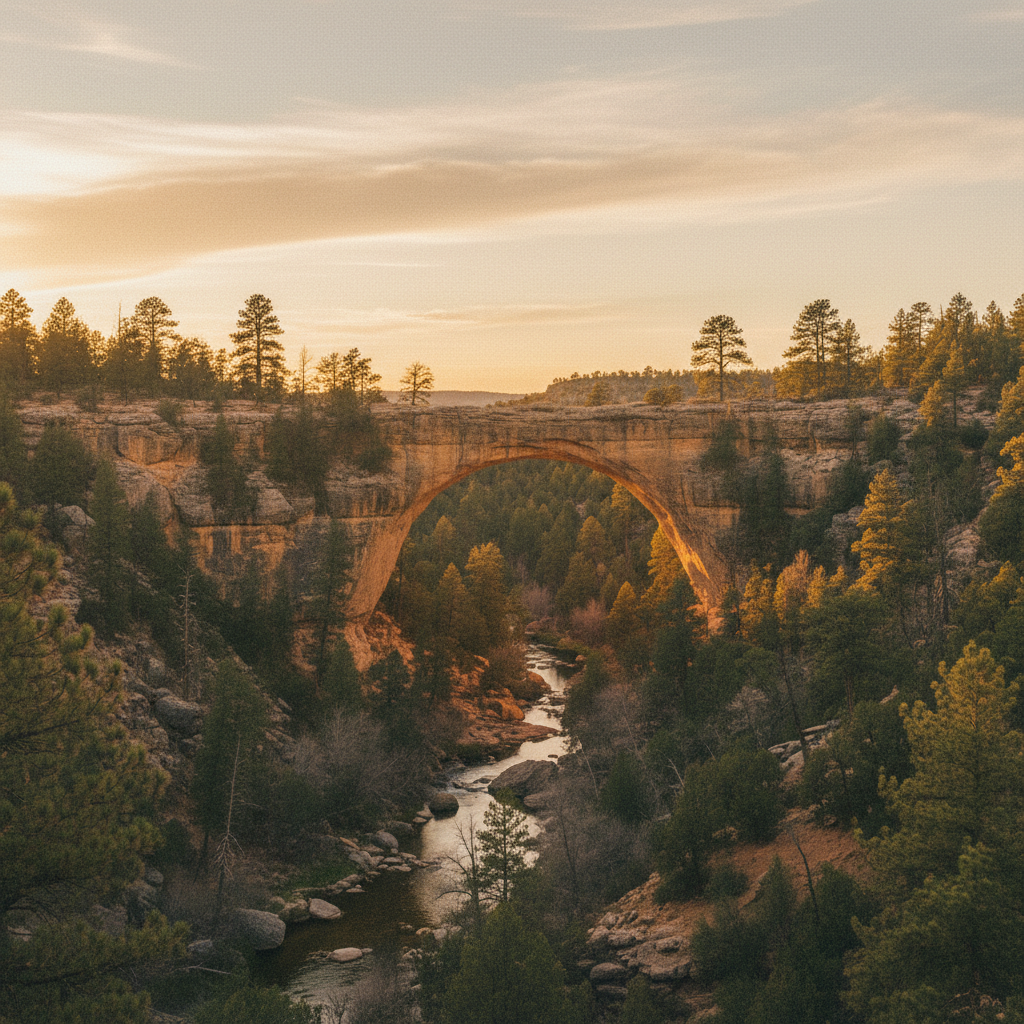
The world's largest natural travertine bridge, forming a cool, green oasis of springs, waterfalls, and historic pioneer architecture in central Arizona's Pine Creek Canyon.
Tonto Natural Bridge stands 183 feet high over a 400-foot-long tunnel that measures 150 feet at its widest point. Unlike the sandstone arches of the Colorado Plateau, this massive structure is composed entirely of travertine, making it the largest known natural travertine bridge in the world. For thousands of years, mineral-rich spring water saturated with calcium carbonate seeped through the limestone aquifers of Pine Creek Canyon, depositing layers of travertine that eventually formed a massive dam across the canyon, which was subsequently bored through by the flowing creek. This continuous geologic process remains active, as water constantly drips and seeps from the cavernous ceiling, leaving a glistening sheen on the cream and tan rock.
Long before European settlers arrived, the Tonto and Apache peoples utilized the canyon and its fertile topsoil for agriculture and shelter. In 1877, a Scottish prospector named David Gowan documented the bridge while searching for gold and seeking refuge. Captivated by the lush valley, Gowan claimed the land under squatter's rights and eventually persuaded his family, including his nephew David Gowan Goodfellow, to emigrate from Scotland. The family established a homestead, growing crops on the flat mesa above the bridge. In the 1920s, they constructed the Goodfellow Lodge, a rustic ten-room lodge with running water that served early tourists. The lodge still stands today, listed on the National Register of Historic Places, and serves as the park's visitor center, housing exhibits on prehistoric inhabitants and pioneer history.
Exploring the park requires descending into the steep, damp microclimate of Pine Creek Canyon. The Pine Creek Trail, a rugged half-mile path, leads directly to the creekbed where hikers can scramble over massive, algae-slick boulders beneath the bridge's towering arch. This trail connects with the Gowan Trail, a steep 0.3-mile descent ending at an observation deck that provides a clear view of the tunnel's interior and its constant, rainy mist. For a shorter but equally dramatic route, the 300-foot Waterfall Trail leads to a lush, fern-draped grotto where spring water sheets down a mossy travertine wall. The descent reveals a dramatic transition from the dry, sun-baked Arizona chaparral on the rim to a cool, subterranean sanctuary of dripping water, wild columbine, and smooth, water-worn stone.
Wear sturdy hiking boots with deep, sticky rubber lugs rather than smooth-soled sneakers or water shoes. The wet travertine boulders under the bridge are covered in a fine layer of slick algae, requiring careful footing and three points of contact during the scramble.