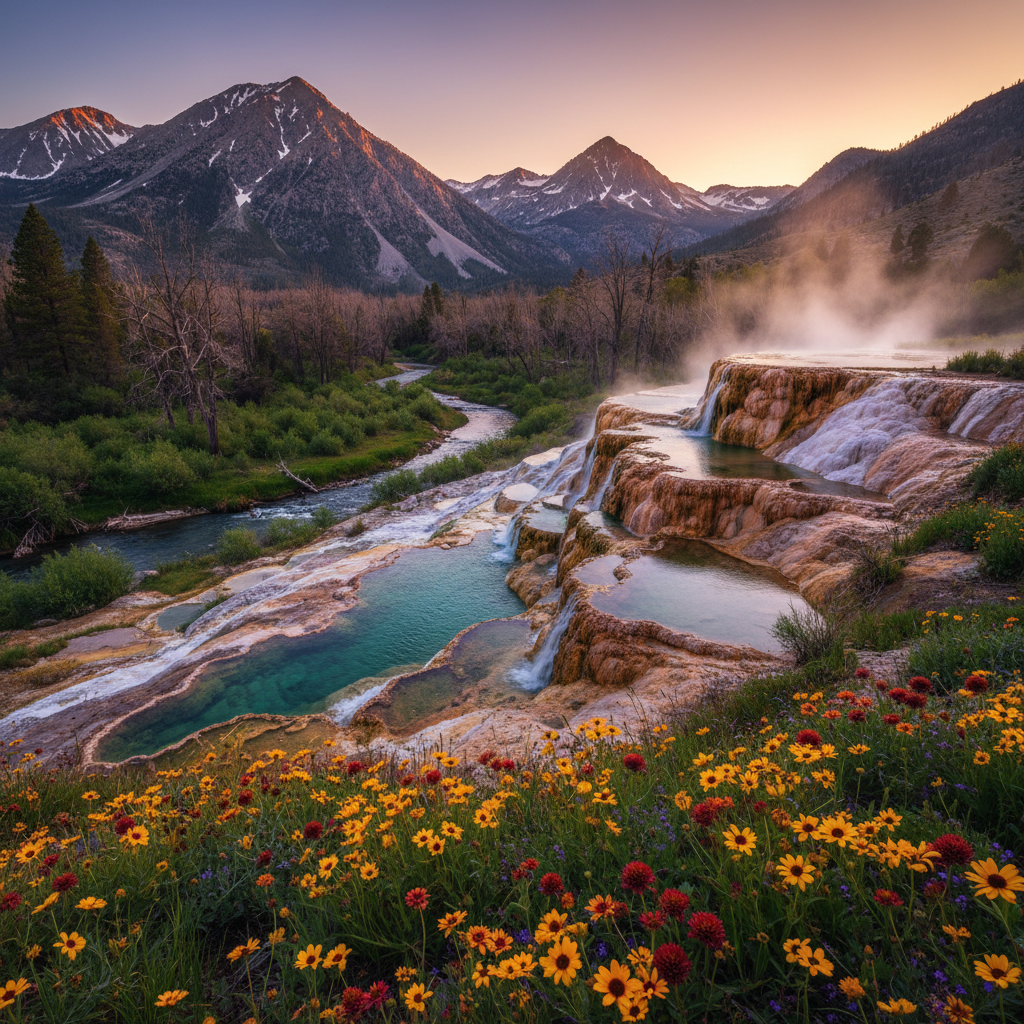
A cascading geothermal spring on Buckeye Creek in the Eastern Sierra.
Buckeye Hot Spring sits on a steep, pine-shaded hillside within the Humboldt-Toiyabe National Forest, just outside Bridgeport, California. Reaching the water requires navigating a short but notoriously steep and sandy trail that drops down from a dirt parking area equipped with a basic vault toilet. While the descent is brief, the loose dirt and rocky terrain demand careful footwork, particularly near the muddy bottom where the path meets the water. Before reaching the main creek-level pools, the trail passes a flat terrace containing two shallower, warmer upper pools. These upper basins offer a more private, elevated soak, though they lack the dramatic water flow found below. The real centerpiece of the site is the lower section, where geothermal water cascades directly over a travertine rock overhang into rock-walled pools at the edge of Buckeye Creek.
The geology of Buckeye Hot Spring is a testament to the volcanic activity of the Eastern Sierra. Superheated water rises from deep underground at approximately 140 degrees Fahrenheit, laden with calcium carbonate and other dissolved minerals. As this water emerges from the hillside and spills over the edge, it slowly deposits travertine, building a thick, cave-like overhang over millennia. This mineral-rich grotto acts as a natural steam room, sheltering the largest of the lower pools. Because the source water is too hot for direct soaking, visitors continuously build and adjust semi-circular rock walls along the bank of Buckeye Creek. These hand-built stone barriers allow the icy, rushing mountain runoff of the creek to mix with the cascading hot springs, creating a series of customizable soaking pools that typically hover between 100 and 120 degrees Fahrenheit. Historically, these healing thermal waters were utilized by the Northern Paiute people, who gathered in this region long before European prospectors and travelers arrived.
Soaking at Buckeye Hot Spring offers a deeply sensory experience, defined by the contrast of hot mineral water, the cold rush of the adjacent creek, and the scent of Jeffrey pines. During the spring snowmelt, the rising waters of Buckeye Creek can completely submerge the lower pools, making them temporarily unusable and forcing visitors to stick to the upper terraces. By late summer and autumn, the creek recedes, exposing the rock walls and allowing for a refreshing cold-plunge ritual between hot soaks. Because the springs are located near Buckeye Campground, they are highly popular and can draw crowds during summer weekends. Visiting during early morning hours or on weekdays offers the best chance of finding a quiet pool. The access road, Buckeye Road, is a bumpy, unmaintained dirt track that can become impassable after heavy rain or snow, and is typically closed to vehicles from winter through early spring, requiring a three-mile hike or snowshoe for those seeking a peaceful winter soak.
Wear sturdy hiking sandals with good grip like Tevas for the steep, slippery descent to the creek, and bring a headlamp if you plan to soak after dark. Keep an eye on creek levels in late spring, as high runoff can completely flood and cool the lower pools.