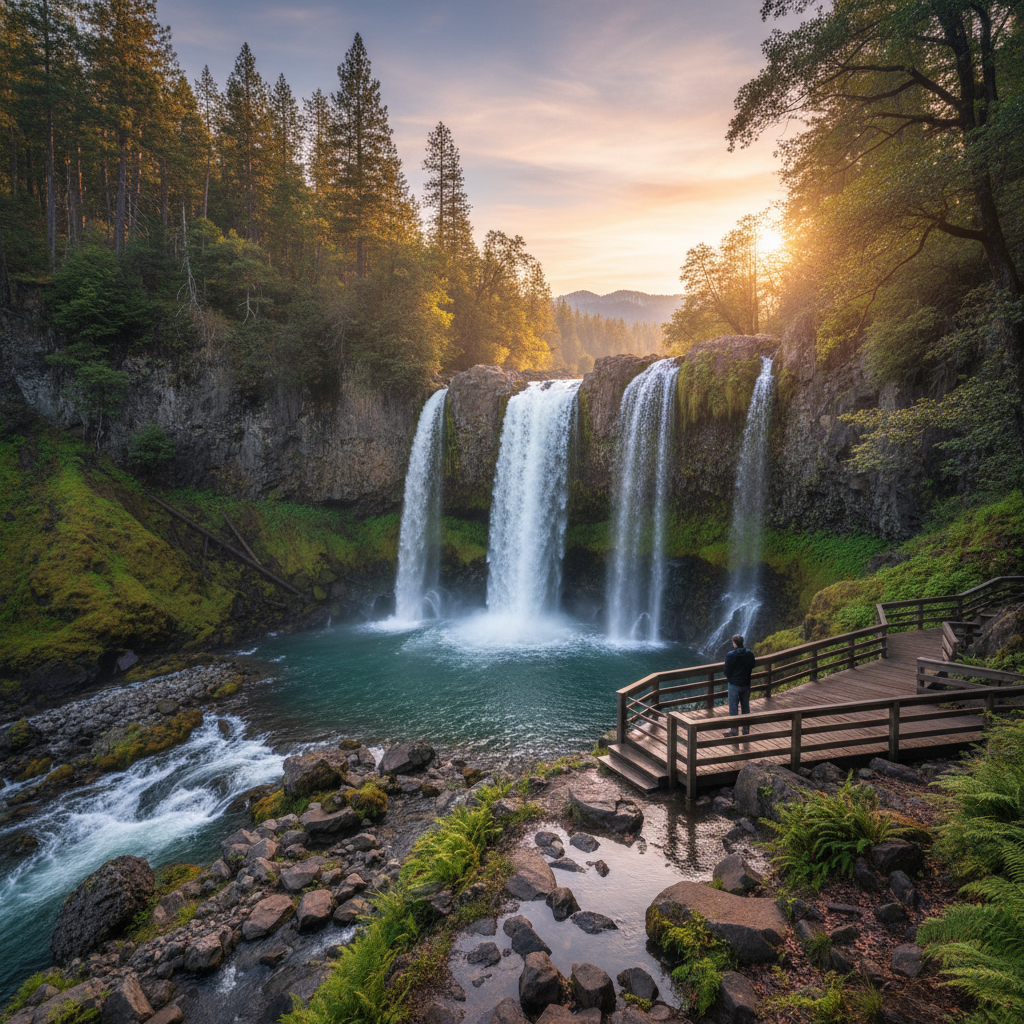
A thundering 129-foot spring-fed waterfall cascading over mossy volcanic basalt.
Burney Falls plunges 129 feet over a moss-draped basalt cliff, a constant 100-million-gallon daily deluge that Theodore Roosevelt famously dubbed the eighth wonder of the world. Long before modern travelers arrived, the Ilmawi band of the Pit River Tribe lived along this riparian corridor, holding the falls as a sacred power spot for visions, meditation, and spiritual cleansing. Unlike waterfalls that diminish to a trickle during dry summer months, this cataract remains a thundering, mist-filled spectacle year-round. The main drop is fed by the surface flow of Burney Creek, but the real magic is the secondary flow: a wide, shimmering curtain of water that bursts directly from the porous volcanic rock face. Countless springs seep through the layered basalt, feeding a lush microclimate of western dogwoods, wild ferns, and emerald mosses that thrive in the perpetual, chilly spray.
The geology behind this relentless flow is a product of the region's volcanic past. Ancient eruptions laid down thick, permeable layers of basalt across the Modoc Plateau, creating a giant subterranean aquifer that collects rain and snowmelt. This water travels through underground fissures and lava tubes before emerging as springs just above the falls, keeping the water temperature at a brisk 42 degrees Fahrenheit even in the heat of August. This unique plumbing is why the falls maintain their volume while the creek bed half a mile upstream often runs completely dry. The pool below is a deep, cerulean basin popular for catch-and-release fly-fishing, where rainbow trout dart through the aerated, highly oxygenated water. In the 1920s, local rancher Frank McArthur purchased 160 acres surrounding the falls to protect them from proposed hydroelectric development, donating the land to the state to create McArthur-Burney Falls Memorial State Park in 1926.
Experiencing the falls has recently become a more structured endeavor to protect this fragile volcanic landscape from being loved to death. Following an intensive $835,000 restoration project that closed the main trails for nine months to repair severe erosion, the iconic 1.1-mile Falls Loop Trail reopened in early 2025 with newly reinforced, stable pathways. To manage the extreme seasonal crowds, California State Parks has implemented a pilot day-use reservation system for peak summer weekends and holidays. Visitors planning a trip between mid-May and late September must secure a vehicle reservation in advance, ensuring the delicate riparian ecosystem and sacred tribal grounds remain protected. For those who secure entry, the loop trail descends from the rim overlook to the misty base, crossing Burney Creek via two footbridges and offering views of the volcanic layers that make this geological wonder possible.
If visiting on a weekend or holiday between mid-May and late September, you must book a day-use vehicle reservation in advance through the state parks system. For the best photography and fewer crowds, hike the newly restored Falls Loop Trail in the early morning when the canyon mist is thickest.