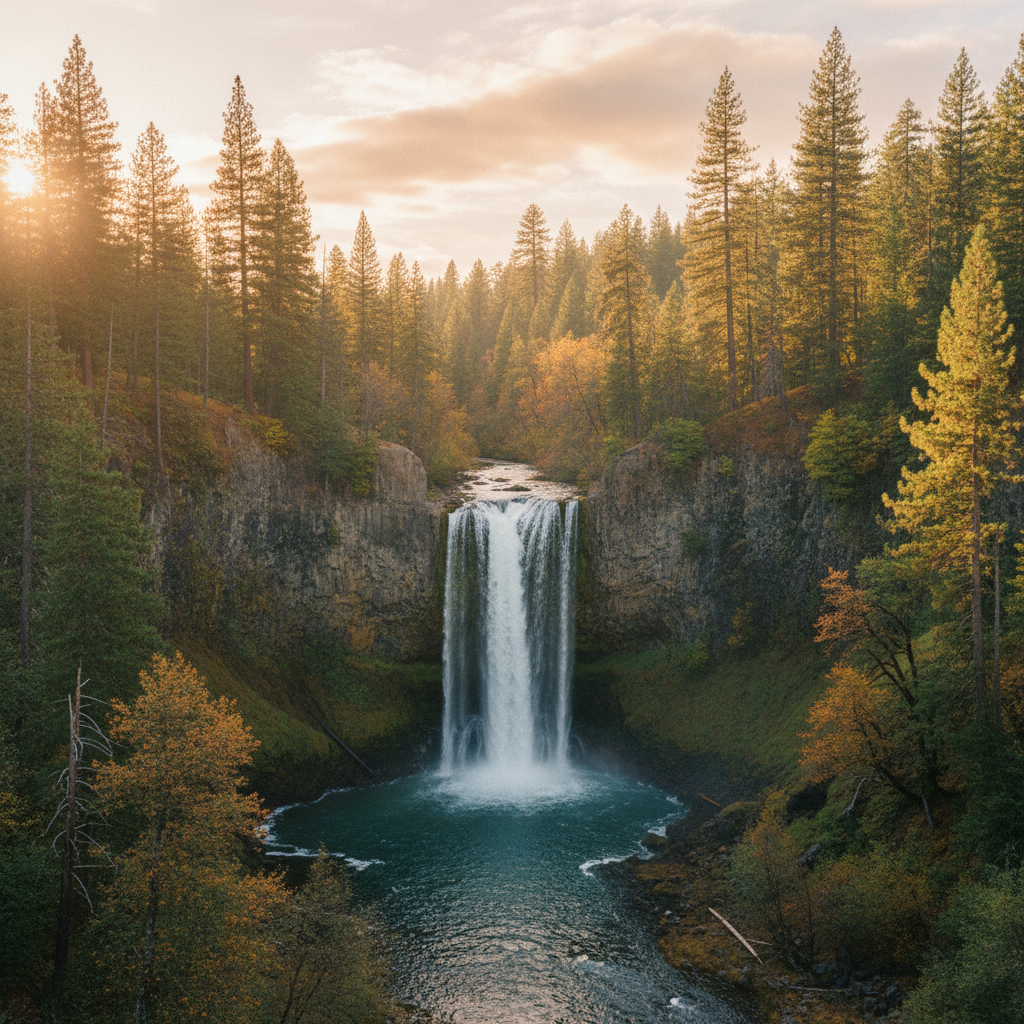
Stand before a 129-foot waterfall fed by underground springs, where icy water pours from porous volcanic rock into a deep turquoise pool.
McArthur-Burney Falls Memorial State Park centers around a geological anomaly: a 129-foot waterfall that flows at a nearly constant rate of 100 million gallons per day, regardless of the season. Unlike typical Sierra and Cascade waterfalls that rely on immediate snowmelt and dwindle to a trickle by late summer, Burney Falls is fed primarily by subterranean springs. The surrounding landscape, shaped by ancient volcanic activity, is layered with highly porous basalt. This volcanic rock acts as a massive underground sponge, storing rainwater and snowmelt from nearby peaks. Within the park, this chilled water, maintaining a temperature of 42 to 48 degrees Fahrenheit, emerges directly from the basalt cliff face in thousands of small, fern-draped rivulets. The main torrent of Burney Creek splits into twin cascades before plunging into a 22-foot-deep pool, creating a persistent, cool mist that fills the canyon and supports a lush microclimate of mosses and wildflowers.
The human history of this canyon is deeply tied to its unique geography. Long before European contact, the Ilmawi band of the Pit River Tribe inhabited this region, gathering food and fishing for trout and salmon in the creeks and nearby Lake Britton. In the 1850s, a pioneer named Samuel Burney settled in the valley, eventually giving his name to the creek and the falls. By the early 20th century, as private utility companies began buying up local water rights for hydroelectric development, the McArthur family stepped in to protect the site. Brothers Frank and Dustin McArthur purchased 160 acres surrounding the waterfall and deeded the land to the State of California in memory of their parents, John and Catherine McArthur. Officially established in 1926, it became the second oldest state park in California, preserving the landscape from industrial development. During the 1930s, the Civilian Conservation Corps constructed a historic log cabin and stone stoves that still stand within the park today.
Visitors can explore the park via the Falls Loop Trail, a paved path that descends into the canyon, offering close-up views of the basalt walls and the roaring pool below. The Pacific Crest Trail also winds through the park, crossing Burney Creek just above the falls and continuing through the surrounding ponderosa pine and mixed conifer forest. In recent years, the park has faced significant management challenges due to its immense popularity, which draws hundreds of thousands of annual visitors. To address severe erosion and protect sensitive riparian habitats, California State Parks completed an extensive $835,000 trail restoration project that required closing the main trail for the entire 2024 season. Today, the park is carefully managed to balance public access with conservation, ensuring that the cold, clear waters and delicate ferns of the canyon remain intact for future generations.
To manage heavy summer crowds, California State Parks requires day-use reservations for vehicles entering the park on Fridays, Saturdays, Sundays, and holidays from May 15 through September 27. These reservations must be booked in advance online through LAZ Parking, as same-day reservations are not available at the gate. If you are visiting during the week or outside the peak summer window, aim to arrive before 9:00 AM or after 4:00 PM to secure a parking spot and enjoy the falls in quieter, softer light.