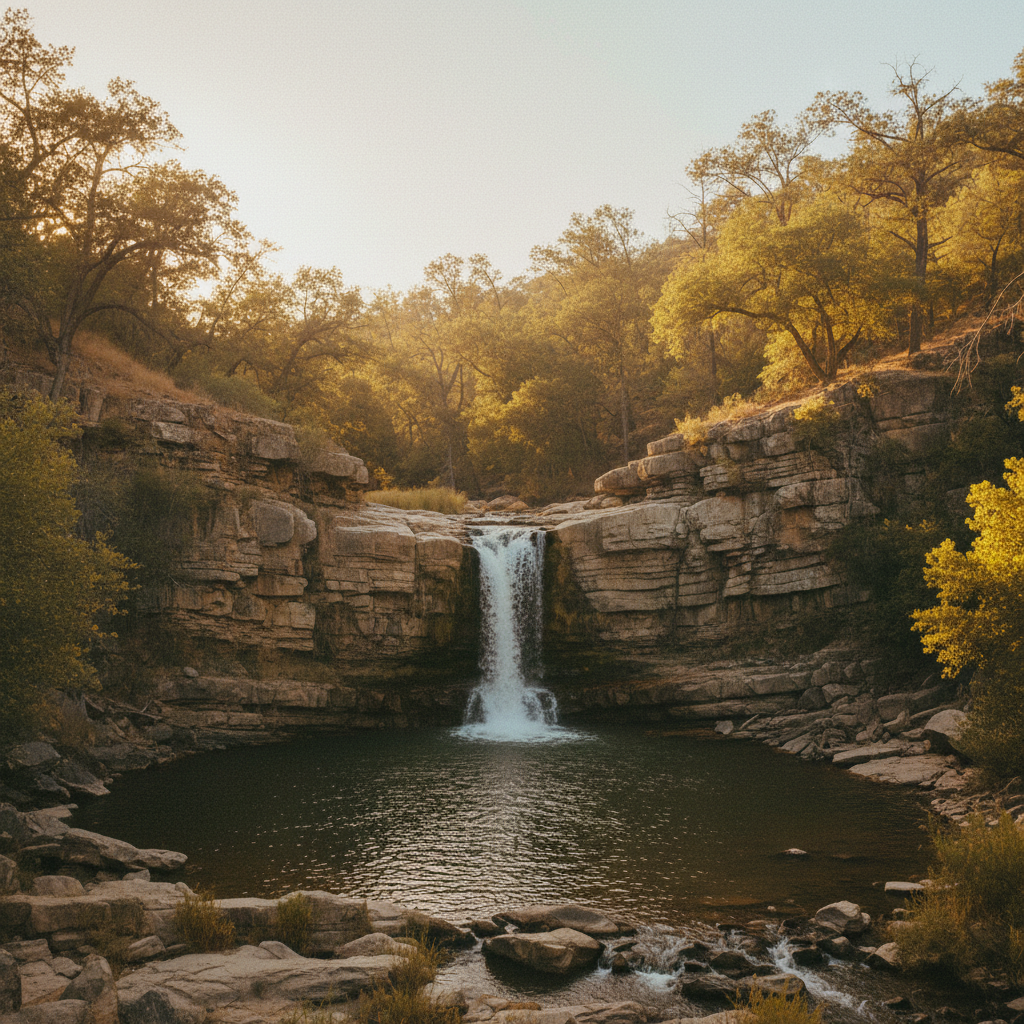
Cedar Creek Falls is an eighty-foot waterfall plunging into a deep basin in the San Diego River Gorge, reached via a strenuous, sun-exposed desert hike.
Cedar Creek Falls plunges eighty feet down a sheer granitic amphitheater into a deep, dark basin carved out of the San Diego River Gorge. Located within the Palomar Ranger District of the Cleveland National Forest near Ramona, California, this seasonal waterfall is one of the backcountry's most dramatic geological features. The surrounding landscape, historically stewarded by the Kumeyaay people, consists of rugged, sun-baked chaparral that gives way to a lush riparian corridor at the canyon bottom. Here, native willows, sycamores, and cottonwoods thrive on the seasonal flow of Cedar Creek, creating a vibrant oasis that contrasts sharply with the arid, exposed hillsides above. For hikers, reaching this oasis requires navigating an 'inverse' trail: an out-and-back route where the entire three-mile journey to the falls is downhill, saving the grueling, hot uphill climb for the return leg.
The journey begins at either the San Diego River Gorge Trailhead in Ramona or the Saddleback Trailhead near Julian, leading travelers down a wide, dusty path cut into slopes of fragrant white sage and ceanothus. As the trail descends roughly 1,000 feet into the gorge, the chaparral traps the heat, reflecting intense sunlight off the pale, decomposed granite soil. This environment demands respect and preparation, as summer temperatures regularly climb past ninety degrees Fahrenheit, turning the canyon into a hazardous corridor. Because of the trail's strenuous nature and a history of heat-related rescues, the U.S. Forest Service strictly regulates access. Hikers must secure a visitor use permit in advance through Recreation.gov, which costs six dollars per group of up to five people, with a daily cap of seventy-five permits to protect the fragile riparian ecosystem and ensure visitor safety.
At the bottom of the canyon, the trail crosses the creek bed before revealing the massive rock bowl where the falls cascade. The water pool, often colloquially but incorrectly referred to as the Devil's Punchbowl, is a cold, refreshing sanctuary during the wet winter and spring months, though it can dry up or turn stagnant with algae by mid-summer. While swimming is permitted when water levels are healthy, strict forest regulations prohibit climbing, jumping, or diving from the surrounding cliffs, and alcohol is banned throughout the permit area. Resting on the smooth granite slabs near the water offers a brief reprieve, but the looming return hike requires careful pacing. The two-mile climb back out features a consistent eight percent grade with virtually no shade, making a minimum of one gallon of water per person an absolute necessity for a safe return to the trailhead.
Secure your six-dollar permit on Recreation.gov well in advance, as only seventy-five are issued daily. Avoid hiking in summer when the falls dry up and temperatures exceed ninety degrees, and carry at least one gallon of water per person for the grueling, unshaded uphill return.